

The Subtle Chains: Unmasking the Rhetoric of Tyranny
The insidious power of tyranny often begins not with the clank of chains, but with the careful crafting of language. Before the sword is drawn or the gulag built, the ground is prepared by a sophisticated, often deceptive, rhetoric that reshapes public perception, redefines truth, and ultimately subverts the will of the people. This article explores how rhetoric, a tool of persuasion, becomes the architects' blueprint for oppressive government, drawing insights from the profound observations within the Great Books of the Western World. Understanding this linguistic manipulation is our first, and perhaps most crucial, defense against the rise of authoritarianism.
The Architect's Quill: Language as a Weapon of Control
For millennia, philosophers have grappled with the power of rhetoric. From Plato's skepticism regarding its capacity to mislead, to Aristotle's meticulous classification of its persuasive appeals, the potential for language to shape belief and action has been a constant concern. In the hands of a budding tyrant, however, rhetoric transcends mere persuasion; it becomes a strategic weapon designed to dismantle critical thought, foster dependency, and consolidate power. The tyranny of the state is often preceded by the tyranny of words, where meaning itself is bent to the will of the ruler.
The Anatomy of Tyrannical Rhetoric
Tyrannical regimes employ a consistent playbook of rhetorical strategies to establish and maintain control. These methods, though varied in their execution, share a common goal: to control the narrative and suppress dissent.
- Simplification and Slogans: Complex societal problems are reduced to simplistic binaries, often framed as "us vs. them." Slogans become ubiquitous, replacing nuanced debate with easily digestible, emotionally charged catchphrases designed to bypass reason. This reductionist language stifles critical inquiry.
- Example: "Make [Nation] Great Again," without defining "great" or outlining the path.
- The Cult of Personality: The leader is elevated to an almost mythical status, portrayed as infallible, uniquely gifted, and the sole savior of the nation. Rhetoric here is grandiloquent, often employing hyperbolic praise and demonizing any who question their authority.
- Techniques: Constant praise, attribution of all successes to the leader, visual propaganda.
- Manufacturing Consent and Dissent: Through controlled media and official pronouncements, a narrative is meticulously constructed. Opposition is not merely disagreed with; it is delegitimized, often labeled as "enemies of the state," "traitors," or "foreign agents." This rhetoric not only silences critics but also encourages citizens to police each other.
- Tools: State-controlled news, carefully curated public spectacles, propaganda films.
- Redefining Truth and Reality: Perhaps the most insidious form of rhetorical tyranny involves the systematic distortion of reality. Facts are dismissed as "fake news," historical events are rewritten, and objective truth is replaced by an officially sanctioned version. This manipulation of language leaves citizens disoriented, unable to trust their own perceptions or external sources of information.
- Impact: Erodes trust in institutions, fosters epistemic nihilism.
- Fear and Division: A common tactic is to identify an external or internal enemy against whom the populace must unite. Rhetoric of fear warns of imminent threats, crises, or conspiracies, positioning the leader as the only protector. This often involves divisive language that pits one group against another.
- Consequences: Polarization, scapegoating, erosion of civil liberties.
Echoes from the Great Books: Philosophical Precedents
The dangers of manipulative rhetoric in the context of tyranny are not new. Philosophers across the ages have warned against them:
| Philosopher/Work | Key Insight on Rhetoric & Tyranny
- Plato, The Republic: Plato extensively critiques sophistry, a form of rhetoric focused on persuasion regardless of truth. He argues that demagogues, masters of persuasive language, can easily sway the public towards unjust governments and tyranny by appealing to emotions rather than reason. His ideal state is ruled by philosopher-kings who prioritize truth over mere opinion.
- Aristotle, Rhetoric: While acknowledging rhetoric as a morally neutral art of persuasion, Aristotle also provides a detailed analysis of its potential for manipulation. He outlines the appeals to logos (logic), pathos (emotion), and ethos (credibility), showing how a speaker can exploit these for good or ill. A tyrant, he implies, would master pathos and a false ethos to gain control.
- Machiavelli, The Prince: Machiavelli offers a pragmatic guide for acquiring and maintaining political power. He advises rulers to understand human nature, which he sees as inherently self-interested, and to use appearances and deception (a form of rhetorical manipulation) to maintain authority. The "lion and the fox" metaphor speaks to the need for both strength and cunning, often employing language to project desired images and instill fear or loyalty.
- Hobbes, Leviathan: Hobbes argues for a strong sovereign to prevent the "war of all against all." While not directly endorsing tyranny, his view on the necessity of absolute power for order highlights how language is used to define the social contract and the sovereign's authority. The sovereign's rhetoric becomes the ultimate arbiter of law and order, and any dissent is seen as a threat to societal stability.
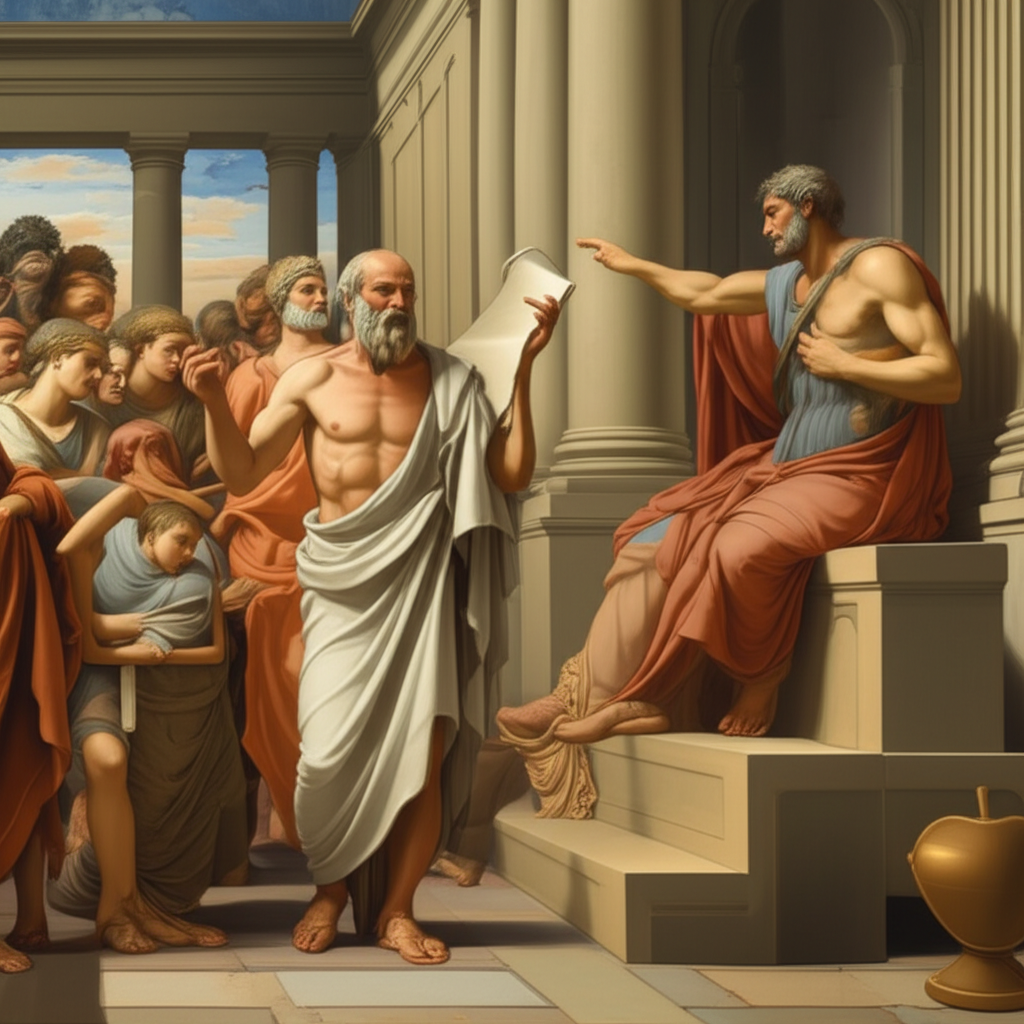
The Philosophical Defense: Cultivating Critical Vigilance
Defending against the rhetoric of tyranny requires more than mere skepticism; it demands active, critical engagement with language itself.
- Deconstruct the Message:
- Identify Appeals: Is the speaker appealing to emotion (pathos), logic (logos), or credibility (ethos)? Are these appeals legitimate or manipulative?
- Unpack Simplifications: What complexities are being ignored? What nuances are being flattened into slogans?
- Examine Definitions: How are key terms like "freedom," "justice," or "enemy" being defined? Are these definitions shifting or serving a particular agenda?
- Seek Diverse Perspectives: Actively consume information from a variety of credible sources, both domestic and international. Do not allow a single narrative to dominate your understanding.
- Prioritize Truth over Persuasion: As Plato argued, the pursuit of truth must precede and inform our understanding of persuasion. Question the motives behind the rhetoric and demand verifiable evidence.
- Engage in Deliberative Discourse: Foster environments where open, respectful debate is encouraged, and where different viewpoints can be aired without fear of reprisal. This strengthens the public sphere against monolithic narratives.
Conclusion: Vigilance in the Realm of Words
The rise of tyranny is rarely a sudden cataclysm; it is often a creeping shadow, cast by the manipulation of public discourse. The rhetoric of oppressive government works by eroding trust, distorting reality, and ultimately disarming the critical faculties of its citizens. By understanding the techniques of rhetorical tyranny and by cultivating a deep, philosophical vigilance towards the language we consume and produce, we can stand as guardians against the subtle chains that seek to bind our minds and our societies. The battle for freedom begins in the arena of ideas, and its primary weapon is a discerning mind.
YouTube Video Suggestions:
-
📹 Related Video: PLATO ON: The Allegory of the Cave
Video by: The School of Life
💡 Want different videos? Search YouTube for: ""Plato's Critique of Rhetoric and Democracy""
-
📹 Related Video: ARISTOTLE ON: The Nicomachean Ethics
Video by: The School of Life
💡 Want different videos? Search YouTube for: ""The Art of Persuasion: Aristotle's Rhetoric Explained""