

The Eloquent Chains: Decoding the Rhetoric of Oligarchy
A Summary of Power's Persuasion
The essence of oligarchy — rule by the few, often the wealthy or a privileged class — lies not just in its structural dominance but profoundly in its persuasive machinery. This article explores how rhetoric, the art of effective or persuasive speaking or writing, becomes the indispensable tool for oligarchic regimes to establish, legitimize, and perpetuate their control over a government and its populace. By meticulously crafting language, these entrenched elites shape public perception, stifle dissent, and secure their privileged position, often under the guise of stability, tradition, or superior wisdom. Understanding this sophisticated manipulation of discourse is crucial for discerning the true nature of power dynamics in any society.
The Foundations of Oligarchic Rule
Oligarchy, as described by thinkers like Plato and Aristotle in the Great Books of the Western World, is a form of government where power resides in a small number of people. Unlike aristocracy, which theoretically entails rule by the "best" (in virtue or wisdom), oligarchy often devolves into governance by the wealthy (plutocracy) or by a select group based on birth, military power, or religious authority. The challenge for any oligarchy, however, is to maintain popular acceptance or, at the very least, passive compliance, given that it inherently represents the interests of a minority. This is where the subtle yet potent force of rhetoric comes into play.
Defining the Oligarchic Core
At its heart, an oligarchy is characterized by:
- Concentration of Power: Authority is held by a select, often self-perpetuating, group.
- Self-Interest: Policies and decisions primarily benefit the ruling few, economically and politically.
- Exclusion: Access to power and influence is restricted, often through informal means or formal qualifications (e.g., property ownership).
- Stability over Equity: A frequent claim is that their rule ensures order and prosperity, often at the expense of broader social justice.
It is this last point, the claim of providing stability, that most frequently becomes the cornerstone of oligarchic rhetoric.
Rhetoric: The Architect of Consent
Aristotle, in his Rhetoric, defined it as "the faculty of observing in any given case the available means of persuasion." For an oligarchy, these "means" are not merely about winning debates; they are about constructing an entire reality that makes their rule seem natural, necessary, or even benevolent. Language becomes the primary medium through which this reality is built, disseminated, and defended.
The Strategic Use of Language in Oligarchy
The language employed by oligarchic systems is rarely blunt; it is nuanced, strategic, and often designed to obscure rather than clarify. This isn't merely propaganda in its crude form but a sophisticated deployment of persuasive techniques that resonate with deeper societal values and anxieties.
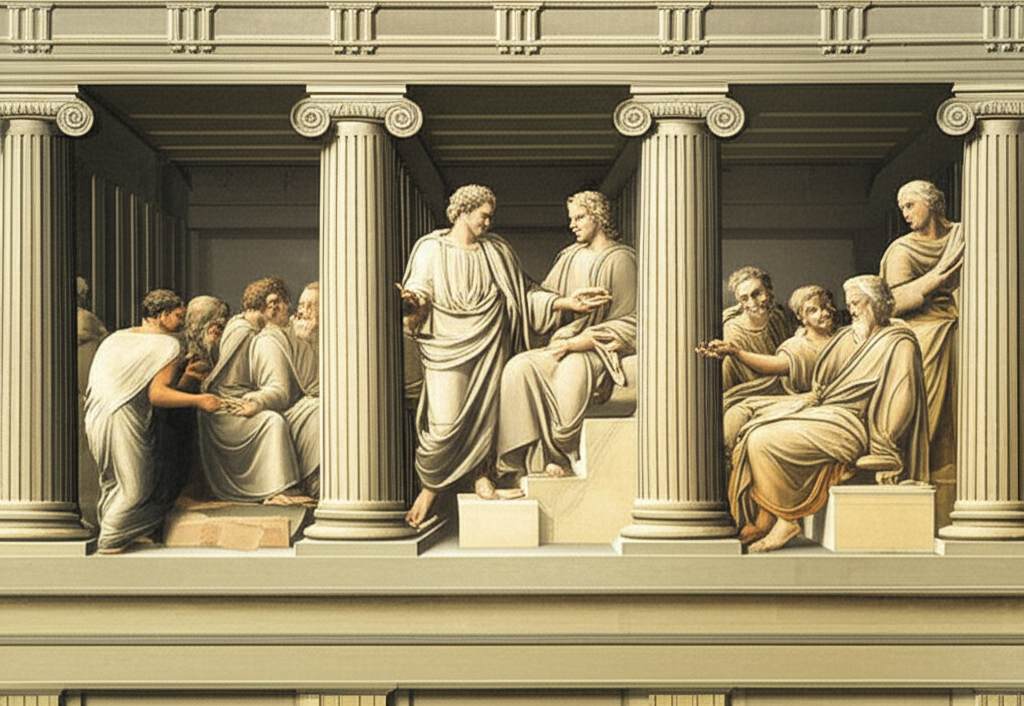
Tactics of Oligarchic Rhetoric
Oligarchies employ a range of rhetorical strategies to secure their position and manage public perception. These tactics often operate on both rational and emotional levels, appealing to core human desires and fears.
1. Framing Narratives and Justifications
Oligarchic rhetoric excels at crafting compelling stories that legitimize their rule. These narratives often revolve around:
- Meritocracy: The idea that the ruling few are in power due to their superior intelligence, virtue, or competence. This justifies their wealth and influence as a natural outcome of their exceptional abilities.
- Stability and Order: Portraying themselves as the sole guarantors of peace and economic prosperity, arguing that any challenge to their rule would lead to chaos or decline.
- Tradition and Heritage: Emphasizing historical continuity and the wisdom of past generations, suggesting that their system is a time-tested and proven model.
- National Interest: Equating the interests of the ruling elite with the interests of the entire nation, blurring the lines between private gain and public good.
2. Controlling the Discourse and Information
A key aspect of oligarchic rhetoric is the active management of public discussion. This includes:
- Limiting Debate: Narrowing the scope of acceptable political discussion, marginalizing alternative viewpoints, and dismissing critics as radical or unpatriotic.
- Gatekeeping Information: Controlling media outlets, academic institutions, and cultural narratives to ensure that the dominant viewpoint is consistently reinforced.
- Cultivating Expertise: Elevating specific "experts" who articulate and validate the oligarchic perspective, lending an air of scientific or objective authority to their claims.
3. Emotional Appeals and Division
Beyond rational arguments, oligarchic rhetoric frequently taps into powerful emotions:
- Fear: Instilling fear of external threats, economic collapse, or social disorder if the current order is disrupted.
- Aspiration: Promising a vision of future prosperity or national greatness that can only be achieved under their guidance.
- Division: Creating "us vs. them" narratives, often pitting different segments of society against each other to distract from the core power imbalances.
4. Euphemism and Obfuscation
The careful choice of language can obscure harsh realities or self-serving policies:
- "Fiscal Responsibility" instead of austerity measures that disproportionately affect the poor.
- "Market Freedoms" to justify deregulation that benefits large corporations.
- "National Security" to rationalize increased surveillance or suppression of dissent.
This use of euphemism allows oligarchs to maintain a veneer of beneficence while pursuing policies that primarily serve their own class interests.
The Philosophical Counter-Narrative
From the Socratic method of relentless questioning to Plato's critique of timocracy and oligarchy in The Republic, philosophy has consistently provided a counter-narrative to the persuasive machinations of entrenched power. The pursuit of truth, the rigorous examination of arguments, and the commitment to justice stand as bulwarks against the seductive but ultimately deceptive rhetoric of oligarchy. By understanding how language is used to construct and maintain unjust forms of government, we equip ourselves with the tools for critical engagement and the potential for meaningful reform.
YouTube: "Plato's Republic Oligarchy"
YouTube: "Aristotle Rhetoric Political Persuasion"
📹 Related Video: What is Philosophy?
Video by: The School of Life
💡 Want different videos? Search YouTube for: "The Rhetoric of Oligarchy philosophy"