

The Subtle Chains: Unpacking the Rhetoric of Oligarchy
Summary: At its core, an oligarchy represents a form of government where power resides with a select few, typically defined by wealth, family, or military might. To maintain this concentrated power, oligarchic systems heavily rely on sophisticated rhetoric – the art of persuasion – to shape public perception, legitimize their rule, and deflect dissent. This article delves into how language becomes a primary instrument for oligarchs, twisting narratives and framing realities to perpetuate their dominance, drawing insights from the timeless observations found within the Great Books of the Western World.
The Unseen Hand: Language as the Architect of Power
From the ancient polis to the modern state, the question of who rules and by what right has preoccupied political philosophy. While brute force can establish dominion, it is the subtle art of rhetoric that truly entrenches and legitimizes any form of government, none more so than an oligarchy. As Daniel Fletcher, I find myself drawn to the timeless observation that power, when wielded by the few, rarely announces itself with a decree of absolute authority; rather, it whispers its legitimacy through carefully constructed narratives, shaping the very fabric of public thought.
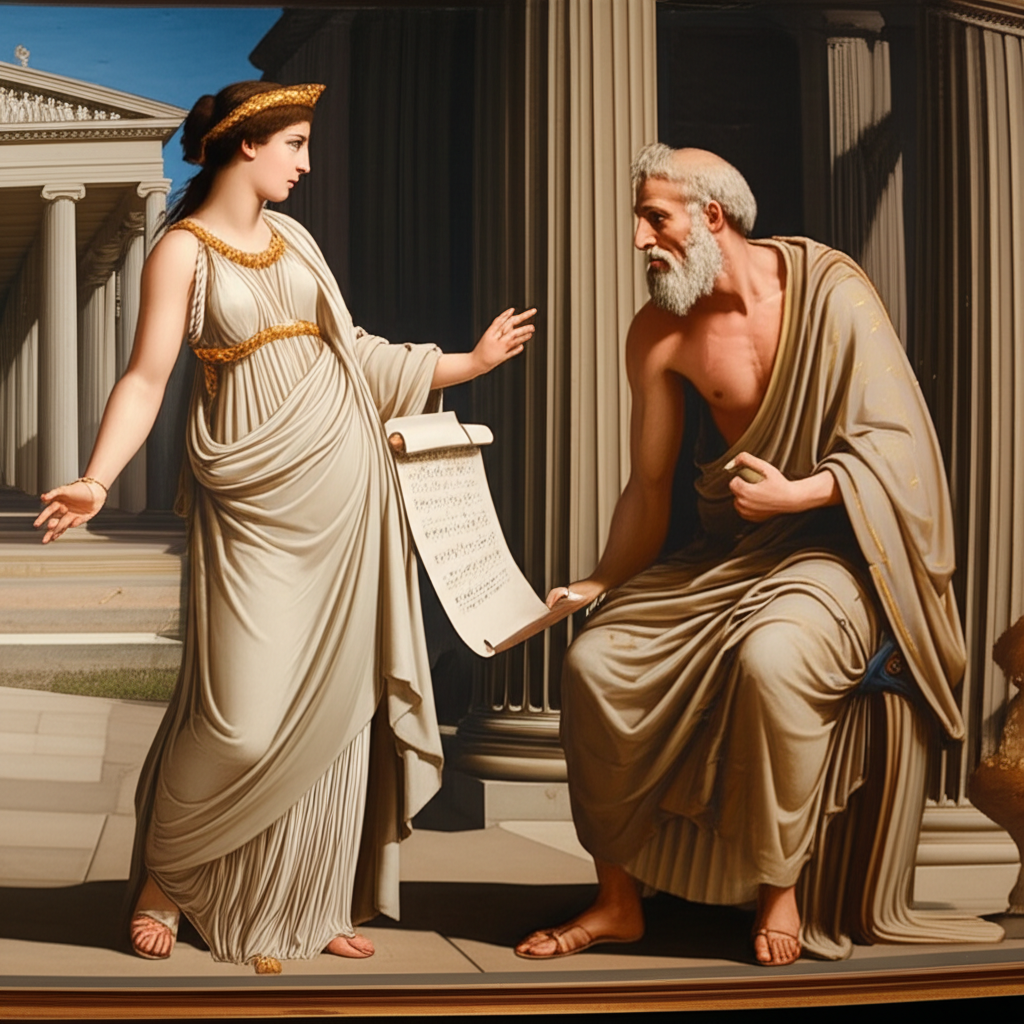
The Great Books of the Western World illuminate this dynamic with remarkable clarity. Plato, in his Republic, dissects the soul of the oligarchic man, driven by insatiable desire for wealth, and implicitly, the arguments such a man would use to justify his accumulation. Aristotle, in his Politics, explicitly defines oligarchy as rule by the wealthy few, for their own benefit, and explores the various constitutional forms it can take, noting how different forms of language are employed to maintain these structures.
Defining the Terms: Oligarchy and its Rhetorical Arsenal
To understand the rhetorical strategies employed by an oligarchy, we must first establish clear definitions.
- Oligarchy: Derived from the Greek oligos (few) and arkhein (to rule), it signifies a government where political power is concentrated in the hands of a small, privileged class. This privilege is often, though not exclusively, based on wealth, social status, or military control. Aristotle distinguished it from aristocracy, where the few rule for the common good, by stating that oligarchs rule purely for their own gain.
- Rhetoric: As defined by Aristotle, rhetoric is "the faculty of observing in any given case the available means of persuasion." It encompasses not just eloquent speech, but the strategic use of language, imagery, and argumentation to influence beliefs, attitudes, and actions. In the context of oligarchy, rhetoric is not merely decorative; it is foundational to its survival.
The insidious power of oligarchic rhetoric lies in its ability to transform self-interest into public virtue, private gain into societal benefit, and concentrated power into natural order.
The Mechanisms of Oligarchic Persuasion
Oligarchies deploy a range of rhetorical techniques to secure and maintain their position. These are not always overt declarations, but often subtle shifts in language and framing that permeate public discourse.
-
Framing Wealth as Merit and Virtue:
- Argument: The wealthy are presented as inherently more capable, intelligent, or virtuous, their success a testament to their superior character or divine favour.
- Effect: This justifies their leadership and dismisses criticisms of inequality, implying that those without wealth simply lack the necessary merit.
- Example: Phrases like "job creators," "wealth generators," or "the engines of the economy" subtly elevate the wealthy above the general populace, implying their indispensable role.
-
Appeals to Order and Stability:
- Argument: The existing oligarchic structure, despite its inequalities, is portrayed as the only bulwark against chaos, instability, or external threats.
- Effect: This instills fear of change and discourages challenges to the status quo, presenting the oligarchs as necessary guardians.
- Example: Warnings against "radicalism," "socialist experiments," or "populist unrest" are used to paint any alternative government as dangerous.
-
Redefinition of Key Terms:
- Argument: Fundamental concepts like "freedom," "justice," or "equality" are re-interpreted to align with oligarchic interests. "Freedom" might become freedom from regulation for corporations, rather than individual liberty; "justice" might emphasize property rights over social equity.
- Effect: This co-opts powerful ideals, emptying them of their broader meaning and making them serve the agenda of the few.
- Example: "Fiscal responsibility" often means cutting social programs while protecting tax breaks for the wealthy.
-
Exclusionary Language and Othering:
- Argument: Divisions are created between the "responsible" citizens (often aligned with the oligarchs) and various "others" – the poor, immigrants, dissidents – who are blamed for societal problems.
- Effect: This diverts attention from structural inequalities and consolidates support among the favored groups.
- Example: Attributing economic woes solely to "lazy workers" or "foreign competition" rather than systemic issues.
-
Cultivation of Apathy and Disengagement:
- Argument: Political engagement is presented as complex, futile, or even dirty, encouraging citizens to leave governance to the "experts" (i.e., the oligarchs).
- Effect: A disengaged populace is less likely to question authority or demand accountability.
- Example: The constant refrain that "politics is just too complicated" or "all politicians are the same."
A Table of Rhetorical Strategies
| Strategy | Description | Oligarchic Objective |
|---|---|---|
| Meritocratic Facade | Presenting wealth and power as earned through superior talent or effort. | Legitimizes inequality; justifies elite rule. |
| Fear of Chaos | Warning against the instability and dangers of alternative political systems or social change. | Suppresses dissent; maintains the status quo. |
| Semantic Re-framing | Re-defining core democratic values (e.g., freedom, justice) to serve elite interests. | Co-opts powerful ideals; distorts public understanding. |
| Scapegoating | Blaming marginalized groups or external factors for societal problems. | Diverts blame from the ruling class; unifies support through common antagonism. |
| Complexification | Portraying government and economics as too intricate for the average citizen to understand or influence. | Fosters political apathy; ensures public deference to "expert" (elite) decisions. |
The Enduring Challenge of Critical Literacy
The insights from the Great Books remind us that the struggle against oligarchic tendencies is perennial. Plato's description of oligarchy's decline into tyranny, and Aristotle's meticulous classification of political forms, are not merely historical curiosities but profound warnings. They underscore the critical importance of language in shaping our political reality and the necessity of philosophical inquiry to pierce through the veil of persuasive rhetoric.
As citizens, our primary defense against the subtle chains of oligarchic government is critical literacy – the ability to analyze and deconstruct the rhetoric that bombards us daily. To question who benefits from a particular narrative, whose interests are served by certain definitions, and what alternative perspectives are being silenced or dismissed. Only through such vigilant engagement can we hope to preserve genuinely democratic ideals against the perennial allure of rule by the few.
YouTube:
- "Plato's Republic: Oligarchy and Tyranny Explained"
- "Aristotle's Politics: Forms of Government and the Role of Rhetoric"
📹 Related Video: What is Philosophy?
Video by: The School of Life
💡 Want different videos? Search YouTube for: "The Rhetoric of Oligarchy philosophy"