

The Intricate Dance: Unpacking the Relationship Between Language and Thought
At the heart of human experience lies a profound and often perplexing relation between what we say, what we hear, and what we truly think. Is language merely a tool for expressing our pre-formed ideas, or does it fundamentally shape the very architecture of our mind? This article delves into this enduring philosophical question, exploring how these two cornerstones of human cognition are inextricably linked, influencing, and defining each other in a continuous, dynamic interplay. From ancient inquiries into the nature of meaning to modern linguistic theories, we will navigate the multifaceted ways in which words give form to thought, and thought seeks expression through words.
The Indivisible Duo: Language and Thought's Fundamental Interplay
The question of how language and thought relate is not a modern one; it has captivated thinkers for millennia. To consider one without the other is to miss a crucial dimension of human understanding.
Historical Perspectives: Ancient Roots of a Complex Idea
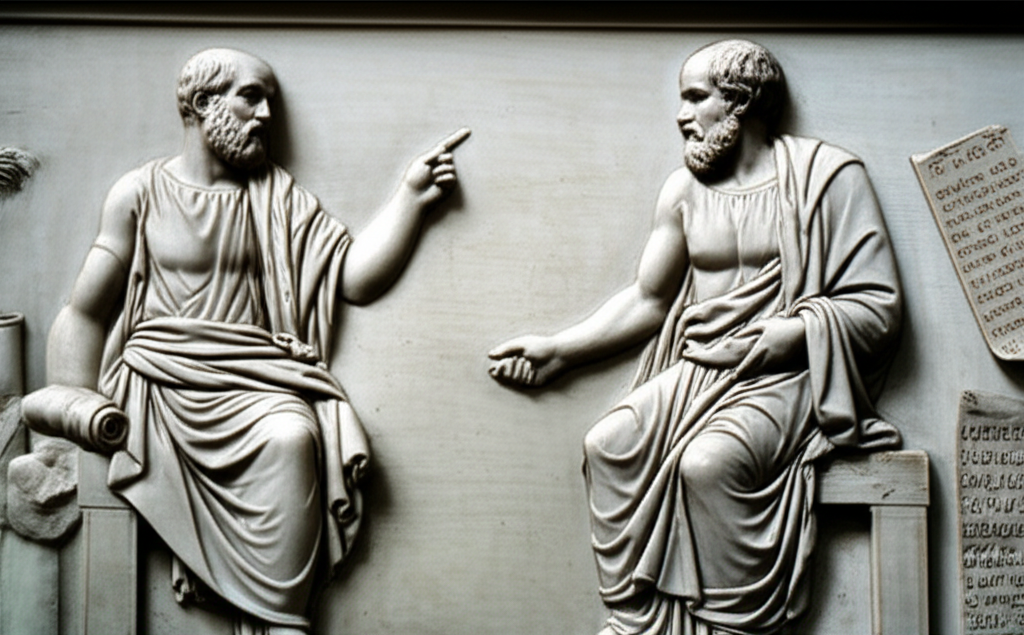
The philosophers of antiquity, whose works populate the Great Books of the Western World, grappled with the nature of ideas and their expression. Plato, in dialogues like the Cratylus, pondered whether words have an inherent connection to the objects they represent or if their meaning is purely conventional. For Plato, true ideas (Forms) existed independently of language, which merely served as an imperfect means to point towards them. Aristotle, on the other hand, with his rigorous system of logic and categories, saw language as a structured reflection of thought, where words (nouns, verbs) directly mirrored the underlying reality and the way our mind apprehends it. His work on rhetoric and poetics further illustrates the power of language not just to convey, but also to persuade and evoke, suggesting a deeper relation than mere transcription.
Defining the Terms: What Do We Mean by 'Language' and 'Thought'?
Before we proceed, it's crucial to establish a working understanding of our key terms:
- Language: A system of conventional spoken, manual (signed), or written symbols by means of which human beings, as members of a social group and participants in its culture, express themselves. This includes its grammar, syntax, and semantics.
- Thought: The process of thinking; cognition; the formation of ideas, reasoning, judgment, and imagination. It encompasses everything that goes on in our mind, from abstract problem-solving to sensory perceptions and emotions.
The relation we seek to explore is whether these two are distinct entities that merely interact, or if they are so deeply intertwined that one cannot fully exist or develop without the other.
Language as the Architecture of the Mind
One prominent view suggests that language is far more than a communication tool; it actively structures and shapes our internal world, profoundly influencing how we perceive, categorize, and reason.
The Sapir-Whorf Hypothesis: Language Shaping Reality
Perhaps one of the most provocative perspectives on this relation is the Sapir-Whorf hypothesis, which posits that the structure of a language affects its speakers' worldview or cognition. Strong versions suggest that language determines thought, while weaker versions argue it merely influences it. For instance, languages with different ways of categorizing colors might lead speakers to perceive color differences differently. Similarly, the presence or absence of specific grammatical structures (e.g., tenses, gendered nouns) could subtly guide the mind's attention and conceptual framework, influencing how ideas are formed and held.
Internal Monologue and the Formation of Ideas
Consider our own inner voice, the constant stream of language that accompanies much of our conscious mind. This internal monologue isn't just a recitation of pre-existing thoughts; it's often the very medium through which we formulate, refine, and connect ideas. Without the linguistic tools to articulate a complex concept, would that concept be fully formed or even accessible to our consciousness? Language provides the labels, categories, and logical connectors that allow us to build intricate mental models and engage in abstract reasoning.
How Language Structures Thought:
- Categorization: Words provide labels that group similar objects or concepts, allowing us to generalize and simplify the world.
- Abstraction: Language enables us to move beyond concrete experiences to discuss abstract ideas like justice, freedom, or time.
- Memory: Linguistic encoding aids in memory retrieval; putting experiences into words helps us remember them.
- Problem-Solving: Articulating a problem often involves breaking it down into linguistic components, making it amenable to logical steps.
- Reasoning: Deductive and inductive reasoning heavily rely on linguistic structures to formulate premises, draw inferences, and construct arguments.
Thought as the Genesis of Language
Conversely, the opposing view emphasizes that thought precedes language, suggesting that our mind is capable of complex ideas and reasoning even before or independently of linguistic expression.
Pre-linguistic Thought: Do We Think Before We Speak?
Many argue that infants, before acquiring language, demonstrate sophisticated thought processes—recognizing faces, understanding cause and effect, and forming intentions. This suggests a form of non-linguistic mind where ideas are present without words. Similarly, artists, musicians, and mathematicians often describe a process where abstract concepts or intuitions take shape in their mind before they are translated into a specific medium, whether it be a painting, a melody, or a mathematical equation. Here, language (or the chosen medium) becomes the vessel, not the creator, of the initial idea.
The Drive to Express: From Inner Idea to Outer Word
The very impulse to communicate stems from a desire to share an internal state, an idea, or a feeling that originates in the mind. We seek words to convey what we are thinking, to bridge the gap between our subjective experience and the shared objective world. The richness and diversity of human language across cultures can be seen as a testament to the myriad ways the human mind seeks to express its unique perceptions and insights. This suggests that the fundamental relation is one where an internal cognitive process drives the development and use of external linguistic systems.
Key Philosophical Debates and Perspectives
The dynamic relation between language and thought has been a fertile ground for philosophical debate, with various schools offering distinct perspectives.
Rationalism vs. Empiricism: Different Lenses on the Relation
- Rationalists (e.g., René Descartes), often emphasized innate ideas and the power of pure reason, suggesting that the mind possesses fundamental truths independent of sensory experience or language. For Descartes, the very act of thinking ("Cogito, ergo sum") was primary, and language was a means to articulate these self-evident truths.
- Empiricists (e.g., John Locke, David Hume), conversely, argued that all ideas originate from sensory experience. Locke, in his Essay Concerning Human Understanding, described language as a system of "arbitrary signs" used to communicate these ideas derived from experience. While acknowledging the utility of language, empiricists often viewed it as a secondary phenomenon, a tool for organizing and transmitting ideas that were fundamentally pre-linguistic in their origin.
Wittgenstein and the Language-Game: Meaning as Use
Later philosophers, notably Ludwig Wittgenstein, offered a radical shift in perspective. In his Philosophical Investigations, Wittgenstein argued against the notion of a private mind or private language. He proposed the concept of "language-games," asserting that the meaning of words is not derived from some internal idea they represent, but from their use within specific social contexts and forms of life. For Wittgenstein, language is inherently public and social, and our mind's ability to think and form ideas is deeply embedded within these shared linguistic practices. The relation here is not one of separate entities interacting, but of an intrinsic fusion where thought is shaped by the rules and possibilities of the language-game we are playing.
The Problem of Private Language and the Shared Mind
Wittgenstein's insights lead to the "private language argument," which challenges the very possibility of a language that only one individual can understand. If meaning is determined by public rules and shared practices, then the notion of a purely internal idea that is completely uncommunicable through language becomes problematic. This highlights the social dimension of the relation between language and thought, suggesting that our individual mind is, in many ways, a product of the collective linguistic environment we inhabit.
Practical Implications and Modern Insights
Understanding the intricate relation between language and thought has implications far beyond abstract philosophy.
Cognitive Science and Neuroscience: Bridging Philosophy and Science
Modern cognitive science and neuroscience continue to explore these questions empirically, investigating how linguistic processing occurs in the brain and its correlation with various cognitive functions. Studies on bilingualism, for example, often reveal differences in cognitive flexibility and problem-solving abilities, suggesting that the structure of one's language can indeed influence the mind's operational modes.
The Ethics of Language: How Words Shape Our World
The profound influence of language on thought underscores the ethical responsibility inherent in communication. The words we choose, the narratives we construct, and the metaphors we employ don't just reflect our ideas; they actively shape the ideas of others, influencing perception, belief, and action. This relation demands careful consideration of how language can be used to foster understanding, or conversely, to create division and misunderstanding.
Conclusion
The relation between language and thought is not a simple linear connection but a rich, complex, and reciprocal dance. While thought can exist in pre-linguistic forms, seeking expression through words, language undeniably provides the framework, the tools, and often the very impetus for our most sophisticated ideas. From the ancient Greeks pondering the nature of meaning to modern philosophers analyzing language-games, the journey into this relation reveals the profound ways in which our capacity for speech and our capacity for cognition are two sides of the same human coin. To truly understand the mind is to understand its deep and abiding connection to language.
📹 Related Video: PLATO ON: The Allegory of the Cave
Video by: The School of Life
💡 Want different videos? Search YouTube for: ""Sapir-Whorf Hypothesis explained""
📹 Related Video: What is Philosophy?
Video by: The School of Life
💡 Want different videos? Search YouTube for: ""Wittgenstein Language Games Philosophy""