

The intricate dance between language and thought stands as one of philosophy's most enduring and fascinating puzzles. Far from being mere separate functions of the mind, they exist in a profound and often reciprocal relation, each shaping and enabling the other. This article delves into the historical and contemporary perspectives on how our capacity for symbolic expression intertwines with our ability to form ideas, to reason, and to perceive the world, drawing insights from the rich tapestry of the Great Books of the Western World.
The Indissoluble Link: Language, Thought, and the Human Mind
At the heart of human experience lies the profound connection between how we articulate and how we conceive. Is language merely a tool for expressing pre-existing ideas, or does it fundamentally structure and even limit our very capacity for thought? This is a question that has occupied philosophers for millennia, from the ancient Greeks who pondered the nature of logos to modern linguists and cognitive scientists. The truth, as we shall explore, lies in a dynamic and often inseparable relation where the mind utilizes language not just as a conduit, but as a crucible for the formation and refinement of complex ideas.
The Primacy of the Idea: Thought Before Word?
For many classical thinkers, the idea seemed to hold a certain precedence. Plato, for instance, envisioned a realm of perfect Forms, accessible through reason, which language could only imperfectly grasp and describe. Aristotle, too, saw language as a representation of mental experiences, which in turn were likenesses of things. In this view, the mind first conceives of an idea—a concept, a perception, an emotion—and then seeks the appropriate linguistic form to convey it.
- Plato's Forms: Ideas as eternal, perfect archetypes, independent of human language.
- Aristotle's Categories: Language as a system for classifying and articulating existing realities and mental concepts.
- Locke's Empiricism: Ideas derived from sensory experience and reflection, with words serving as "sensible marks" for these ideas.
This perspective suggests that while language is crucial for communication and shared understanding, the foundational act of thought can occur prior to or even independently of its linguistic expression. The mind is seen as the primary generator of ideas, with language as its faithful, if sometimes flawed, servant.
Language as the Architect of Thought: Shaping the Mind's Landscape
Conversely, a powerful counter-argument posits that language is not merely a transparent window to thought, but rather an active force that shapes and structures our very cognitive processes. This view gained prominence in the 20th century with figures like Benjamin Lee Whorf and Edward Sapir, whose linguistic relativity hypothesis (often called the Sapir-Whorf hypothesis) suggested that the grammatical structures and vocabulary of a language influence how its speakers perceive and conceptualize reality.
Consider the differences in how various languages categorize colors, describe time, or express spatial relations. Does a language with fewer distinct color terms lead its speakers to perceive fewer color distinctions? While extreme determinism (that language entirely dictates thought) has largely been disproven, the weaker form of the hypothesis—that language influences thought—finds considerable support.
Table: Contrasting Perspectives on Language and Thought
| Philosophical Viewpoint | Primary Focus | Relation | Key Implications |
|---|---|---|---|
| Platonism/Classical Idealism | Independent Ideas (Forms) | Language represents pre-existing ideas; imperfect conduit. | Thought can transcend language; truth exists beyond words. |
| Empiricism (Locke) | Sensory Experience & Reflection | Language labels and communicates ideas derived from experience. | Language can be ambiguous; clarity of ideas is paramount. |
| Linguistic Relativity | Structure & Vocabulary of Language | Language shapes and influences cognitive categories and perception. | Different languages lead to different ways of thinking about the world. |
| Wittgensteinian Analysis | Language Games & Use | Meaning is found in language's use within a form of life. | The limits of my language are the limits of my world (and thought). |
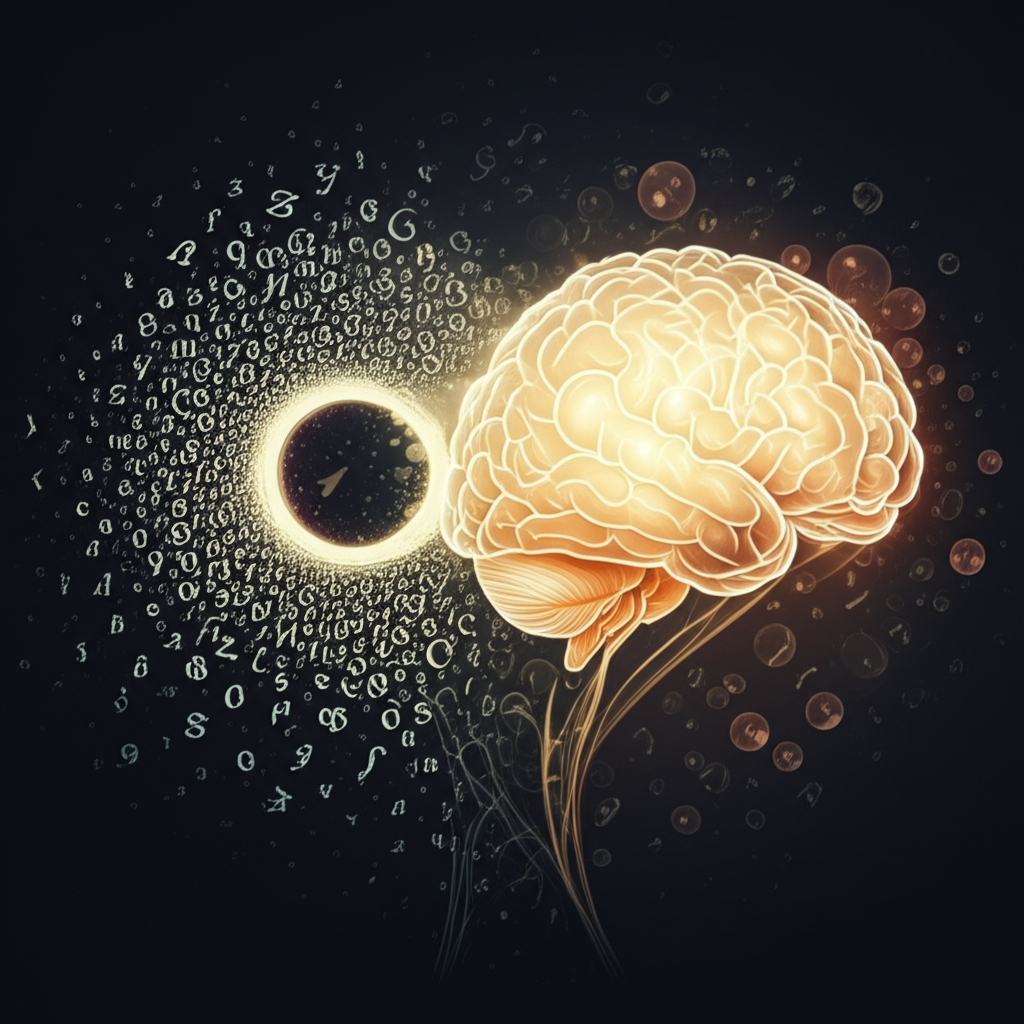
The Dialectical Dance: A Reciprocal Relation
Perhaps the most compelling understanding lies in a synthesis: language and thought engage in a constant, dynamic, and reciprocal relation. The mind does not simply think and then speak, nor does language entirely pre-determine what the mind can conceive. Instead, they co-evolve.
- Language as a Tool for Abstract Thought: Without language, our ability to form complex, abstract ideas—concepts like justice, freedom, or infinity—would be severely limited. Language provides the scaffolding necessary to build and manipulate these intricate mental constructs. It allows us to hold multiple ideas in our mind simultaneously, to compare them, and to reason about them.
- Internal Monologue: Much of our thought occurs as an internal dialogue, a "speaking to oneself." This internal language is not merely a report of our ideas, but an active process of forming, testing, and refining them. It is where we debate, plan, and analyze, using the very structures and vocabulary of our native tongue.
- The Social Dimension of Thought: Language is inherently social. Through communication, we share ideas, learn from others, and collectively build knowledge. This shared linguistic environment enriches individual thought and allows for the development of complex cultural and scientific frameworks.
Philosophers like Ludwig Wittgenstein, particularly in his later work, emphasized that the meaning of words is found in their use within "language games" and "forms of life." For Wittgenstein, understanding a concept is inextricably linked to understanding how the relevant words are used. This suggests that our conceptual framework—our way of thinking about the world—is deeply embedded in and constituted by our linguistic practices. The very possibility of having certain ideas is tied to the existence of the language that allows us to articulate them.
Cultivating the Mind Through Language
The profound relation between language and thought has significant implications for education, communication, and our understanding of human consciousness. To cultivate a rich and nuanced mind is, in many ways, to cultivate a rich and nuanced language. Expanding one's vocabulary, engaging with complex grammatical structures, and exploring diverse linguistic expressions inevitably broadens the scope and depth of one's thought.
The Great Books offer a testament to this truth. Reading the intricate arguments of Aristotle, the poetic dialogues of Plato, the rigorous logic of Descartes, or the social critiques of Rousseau, we don't just absorb ideas; we engage with the very linguistic frameworks that gave them birth. We learn not just what they thought, but how they thought, often through the meticulous crafting of their prose.
Ultimately, the mind and language are two sides of the same coin, locked in an eternal embrace. To understand one is to illuminate the other, revealing the miraculous capacity of humanity to both conceive and articulate the world around us, and within us.
📹 Related Video: What is Philosophy?
Video by: The School of Life
💡 Want different videos? Search YouTube for: ""Language and thought philosophy debate" or "Wittgenstein language games explained""
📹 Related Video: KANT ON: What is Enlightenment?
Video by: The School of Life
💡 Want different videos? Search YouTube for: ""Sapir-Whorf hypothesis documentary" or "Does language shape thought?""