

The Intricate Dance: Exploring the Relation Between Language and Thought
The relation between language and thought is one of philosophy's most enduring and fascinating puzzles. Is language merely a tool we use to express our pre-existing ideas, or does it fundamentally shape the very structure of our mind and the way we think? This article delves into this profound interplay, exploring how these two seemingly distinct human capacities are, in fact, deeply intertwined, drawing insights from philosophical traditions found within the Great Books of the Western World and beyond. We’ll examine historical perspectives, the dynamic ways they influence each other, and the ongoing debate about their primacy.
Unpacking the Core Question: A Philosophical Journey
At its heart, the inquiry into the relation between language and thought asks whether our cognitive landscape is constructed independently of the words we use, or if our linguistic frameworks dictate the boundaries and pathways of our understanding. This isn't just an academic exercise; it touches upon how we perceive reality, form concepts, and communicate our innermost ideas.
Historical Lenses on the Interplay
Philosophers throughout history have grappled with this complex relation, offering diverse perspectives that continue to inform our understanding:
- Ancient Roots: Language as a Reflection of Thought
- Plato and the Forms: For Plato, as explored in works like The Republic, true ideas (Forms) exist independently of both mind and language. Language, in this view, is an imperfect attempt to describe these perfect, eternal realities accessible through pure thought. The mind grasps the Forms, and language then tries to articulate that grasp.
- Aristotle's Logic: Aristotle, whose works on logic and categories are foundational, saw language as directly mirroring the structure of thought and reality. His categories (substance, quantity, quality, etc.) are both categories of being and categories of predication in language, suggesting a direct relation where language is a logical expression of how the mind organizes the world.
- Early Modern Perspectives: Language as a Vehicle for Ideas
- John Locke's Empiricism: In his Essay Concerning Human Understanding, Locke posited that all our ideas originate from sensory experience and reflection. Words, for Locke, are "sensible marks of ideas," serving primarily as instruments for communication. The mind forms ideas, and language provides labels for these ideas, allowing them to be shared. The relation here is one of representation.
- Immanuel Kant's Categories: Kant, while acknowledging the role of experience, argued that the mind actively structures our experience through innate categories of understanding. While not directly about language, his framework implies that our mind's inherent structure dictates how we perceive and conceptualize, and language would then naturally reflect these structures.
- The Linguistic Turn: Language as a Shaper of Thought
- Ludwig Wittgenstein: The 20th century brought a significant shift. Wittgenstein, particularly in his later work Philosophical Investigations, argued that language is not merely a tool but is deeply embedded in our forms of life. Our concepts and even our understanding of reality are shaped by the "language games" we play. The relation becomes constitutive; language doesn't just describe thought, it helps create it.
- Sapir-Whorf Hypothesis: This hypothesis, while controversial, proposes that the structure of a language affects its speakers' worldview or cognition. Different languages lead to different ways of thinking about time, space, and causality, suggesting a strong influence of language on the mind.
The Dynamic Interplay: How Language and Thought Co-Evolve
The modern consensus often leans towards a more dynamic and reciprocal relation, where language and thought continuously influence and refine each other.
How Language Shapes Thought
- Categorization and Conceptualization: Language provides us with ready-made categories (e.g., "chair," "justice," "freedom") that allow us to organize and make sense of the vastness of experience. Without these linguistic labels, our mind would struggle to group disparate perceptions into coherent ideas.
- Abstract Reasoning: Complex abstract ideas like mathematics, philosophy, or ethics are almost impossible to conceive without the sophisticated structures of language. Language allows us to manipulate symbols, construct arguments, and develop intricate systems of thought that go far beyond immediate sensory input.
- Memory and Learning: Language acts as a mnemonic device, helping us encode and retrieve information. The act of verbalizing an idea or concept often solidifies it in our mind, making it more accessible for future thought.
- Cultural Transmission: Through language, we inherit a vast reservoir of collective thought, knowledge, and cultural understanding. This inherited linguistic framework profoundly influences how we perceive the world and form our own ideas.
How Thought Shapes Language
- Expression of the Mind: Fundamentally, language serves as the primary means by which we express our internal ideas, emotions, and intentions. Our mind generates thought, and language provides the vehicle for its articulation.
- Innovation and Evolution: As humanity develops new ideas, discovers new phenomena, or creates new technologies, language evolves to accommodate these changes. New words are coined, existing terms acquire new meanings, and linguistic structures adapt to express novel concepts.
- Logical Structure: The inherent logic and coherence of human thought are often reflected in the grammatical rules and syntax of language. The way we structure sentences, connect clauses, and build arguments often mirrors the logical flow of our mind's reasoning processes.
- Problem Solving: The act of thinking through a problem, forming hypotheses, and evaluating solutions often involves internal language or "inner speech." Our mind uses linguistic structures to navigate complex problems and arrive at new ideas.
The Unresolved Question: Which Comes First?
The question of whether language precedes thought or vice-versa remains a subject of intense debate.
- Pre-linguistic Thought: Evidence from infants, pre-verbal children, and animals suggests that some form of thought or cognition can exist without fully developed language. They can solve problems, recognize patterns, and even demonstrate emotional intelligence. This supports the notion that the mind can generate ideas independently of language.
- Language as a Prerequisite for Complex Thought: However, truly abstract, reflective, and self-aware thought—the kind that defines much of human consciousness—is often seen as inextricably linked to language. Can one truly ponder philosophical questions, construct scientific theories, or reflect on their own mortality without the scaffolding that language provides?
The prevailing view suggests a continuous feedback loop: basic thought might exist without language, but language vastly expands the capacity and complexity of human thought. In turn, our evolving ideas and cognitive needs drive the development and refinement of language.
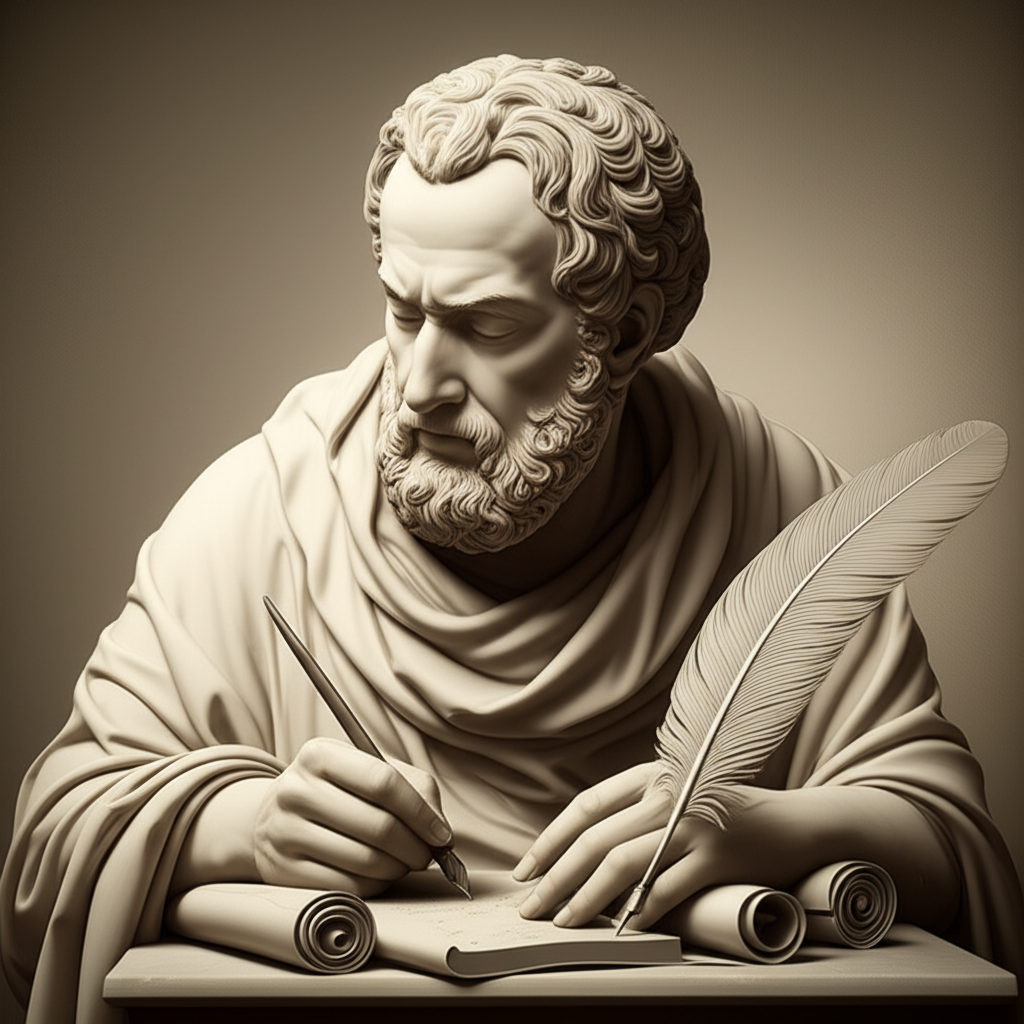
Conclusion: A Symbiotic Relation
The relation between language and thought is not a simple cause-and-effect but a profound, symbiotic, and dynamic interplay. From the foundational texts of the Great Books of the Western World to contemporary cognitive science, philosophers have continually sought to understand how these two pillars of human experience construct our reality. Language is more than just a tool for the mind; it is an integral part of how we form ideas, perceive the world, and connect with others. To truly understand one, we must always consider its intricate dance with the other.
YouTube Video Suggestions:
-
📹 Related Video: ARISTOTLE ON: The Nicomachean Ethics
Video by: The School of Life
💡 Want different videos? Search YouTube for: ""Wittgenstein language games thought""
2. ## 📹 Related Video: What is Philosophy?
Video by: The School of Life
💡 Want different videos? Search YouTube for: ""Sapir Whorf hypothesis explained philosophy""