

The Enduring Inquiry: God, the World, and Our Place Within
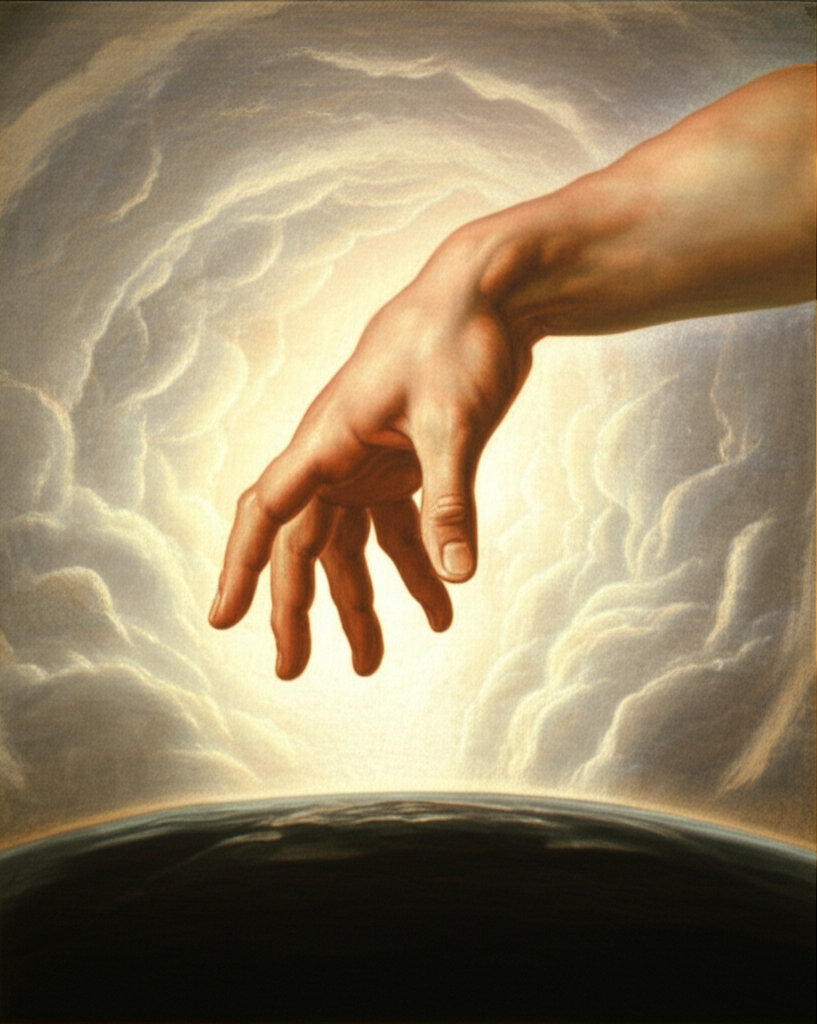
The relationship between God and the world stands as one of philosophy and theology's most profound and persistent questions. It probes the very nature of existence, causality, and purpose, shaping our understanding of reality, morality, and human significance. From ancient creation myths to sophisticated metaphysical systems, thinkers across millennia, many represented in the Great Books of the Western World, have grappled with how a divine entity relates to the material world we inhabit. This article explores various perspectives on this fundamental relation, examining concepts of transcendence, immanence, creation, and divine providence, and highlighting their enduring impact on human thought.
Unpacking the Divine-Cosmic Link
At its core, the question asks: Is God separate from the world, intertwined with it, or something else entirely? The answers offered by different philosophical and religious traditions paint a rich tapestry of thought, each with unique implications for how we perceive ourselves and the cosmos. Understanding this relation is not merely an academic exercise; it profoundly influences our ethical frameworks, our sense of meaning, and our approach to life's ultimate mysteries.
Diverse Perspectives on the God-World Relation
Philosophers and theologians have conceived of the relation between God and the world in numerous ways. These perspectives often hinge on how one defines the nature of the divine and the nature of reality itself.
- Creation Ex Nihilo: This view, prominent in Abrahamic theology (Judaism, Christianity, Islam), posits that God created the world "out of nothing" (ex nihilo). God is entirely transcendent, distinct from and sovereign over creation. The world is dependent on God, but God is not dependent on the world. Thinkers like St. Augustine and St. Thomas Aquinas, whose works are foundational in the Great Books, extensively explored this concept, emphasizing divine omnipotence and goodness.
- Pantheism: From the Greek "pan" (all) and "theos" (God), pantheism identifies God with the world itself. God is everything, and everything is God. There is no distinction between creator and creation. Baruch Spinoza, a key figure in rationalism, famously articulated a pantheistic view, arguing for a single, infinite substance (God or Nature) of which all things are modes.
- Panentheism: This perspective suggests that the world is in God, but God is greater than and not exhausted by the world. God contains the world, yet also transcends it. It's often described as God being like the soul of the world, or the ocean containing all its waves. This offers a middle ground between strict transcendence and pure immanence.
- Deism: Popular during the Enlightenment, deism proposes that God created the world and set it in motion according to natural laws, but then largely withdrew, allowing the world to operate without divine intervention. God is seen as a "watchmaker" who designs and builds a perfect clock, then leaves it to run on its own. This view often emphasizes reason and natural law over revelation.
- Process Theology: A more modern approach, process theology views God not as static and immutable, but as dynamic and evolving, intimately involved in the ongoing creative process of the world. God is seen as persuasive rather than coercive, influencing events rather than strictly determining them, and is affected by the world's experiences.
Key Philosophical Concepts in the Divine-World Relation
Understanding the nuances of the God-world relation requires delving into several interconnected philosophical concepts.
Transcendence vs. Immanence
- Transcendence: This refers to God's existence beyond and independent of the material world. A transcendent God is not bound by space, time, or the laws of nature that govern creation. This emphasizes God's otherness, majesty, and ultimate unknowability in certain aspects.
- Immanence: This concept describes God's presence within and pervading the world. An immanent God is actively involved in creation, sustaining it, and perhaps even manifesting through it. This highlights God's closeness, accessibility, and active participation in human history and natural processes.
Many traditions attempt to balance both, asserting that God is both beyond and within the world.
Divine Providence and Free Will
The relation between God's governance of the world (divine providence) and human freedom is a perennial philosophical puzzle. If God is omniscient and omnipotent, does this negate human free will?
- Determinism: Some interpretations suggest that God's absolute power and knowledge mean all events, including human choices, are predetermined.
- Compatibilism: Others argue that divine providence and human freedom are compatible. God might foreknow all choices without causing them, or God might create a world where genuine freedom is possible within a larger divine plan. This was a significant topic for thinkers like Boethius and Augustine.
The Problem of Evil
Perhaps the most challenging aspect of the God-world relation for many is the existence of suffering and evil in a world supposedly created and governed by an all-good, all-powerful God.
- Theodicies: These are attempts to reconcile the existence of evil with the attributes of God. Common arguments include:
- Free Will Defense: Evil is a consequence of human freedom, which God permits for a greater good.
- Soul-Making: Suffering builds character and fosters moral development.
- Limited Divine Power: (Less common in traditional theology) God's power is not absolute, or God is struggling against evil forces.
The Enduring Significance of This Inquiry
The way we conceive of the relation between God and the world has profound implications. It shapes our understanding of:
- Humanity's Place: Are we mere specks in an indifferent cosmos, or are we created with purpose and inherent value, part of a grand divine design?
- Ethics and Morality: Does morality derive from divine commands, or is it inherent in the rational order of a God-created world?
- Meaning and Purpose: Is there an ultimate meaning to existence, or is meaning something we construct in an otherwise indifferent universe?
This fundamental relation underpins much of Western thought, influencing art, literature, science, and our personal spiritual journeys. To engage with it is to confront the deepest questions of being.
YouTube: "Plato Timaeus cosmology explanation"
YouTube: "Aquinas on creation and divine causality"
📹 Related Video: What is Philosophy?
Video by: The School of Life
💡 Want different videos? Search YouTube for: "The Relationship Between God and the World philosophy"