

The Eternal Dance: Unpacking the Relation Between Fate and Will
At the heart of human experience, and indeed, much of Western philosophy, lies a profound and enduring question: Are our lives predetermined, unfolding according to some grand, unyielding cosmic plan, or are we the architects of our own destiny, charting our course through conscious choice and will? This article delves into the intricate relation between fate and will, exploring how philosophers, from ancient Greece to modern times, have grappled with the concepts of necessity and contingency in shaping our existence. We'll find that this isn't merely an academic exercise, but a deeply personal inquiry into the very nature of our freedom and responsibility.
The Echoes of Necessity: Fate in the Ancient World
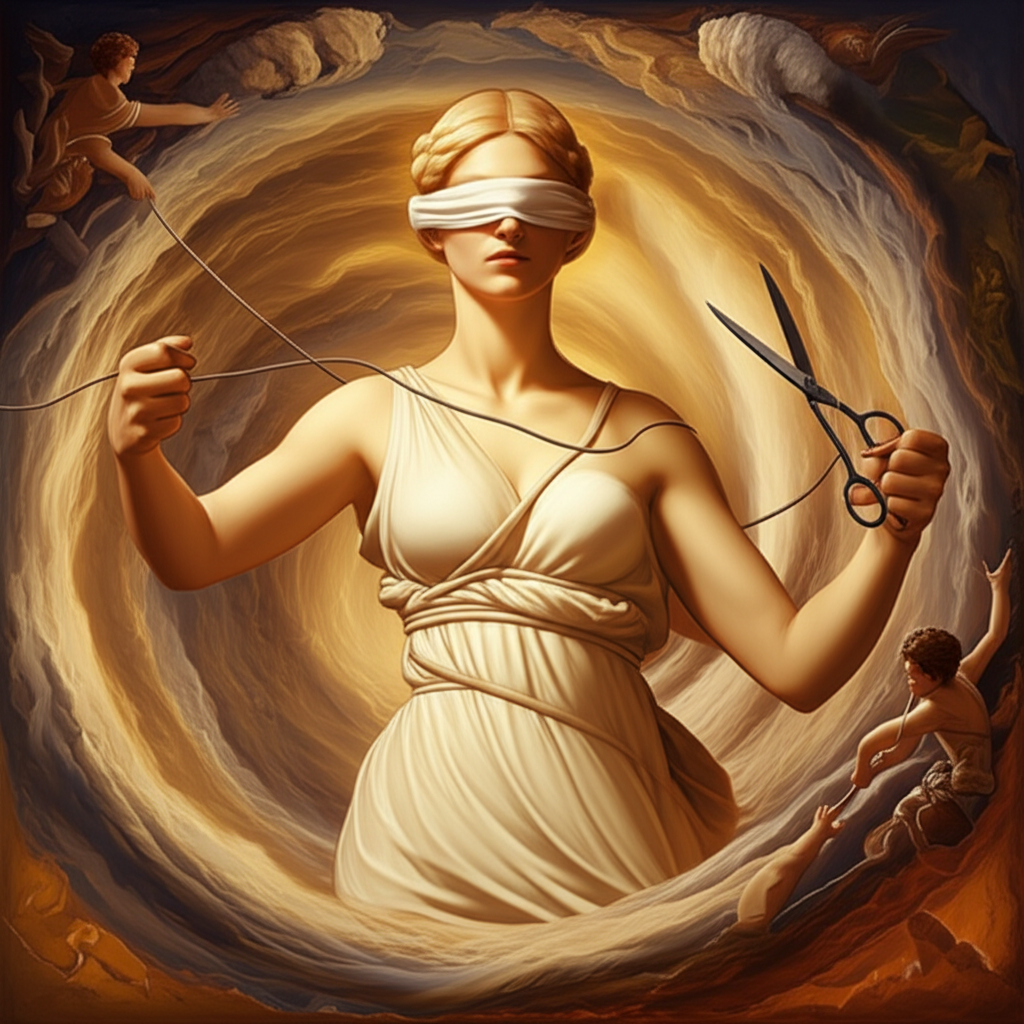
For the ancient Greeks, fate was often an inescapable, almost personified force. Think of the tragic heroes in Aeschylus or Sophocles, whose destinies, however valiant their struggles, were ultimately sealed by the gods or a cosmic order beyond their control. Even Zeus, king of the gods, was sometimes depicted as subject to the Moirai, the Fates. This perspective emphasized a sense of necessity: certain events must occur, regardless of individual desires.
- Homeric Epics: Heroes like Achilles confront their fated deaths, yet their will to fight bravely or choose their path (a short, glorious life versus a long, obscure one) defines their character within that fated framework.
- Stoicism: Philosophers like Epictetus and Marcus Aurelius taught that while external events are fated and beyond our control, our will lies in our response to them. We cannot control the external world, but we can control our judgments and attitudes. This is where human freedom truly resides – in the inner citadel of the mind. They embraced a form of determinism, but one that still gave immense power to individual will in accepting or rejecting one's lot with wisdom.
The concept of necessity here is often tied to the natural order or a divine decree, suggesting that the universe operates according to immutable laws. Contingency, in this view, might be seen as the illusion of choice or the specific, unpredictable details within a predetermined narrative.
Divine Providence and Human Agency: Medieval Reconciliations
The advent of monotheistic religions brought a new dimension to the debate. How could an omniscient, omnipotent God, who knows all future events and orchestrates the universe, grant humans genuine will or free choice? This was a central dilemma for medieval thinkers, notably Saint Augustine and Saint Thomas Aquinas, both prominent figures in the Great Books of the Western World.
- Augustine of Hippo: Grappled extensively with God's foreknowledge and human will. He argued that God's foreknowledge does not cause our actions, but merely knows them. Our choices are still free, even if God knows what they will be. This maintains both divine necessity (God's plan) and human contingency (our choices).
- Thomas Aquinas: Distinguished between different types of necessity. Some things are absolutely necessary (e.g., God's existence), while others are hypothetically necessary (if I choose to sit, it is necessary that I sit, but the initial choice was free). He posited that human will is free, but guided by reason and ultimately oriented towards the good, which is God. God's grace assists, but does not override, our freedom.
This period saw sophisticated attempts to harmonize divine fate (providence) with human moral responsibility, emphasizing that the relation is not one of opposition but of different levels of causality.
The Enlightenment and Beyond: Determinism, Freedom, and the Modern Self
As philosophy shifted away from purely theological frameworks, the relation between fate and will took on new forms. The rise of scientific thought introduced concepts of natural laws and causality that challenged traditional notions of free will.
- Baruch Spinoza: A radical determinist, Spinoza argued that everything in the universe, including human actions, is determined by prior causes. Our sense of will is merely our awareness of our desires, without understanding their true causes. Freedom, for Spinoza, is not the ability to choose otherwise, but the understanding of the necessity of all things, leading to a rational acceptance of our place in the causal chain.
- Immanuel Kant: In stark contrast, Kant famously argued for the necessity of free will for morality. Even if empirically our actions might seem determined, for us to be moral agents, we must presuppose that we have the freedom to choose to act according to duty. This is a practical necessity for rational beings, distinguishing between the phenomenal world (governed by necessity) and the noumenal world (where will is free).
The 20th century further complicated this relation with existentialist thought, which emphasized radical human freedom and responsibility in a world without inherent meaning or fate. Jean-Paul Sartre famously declared that "existence precedes essence," meaning we are condemned to be free, creating our own values and meaning through our choices.
The Intertwined Relation: Necessity, Contingency, and Choice
So, where does this leave us? Is it an either/or proposition? Perhaps the most compelling philosophical perspectives suggest that fate and will are not mutually exclusive but exist in a dynamic relation.
Consider the following table outlining this interplay:
| Aspect of Existence | Primarily Influenced by Fate (Necessity) | Primarily Influenced by Will (Contingency) |
|---|---|---|
| Circumstances | Birthplace, genetic makeup, historical era | Our response to these circumstances |
| Natural Laws | Gravity, physics, biological processes | How we utilize or adapt to these laws |
| External Events | Accidents, global crises, others' actions | Our interpretation and reaction to events |
| Inner Life | Temperament, predispositions | Our choices, attitudes, and development |
Fate, in this sense, might be understood as the necessity of the givens – the unchangeable framework of our existence, the laws of the universe, the hand we are dealt. It sets the stage, providing the parameters within which we operate. Will, then, represents our capacity for contingency – our ability to make choices, to interpret, to adapt, to strive, and to imbue our lives with meaning within those given parameters.
The relation is akin to a river: the riverbed (fate/necessity) dictates its general course and boundaries, but the specific currents, eddies, and the debris it carries (will/contingency) are ever-changing, shaped by countless individual factors and choices. Our freedom might not be absolute, but it is profoundly significant within the bounds of what is.
Conclusion: The Ongoing Philosophical Inquiry
The relation between fate and will remains one of philosophy's most fertile grounds for inquiry. It forces us to confront fundamental questions about responsibility, morality, the nature of reality, and the very essence of what it means to be human. Whether we see fate as an unyielding cosmic force, divine providence, or simply the sum of all prior causes, our capacity for will – to choose, to strive, to make meaning – defines our active engagement with existence. Understanding this intricate interplay of necessity and contingency is not about finding a definitive answer, but about deepening our appreciation for the complex tapestry of life and our unique role within it.
📹 Related Video: STOICISM: The Philosophy of Happiness
Video by: The School of Life
💡 Want different videos? Search YouTube for: ""free will determinism philosophy debate" or "stoicism fate and free will""