

The Unfolding Tapestry: Fate, History, and the March of Time
A Predetermined Path or a Contingent Journey?
The relationship between Fate and History is one of philosophy's most enduring and intricate puzzles. Are the grand narratives of human civilization, the rise and fall of empires, the triumphs and tragedies of individuals, merely the unfolding of a predetermined script, or are they the unpredictable consequences of countless contingent choices? This article explores how these concepts intersect, using Time as their shared medium, and delves into the profound debate between Necessity and Contingency that underpins our understanding of the human story.
The Ancient Echoes: Defining Fate
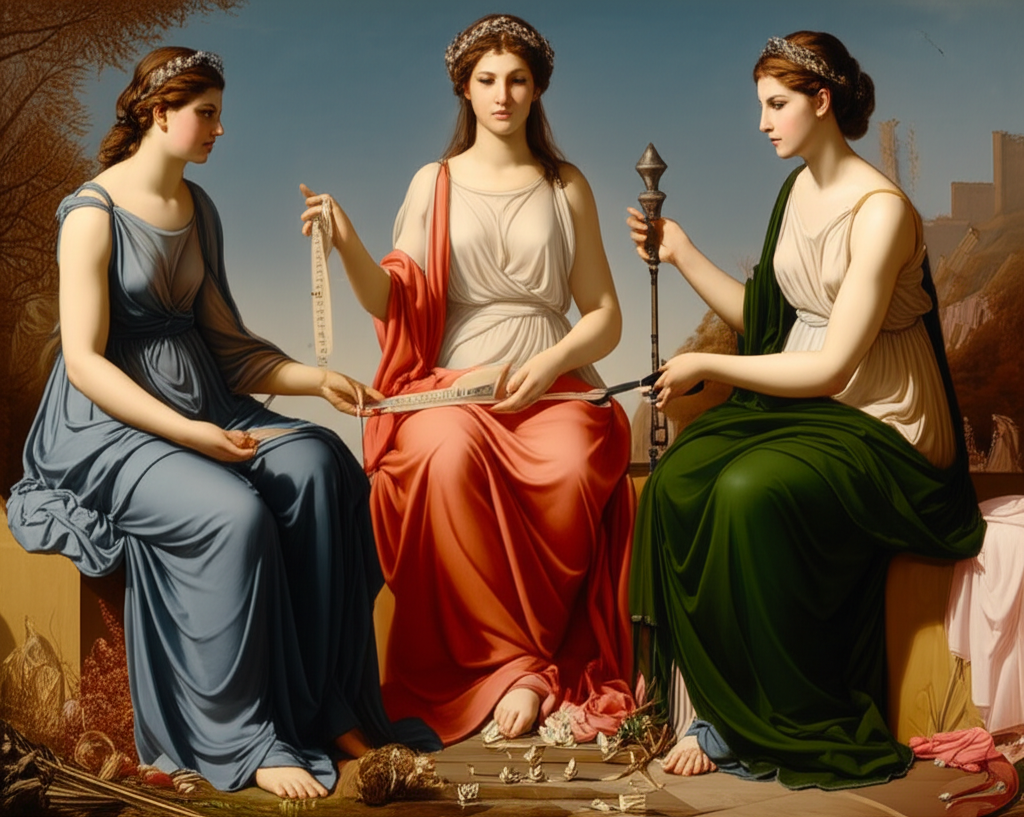
From the ancient Greek Moirai (the Fates) to the Stoic concept of logos or divine reason, the idea of Fate has permeated human thought. It speaks to an ultimate, often inescapable, order that dictates events. In its classical sense, fate might be seen as:
- Divine Will: A preordained plan set by a higher power, as explored in works like Augustine's City of God from the Great Books of the Western World, where divine providence guides history towards a specific end.
- Natural Law: An inherent, unchangeable order within the cosmos that dictates the course of all things, including human affairs.
- Predetermination: The belief that all events, including human actions, are causally determined by an unbroken chain of prior occurrences, leaving no room for genuine alternative possibilities.
Is history merely the detailed record of this predetermined journey?
History's Narrative: The Human Chronicle
History, by contrast, is often understood as the disciplined study and interpretation of the past, a chronicle of human actions, decisions, and their consequences unfolding through Time. It seeks to understand what happened, why it happened, and how it shapes the present. Yet, history is more than just a collection of facts; it is:
- A Human Construct: Narratives are shaped by historians, influenced by their perspectives, sources, and the questions they seek to answer.
- A Record of Agency: It documents the choices made by individuals and groups, their struggles, innovations, and conflicts.
- A Continuous Process: History is not static; it is an ongoing stream of events that constantly redefines the present and future.
The tension arises when we ask if these recorded actions are truly free or merely the visible symptoms of an underlying, fated necessity.
Time: The Indispensable Dimension
Both Fate and History are inextricably bound to Time. Time is the stage upon which history unfolds, the medium through which events come into being. For fate, time is the linear progression that reveals the predetermined outcome. For history, time is the very fabric of its narrative, allowing for sequence, causality, and development.
- Linear Time: The dominant Western view, where time moves forward, from past to present to future, providing a framework for historical progression and the unfolding of fate.
- Cyclical Time: Some ancient philosophies, as found in certain pre-Socratic thinkers, conceived of time as cyclical, with events repeating in an endless loop, suggesting a different kind of fate or recurrence.
Regardless of its nature, time is the crucible in which the relationship between what must be and what is is forged.
Necessity and Contingency: The Philosophical Tug-of-War
The core of the debate lies in the philosophical distinction between Necessity and Contingency.
- Necessity suggests that certain events must happen; there are no other possible outcomes. If history is fated, then every event, every war, every discovery, every individual life, is necessary.
- Contingency, on the other hand, posits that events could have been otherwise. There are genuine forks in the road, moments where alternative choices or chance occurrences could have led to vastly different historical paths.
The question then becomes: Is history a necessary progression, or a contingent series of events shaped by human choice and chance?
Great Books Perspectives on Necessity and Contingency:
| Philosopher (Great Books Reference) | View on Necessity/Contingency in History | Key Ideas |
|---|---|---|
| Aristotle (Nicomachean Ethics, Metaphysics) | Acknowledges both necessity (e.g., natural laws) and contingency (human choice, chance). History is not solely necessary. | Distinguishes between what is always and what is for the most part; emphasizes potentiality and actuality, allowing for choices. |
| Augustine of Hippo (City of God) | Emphasizes divine providence (a form of fate) while upholding human free will. | God's foreknowledge does not negate human choice; history unfolds according to God's plan, but humans remain morally responsible for their contingent actions. |
| Baruch Spinoza (Ethics) | Argues for absolute necessity in all things, including human actions and historical events. | Everything follows from the nature of God (or Substance) by eternal necessity; apparent contingency is due to our limited knowledge. |
| G.W.F. Hegel (Phenomenology of Spirit, Philosophy of History) | Views history as the necessary, rational unfolding of "Spirit" or "Reason" towards freedom. | While individual actions appear contingent, they contribute to a larger, necessary historical progression driven by a dialectical process. |
The Enduring Dialogue
The dialogue between Fate and History continues to resonate. Do we write history to understand the necessary unfolding of a predetermined path, or to celebrate and learn from the contingent choices that have shaped our world? Perhaps the truth lies in a nuanced interplay: a broad, necessary framework within which a vast array of contingent human choices and actions define the rich tapestry of our shared past. The tension between what must be and what could be otherwise remains a fertile ground for philosophical inquiry, constantly inviting us to reconsider our place in the grand narrative of Time.
📹 Related Video: What is Philosophy?
Video by: The School of Life
💡 Want different videos? Search YouTube for: ""Fate vs Free Will Philosophy Debate""
📹 Related Video: What is Philosophy?
Video by: The School of Life
💡 Want different videos? Search YouTube for: ""Hegel Philosophy of History Explained""