

The Chains We Forge: Unpacking the Relation Between Labor and Slavery
The very idea of labor – the effort we expend to transform the world around us – stands in stark contrast to the dehumanizing grip of slavery. Yet, history and philosophy reveal a complex, often uncomfortable relation between the two. From ancient Greek justifications for chattel slavery to modern critiques of alienated work, the "Great Books" compel us to confront how easily the necessity of labor can morph into a form of subjugation, challenging our understanding of freedom, dignity, and the essence of Man. This article will explore this fraught connection, drawing insights from the foundational texts that have shaped Western thought.
The Ancient Foundations: Labor, Necessity, and the Free Man
For the classical thinkers, particularly those found in the "Great Books of the Western World," the relation between labor and freedom was deeply intertwined with social hierarchy and the pursuit of the good life.
Aristotle's Natural Slavery and the Zoon Politikon
Aristotle, in his Politics, grappled with the concept of slavery not as an economic necessity but as a natural arrangement for certain individuals. He posits the idea of a "natural slave" – one whose rational faculty is insufficient for self-governance, and whose primary function is the use of their body for labor. This individual, he argued, is a "living possession," naturally suited to serve a master and thereby enable the master's pursuit of leisure, philosophy, and political life – the true hallmarks of a free man.
- The Master's Freedom: The master, freed from the drudgery of manual labor, could engage in civic life, contemplation, and the development of virtue.
- The Slave's Purpose: The slave's labor was seen as a means to an end, a necessary function within the household economy, but not an activity that contributed to their own flourishing in the same way.
This perspective highlights a deeply troubling aspect of the ancient relation: labor was often seen as antithetical to the highest forms of human activity, a necessary evil to be performed by those deemed less capable of true freedom.
The Dawn of Modernity: Labor as Property and the Threat of Subjugation
As Western thought evolved, the discussion shifted from "natural" slavery to the relation between labor, property, and individual rights.
Locke's Labor Theory of Property
John Locke, in his Two Treatises of Government, famously argued that labor is the foundation of property. When a man mixes his labor with something in nature, he makes it his own, thereby investing a part of himself into it. This idea was revolutionary, grounding individual rights in the very act of working.
However, Locke's framework also implicitly highlights the dangers: if a man's labor is his own, what happens when that labor is coerced or exploited? The very principle that establishes property rights can, when subverted, lead to a form of economic or political slavery, where an individual's labor is no longer their own but belongs to another.
The Dialectic of Domination: Hegel's Master-Slave Relation
Perhaps one of the most profound explorations of the relation between slavery and the formation of self-consciousness comes from G.W.F. Hegel's Phenomenology of Spirit.
The Struggle for Recognition
Hegel introduces the "Master-Slave Dialectic" as a fundamental moment in the development of self-consciousness. Two consciousnesses confront each other, each seeking recognition from the other. One, the Master, asserts dominance, forcing the other, the Slave, into submission.
- The Master's Paradox: The Master achieves recognition, but it is from a consciousness (the Slave) that he does not recognize as truly equal or free. His victory is hollow; he is recognized by an object, not a subject.
- The Slave's Transformation through Labor: The Slave, compelled to labor for the Master, transforms nature. In shaping the world through their labor, the Slave begins to see their own agency reflected in the products of their work. Through this transformative process, the Slave, paradoxically, achieves a more profound self-consciousness and a truer freedom than the Master, who merely consumes without creating.
This dialectic fundamentally shifts our understanding: it suggests that labor, even under conditions of slavery, can be a path to self-awareness and, ultimately, to liberation for the man who engages in it.
Marx and the Alienation of Labor: Modern Slavery?
Karl Marx, deeply influenced by Hegel, took the concept of labor and its relation to human freedom in a radical new direction, critiquing the economic systems of his time.
The Chains of Alienation
For Marx, capitalism, despite its promises of freedom, often leads to a new form of slavery: alienated labor. In his Economic and Philosophic Manuscripts of 1844, Marx argued that under capitalism, the worker is alienated from:
- The Product of Their Labor: The worker does not own what they produce.
- The Act of Production: Work becomes a means to an end (survival), not a fulfilling activity.
- Their Species-Being: The creative, free, and social essence of Man is suppressed.
- Other Men: Competition and class division replace cooperation.
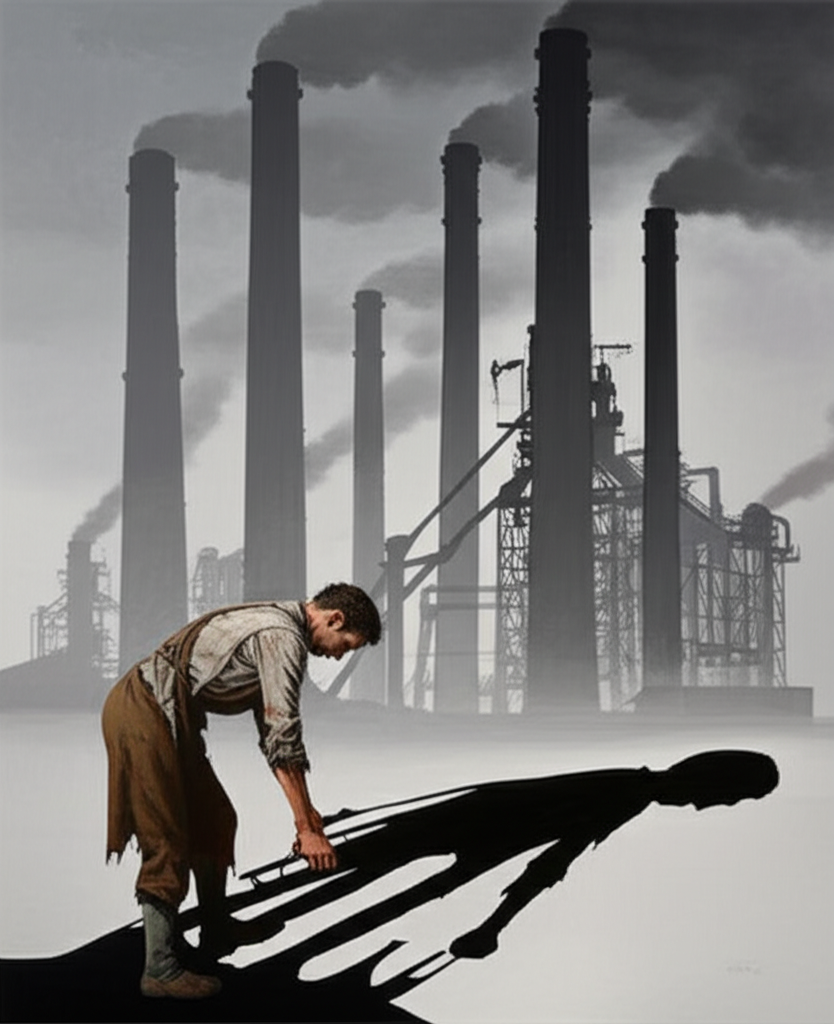
Marx argued that this alienation reduces the man to a mere appendage of the machine, a commodity whose labor power is bought and sold. While not chattel slavery, this economic subjugation, he contended, profoundly restricts human freedom and dignity, making the worker "poorer the more wealth he produces." The relation here is one of exploitation, where the capitalist profits from the surplus value of the worker's labor.
Distinguishing Free Labor from Slavery: A Philosophical Lens
The insights from the "Great Books" provide critical distinctions between free labor and slavery, allowing us to critically assess the relation in any given context.
| Aspect | Free Labor | Slavery |
|---|---|---|
| Control over Self | The man retains autonomy over their body and mind. | Control over the man's body and will is denied. |
| Volition | Engagement is voluntary, based on consent. | Engagement is coerced, based on force or threat. |
| Purpose | Contributes to the worker's own flourishing/goals. | Primarily serves the master's goals/profit. |
| Ownership | The worker owns their labor power and its fruits (or trades it for fair compensation). | The master owns the labor power and its fruits. |
| Dignity | Upholds the inherent dignity of the individual. | Denies the inherent dignity of the individual. |
| Freedom | An expression of individual freedom and agency. | The antithesis of freedom; absolute subjugation. |
The Enduring Relation: Modern Echoes
The philosophical discussions from Plato to Marx are not mere historical curiosities. They force us to continually examine the relation between labor and slavery in our own societies. Questions about fair wages, working conditions, automation, global supply chains, and the gig economy all touch upon the fundamental tension between maximizing productivity and preserving human dignity. When does the necessity of work become a form of subjugation? When does the economic system reduce a man to a tool rather than recognize him as an end in himself?
The "Great Books" challenge us to be vigilant, to scrutinize the conditions under which labor is performed, and to ensure that the pursuit of progress never compromises the fundamental freedom and inherent worth of every man. For in understanding the historical and philosophical relation between labor and slavery, we are better equipped to champion true human liberation.
YouTube:
- Hegel Master Slave Dialectic Explained
- Marx Alienation of Labor Summary
📹 Related Video: What is Philosophy?
Video by: The School of Life
💡 Want different videos? Search YouTube for: "The Relation Between Labor and Slavery philosophy"