

The Inextricable Link: Exploring the Relation Between Cause and Change
Summary: At the heart of philosophical inquiry lies the fundamental relation between cause and change. This article explores how change is the observable manifestation of causality, arguing that one cannot exist without the other. We delve into the historical understanding of these concepts, from ancient Greek thought to modern challenges, emphasizing that understanding why things happen (cause) is inseparable from understanding that they happen (change). This principle underpins our comprehension of the universe, from the simplest physical interactions to the grandest transformations of societies and ideas.
The Fundamental Interplay: Why Things Happen and How They Transform
From the moment we begin to question the world around us, we are confronted with phenomena that shift, evolve, and transform. Leaves turn colour, water boils, empires rise and fall, and ideas revolutionize societies. Each of these occurrences, whether grand or mundane, points to an underlying truth: change is constant. But what propels this ceaseless flux? The answer, unequivocally, lies in cause.
The relation between cause and change is not merely one of sequence, where a cause precedes an effect. It is a profound, interwoven connection, a philosophical principle that shapes our understanding of reality. To speak of change without a cause would be to posit an event arising from nothing, an arbitrary shift in being that defies rational explanation. Conversely, a cause that produces no change, no observable effect, would be an inert, unmanifested potential, philosophically indistinguishable from non-existence. They are two sides of the same coin, inextricably linked in the fabric of existence.
Unpacking the Mechanisms: Causality as the Engine of Transformation
The Great Books of the Western World are replete with explorations of this very relation. Ancient philosophers, particularly Aristotle, meticulously categorized causes, providing a framework that has informed Western thought for millennia. While modern science has refined our understanding of specific causal mechanisms, the fundamental philosophical inquiry into why things change remains vibrant.
Aristotle's Enduring Framework: A Lens on Change
Aristotle, in his Physics and Metaphysics, offered a comprehensive understanding of causality, proposing four types of causes that contribute to the existence and change of a thing:
- Material Cause: That out of which a thing comes to be and which persists (e.g., the bronze of a statue).
- Formal Cause: The form or pattern of the thing; its essence (e.g., the shape of the statue).
- Efficient Cause: The primary source of the change or rest (e.g., the sculptor who makes the statue).
- Final Cause: The end, that for the sake of which a thing is done (e.g., the purpose of the statue, perhaps to honor a god).
This classical framework highlights that change is not a monolithic concept but a multi-faceted process driven by various interacting causes. A seed changes into a tree due to its material (genetic code, nutrients), its form (the blueprint of a tree), the efficient cause (sunlight, water), and its final cause (to grow, reproduce). The relation here is one of dynamic interaction, where each cause contributes to the overall transformation.
The Principle of Sufficient Reason: A Foundational Belief
Leibniz later articulated the Principle of Sufficient Reason, stating that for every fact, every existence, every true proposition, there must be a reason why it is so and not otherwise. This principle directly reinforces the necessary relation between cause and change. If something changes, there must be a sufficient reason – a cause – for that change. Without it, the change would be inexplicable, a violation of our rational expectations of an ordered universe. This isn't merely a logical construct but a fundamental assumption underpinning scientific inquiry and our everyday understanding of how the world operates.
Change as the Observable Outcome of Causal Action
Change is, in essence, the manifestation of a cause in action. We infer causality by observing changes. When we see a ball move (change in location), we look for what caused it (a kick, a push). When we observe a substance altering its properties (change in state), we seek the catalyst (heat, chemical reaction).
The Nature of Transformation: From Potentiality to Actuality
Philosophically, change can be understood as the actualization of potential. An acorn has the potential to become an oak tree. The various causes (sunlight, water, soil, time) act upon this potential, bringing about the change from acorn to sapling to mature tree. This journey from potentiality to actuality is the very definition of transformation, driven by a complex web of causal relations.
- Substantial Change: A thing ceases to be what it was and becomes something else (e.g., a log burning to ash).
- Accidental Change: A thing remains what it is but changes in some quality, quantity, or location (e.g., a log being painted blue).
In both cases, a cause is at work, initiating and sustaining the alteration.
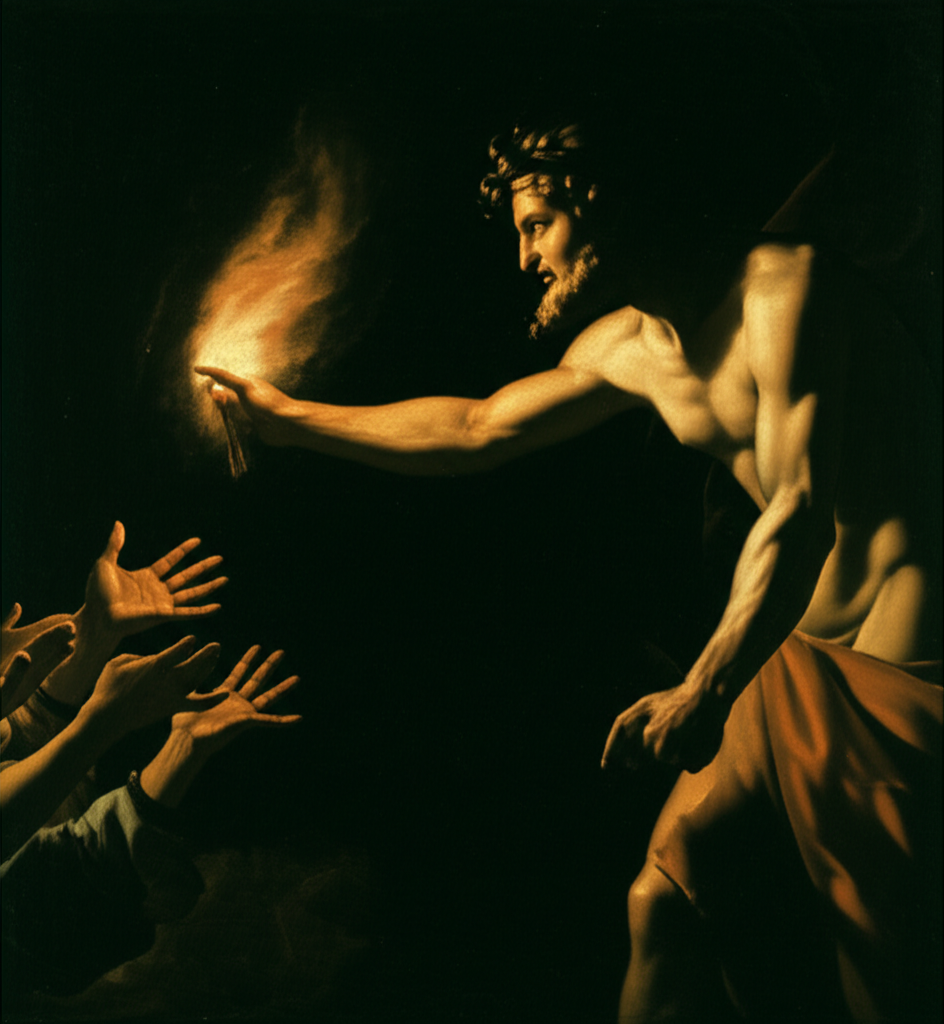
Hume's Skepticism: A Necessary Challenge to Our Understanding
While the relation between cause and change seems intuitively obvious, philosophers like David Hume famously challenged our ability to truly perceive causality. Hume argued that we never actually observe the "necessary connection" between a cause and its effect. Instead, we merely observe constant conjunction: one event (cause) invariably followed by another (effect). Our belief in causality, he suggested, is more a product of habit and expectation than a direct empirical observation of a principle.
Hume's skepticism doesn't negate the existence of cause and change but rather forces us to re-evaluate the epistemological basis of our knowledge. It pushes us to acknowledge that while we experience change and infer cause, the philosophical relation is complex, perhaps even a fundamental assumption we make to render the world intelligible. This ongoing debate underscores the enduring importance of this foundational philosophical inquiry.
The Enduring Philosophical Relation: Why It Still Matters
Understanding the relation between cause and change is not merely an academic exercise. It forms the bedrock of our scientific endeavors, our legal systems (determining culpability), our ethical frameworks (assigning responsibility), and our personal narratives (understanding why our lives unfold as they do). Every time we ask "why?" we are seeking a cause. Every time we observe "what happened?" we are witnessing change.
The principle that every effect has a cause, and every cause leads to some change, remains a powerful lens through which we interpret the universe. It invites us to look beyond the surface, to seek the underlying forces and reasons for the dynamic world we inhabit, fostering a deeper appreciation for the intricate tapestry of existence.
Key Takeaways on Cause and Change
- The relation between cause and change is fundamental to understanding reality.
- Change is the observable manifestation of causal action.
- Philosophers like Aristotle provided early frameworks for categorizing causes.
- The Principle of Sufficient Reason posits that every event has a cause.
- Change involves a transformation from potentiality to actuality.
- Hume's skepticism highlights the empirical challenges in perceiving the "necessary connection" of cause and effect.
- Grasping this relation is crucial for scientific, ethical, and personal understanding.
YouTube: "Aristotle Four Causes Explained"
YouTube: "David Hume Causality Explained"
📹 Related Video: What is Philosophy?
Video by: The School of Life
💡 Want different videos? Search YouTube for: "The Relation Between Cause and Change philosophy"