

The Indissoluble Bond: Unpacking the Relation Between Cause and Change
The philosophical landscape is replete with foundational concepts, and among the most enduring and interconnected are cause and change. At its heart, understanding the universe, ourselves, and the very fabric of reality hinges on grasping the profound relation between these two phenomena. This article delves into how cause is the engine of change, how change necessitates a cause, and the enduring philosophical principle that binds them, drawing insights from the venerable texts of Western thought.
The Inherent Connection: A Summary
In essence, cause is the agency or condition that brings about an effect, and that effect is most often a change. Whether we speak of a qualitative shift, a quantitative alteration, a movement in space, or a substantial transformation, change is never arbitrary; it always arises from some preceding cause. This fundamental relation is not merely an observation but a bedrock principle upon which much of our scientific and philosophical inquiry is built, guiding our attempts to explain and predict the unfolding of events in the cosmos.
The Ancient Roots: Aristotle's Insight into Change
From the earliest philosophical inquiries, thinkers grappled with the nature of change. Heraclitus famously declared that "everything flows," emphasizing the ceaseless flux of existence. Yet, it was Aristotle who provided a rigorous framework for understanding change through the lens of causation, a framework that remains remarkably influential. For Aristotle, to understand change was to understand its causes.
Aristotle delineated four types of causes, each indispensable for a complete understanding of any given change:
- Material Cause: That out of which something is made (e.g., the bronze of a statue). This speaks to the potentiality for change.
- Formal Cause: The form or essence of a thing (e.g., the shape of the statue). This defines what the change is striving towards.
- Efficient Cause: The primary source of the change or rest (e.g., the sculptor who makes the statue). This is the active agent of change.
- Final Cause: The end, purpose, or goal of the change (e.g., the statue's purpose as a work of art or memorial). This provides the reason for the change.
This detailed schema reveals that change is not a simple, monolithic event, but a complex process with multiple explanatory factors. Each cause contributes to the intelligibility of the change, demonstrating their intricate relation.
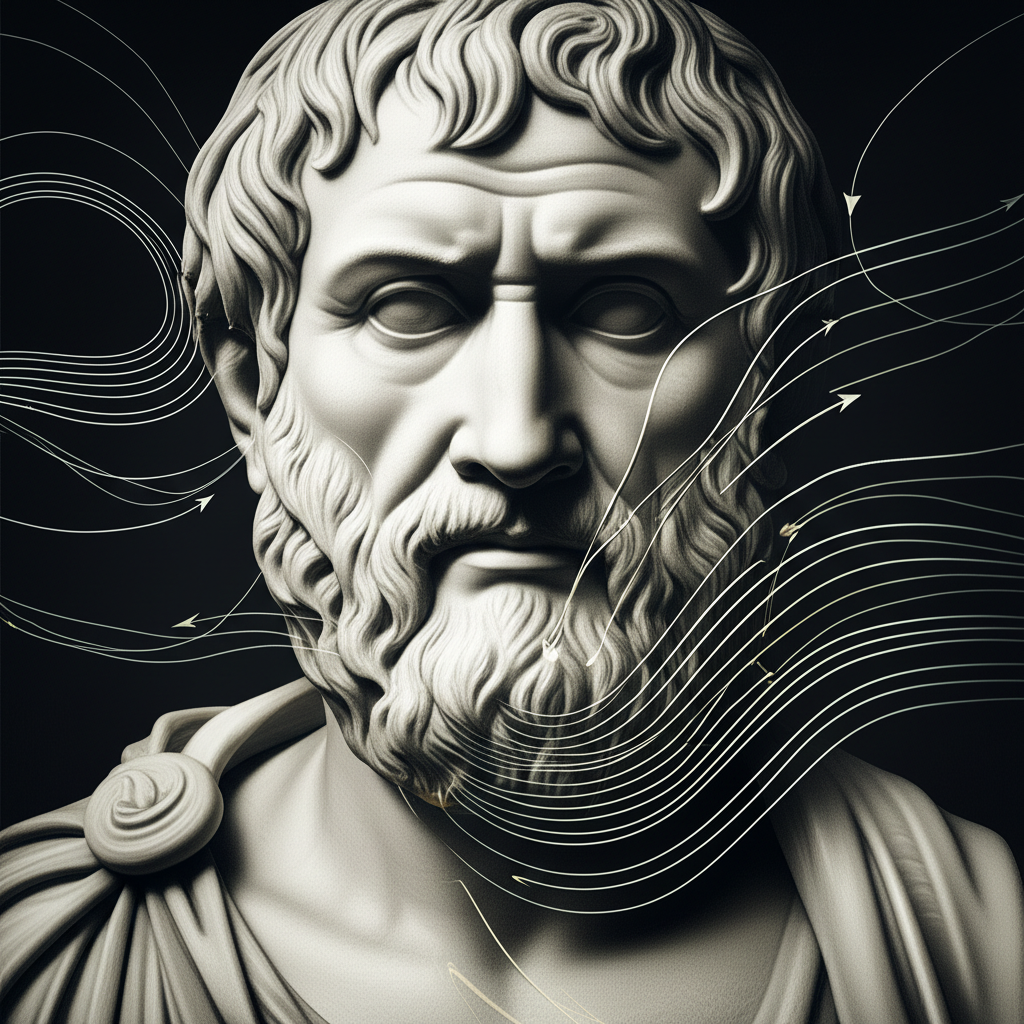
The Indispensable Link: Why Change Demands a Cause
Consider any instance of change: a leaf falling, water boiling, a thought forming, or a society evolving. In each case, our minds instinctively seek an explanation – a cause. This isn't merely a habit; it's rooted in the profound principle that nothing comes from nothing, or ex nihilo nihil fit.
The relation is reciprocal:
- No Change Without a Cause: If something changes, there must be an antecedent condition or event that brought about that change. A static object does not spontaneously move; a cold object does not spontaneously heat up.
- Causes Primarily Effect Change: The very function of a cause is to produce an effect, and that effect is almost universally a change from a prior state. Even maintaining a state (e.g., a dam holding back water) can be seen as preventing a change (the water flowing freely), implying an active cause at work.
This fundamental principle underpins our entire scientific endeavor. Scientists seek to identify the causes of observed phenomena, understanding that by manipulating these causes, they can predict and even control change.
Hume's Skepticism and the Modern Perspective
While the intuitive relation between cause and change seems undeniable, philosophers like David Hume famously challenged the notion of a necessary connection. Hume observed that we only ever perceive a constant conjunction of events – one event (the cause) consistently preceding another (the effect or change). We don't see the necessity of the relation itself, only its regularity. From this, he argued that our belief in causation is more a product of psychological habit than logical certainty.
However, even Hume's skepticism, profound as it was, did not negate the empirical observation of the constant relation. We still operate under the practical principle that if we want to effect a change, we must apply a cause. Modern physics, while exploring probabilistic causes at the quantum level, still fundamentally seeks the mechanisms that drive change. The universe, in its unfolding, still appears to adhere to causal chains, even if our understanding of their necessity evolves.
The Enduring Principle of Causality
The principle of causality – that every effect has a cause – remains a cornerstone of our understanding of reality. It is not merely an assumption but a powerful heuristic that allows us to make sense of the world and interact with it effectively.
Consider these facets of the principle:
- Predictability: Knowing the causes allows us to predict future changes.
- Explanation: Identifying causes provides coherent explanations for observed changes.
- Agency: Understanding causation empowers us to act as causes ourselves, bringing about desired changes in our environment.
The Great Books continually revisit this principle, from Plato's forms as ultimate causes of being, to Aquinas's Five Ways (which largely rely on the necessity of a first cause for all observed changes), to Kant's assertion that causality is a fundamental category of human understanding, shaping how we perceive experience itself.
Conclusion: The Unbreakable Thread
The relation between cause and change is not just a philosophical abstraction; it is the very pulse of reality as we perceive and interact with it. Change is the dynamic unfolding of existence, and cause is the underlying force or condition that drives this unfolding. To understand one is to necessarily engage with the other. This profound and intricate relation, illuminated by centuries of philosophical inquiry, remains a central principle for navigating the complexities of the world and our place within it.
YouTube Video Suggestions:
- **## 📹 Related Video: ARISTOTLE ON: The Nicomachean Ethics
Video by: The School of Life
💡 Want different videos? Search YouTube for: "** "Aristotle's Four Causes Explained""
2. **## 📹 Related Video: ARISTOTLE ON: The Nicomachean Ethics
Video by: The School of Life
💡 Want different videos? Search YouTube for: "** "Hume Causality and Constant Conjunction""