

What does it mean to face death without fear? For many, the fear of mortality overshadows every decision, from career choices to matters of faith. But for Socrates, the prospect of death was not a source of terror—it was a pivotal moment to demonstrate his dedication to truth. His philosophy challenges the notion of death as the ultimate evil, inviting us instead to see it as an opportunity to deepen our understanding of existence. His final days, as narrated in Plato's Apology, depict not only a philosopher but a man unafraid to live—and die—by his principles.
Socrates' calm demeanor and unwavering courage as he drank the hemlock stand in stark contrast to our modern fears of death, which drive so many of our pursuits and insecurities. By embracing death as a transition, Socrates exemplifies what it means to align our actions with our ideals, a lesson that remains relevant today. This week's theme explores what it means to confront mortality head-on and the ways in which embracing the unknown can deepen our pursuit of truth.
In encouraging you to reflect on this notion, we invite you to see Socrates not merely as an ancient figure but as a living idea. Imagine Plato's world as a mirror to our own, and explore with us how these ancient dialogues speak to our fears, desires, and the pursuit of knowledge. You can participate further by engaging in planksip.org, where we continue these conversations and explore the personification of Plato as an ideal worth imagining.
From the Archives of Ancient Greece: Featuring Dr. Michael Sugrue
Dr. Michael Sugrue delves deeply into Socrates' relationship with death, highlighting the significance of the philosopher’s calm acceptance of his fate. Sugrue interprets Socrates’ final days not as a tragic conclusion but as the logical culmination of a life devoted to truth and philosophical inquiry. According to Sugrue, Socrates believed that a genuine philosopher must remain indifferent to death if they are to remain committed to the search for wisdom. For Socrates, accepting death gracefully was an extension of his lifelong dedication to living a virtuous and examined life.
Drawing parallels to our modern day, Sugrue points out that contemporary society tends to avoid discussions of mortality, often equating death with failure or loss. Yet, in the ancient Greek mindset, death could signify something more—a transition into another state of existence. Socrates’ death, as Sugrue describes, becomes a philosophical statement, one that resonates with the timeless question of whether we should fear the unknown or seek to understand it.
By re-examining these ancient dialogues with Sugrue’s insights, we are encouraged to question our own fears and priorities. The philosopher’s fearlessness inspires us to embrace a life committed to inquiry and to confront mortality not as an enemy but as a natural and necessary part of our journey. Join us at planksip.org, where we engage with Sugrue’s analyses and explore how Socratic principles can shape our own pursuit of wisdom.
Insights from the Dialogues: Quoting Plato
In Apology (39a-42a), Socrates addresses the Athenians, reflecting on the nature of death. He famously argues that fearing death is akin to claiming knowledge we do not have. Socrates suggests that since no one knows what comes after death, fearing it is irrational—a concept that challenges our instinctive dread of the unknown. He even goes so far as to describe death as a potential blessing, implying that it might be a gateway to greater understanding or a release from the limitations of the physical world.
This dialogue forces us to confront our preconceptions about mortality. It raises questions about how fear of the unknown shapes our choices and beliefs. Imagine a life lived without fear of failure or mortality. What truths might you pursue if you embraced uncertainty instead of avoiding it? Socrates’ life and death present a model for such a mindset, one that prioritizes integrity and the relentless pursuit of wisdom over comfort and safety.
This section of the Apology can be particularly powerful for modern readers, who are often bombarded with messages that equate success with avoiding risk or pain. Socrates offers a counterpoint to this narrative, showing us that to live fully, we must be willing to face the unknown with courage and curiosity. Reflecting on this, we encourage you to explore further discussions and share your thoughts on planksip.org, where the pursuit of truth remains central to our dialogue.
Chance and Fate: Exploring Ancient Games
In ancient Greece, games of chance like knucklebones (astragali) were more than mere diversions; they carried profound symbolic meaning about fate and mortality. The casting of bones to predict outcomes was a ritualistic practice that mirrored the unpredictable nature of life itself. The Greeks believed that fate was intertwined with every throw of the bones, a philosophy that reinforced their acceptance of life’s uncertainties.
Just as Socrates faced his death with composure, ancient Greeks used these games to confront the reality of fate’s unpredictability. Imagine a group of Athenians huddled around, casting knucklebones to divine their futures, reflecting on the precariousness of life and the inevitability of death. This practice wasn’t about controlling fate but about accepting one’s role within it—a concept closely tied to Socratic wisdom, which teaches us to embrace uncertainty rather than resist it.
Explore the Mystical World of Astraguli: Ancient Games of Chance with Cultural Significance.
These symbolic games offer a powerful metaphor for how we might approach the uncertainties in our own lives. Rather than striving to control every outcome, we can learn to face the unknown with grace and an open mind. Join the conversation on planksip.org, where we explore these connections between ancient rituals and modern philosophies, encouraging a deeper understanding of the role of fate in shaping our lives.
Virtues Revisited: Practical Lessons for Today
This week, we revisit the virtue of courage through the lens of Socrates’ final moments. For Socrates, courage was not simply about facing physical danger; it was the ability to confront moral and philosophical challenges with unwavering integrity. His decision to accept his death sentence rather than flee or compromise his principles illustrates a profound commitment to the truth—a commitment that transcended his own life.
In today’s world, courage is often equated with heroic acts or bold risks, but Socrates’ example offers a more nuanced understanding. It suggests that true courage lies in the willingness to pursue what is right, even in the face of fear and uncertainty. Whether this means standing up for your beliefs, questioning widely held assumptions, or choosing the harder path of honesty, Socratic courage challenges us to live more authentically.
Consider moments in your own life where fear held you back from pursuing a deeper truth. How might embracing Socratic courage change the way you approach challenges or confront uncomfortable realities? Reflecting on these questions can inspire new ways of living with greater integrity and purpose. We invite you to share your reflections on planksip.org and explore what Socratic courage might mean in today’s society.
Engage with Us: Reader’s Corner
We want to hear from you! This week’s discussion touches on deep themes of mortality, truth, and courage. How do you approach the fear of death in your own life? Have you encountered moments where embracing uncertainty led to personal growth or new insights? Join our conversation at planksip.org, where we explore these timeless questions together.
By sharing your thoughts and engaging with other readers, you can become part of a community dedicated to re-imagining ancient wisdom for modern challenges. Socrates once said that the only true wisdom is in knowing you know nothing—so let’s explore these uncertainties together.
Closing Reflection: Socrates’ Enduring Legacy
Socrates’ courage in the face of death serves as an enduring symbol of what it means to live with integrity and a commitment to truth. His final moments were not a resignation to fate but a powerful affirmation of his values. By choosing death over compromise, Socrates demonstrated that living an examined life requires confronting our deepest fears and remaining true to our beliefs, even when the cost is high.
This legacy challenges us to rethink our relationship with fear and to consider how embracing uncertainty might open new paths to wisdom. As we continue to explore these themes in Plato Re-Imagined, we encourage you to reflect on how Socratic principles can guide your own pursuit of truth in a world that often prioritizes comfort over integrity. Let’s keep these dialogues alive, both in our hearts and on planksip.org.
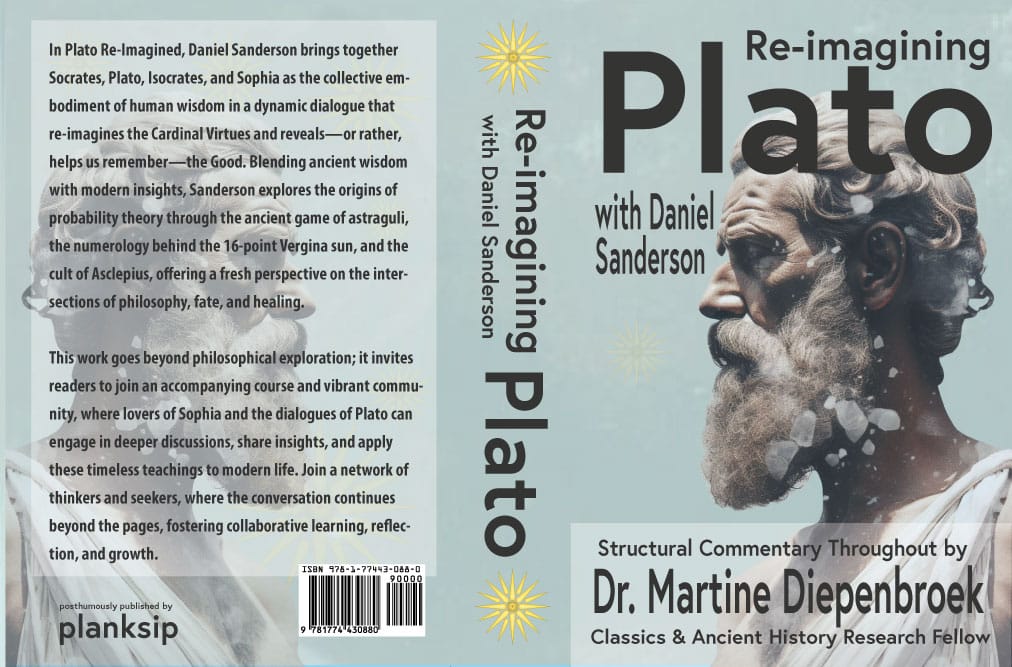
Plato Re-Imagined
This course offers 32 comprehensive lectures exploring most of Plato's dialogues. These lectures guide students toward a consilient understanding of the divine—a concept that harmonizes knowledge across disciplines and resonates with secular and religious leaders. As a bonus, Lecture #33 focuses on consilience, demonstrating how different fields of knowledge can converge to form a unified understanding.


