

The Pursuit of Pleasure and the Good Life: An Odyssey Through Philosophical Thought
The quest for a fulfilling existence, often articulated as "the good life," is perhaps the most ancient and persistent inquiry of humanity. At the heart of this enduring pursuit lies the intricate relationship with pleasure. Is pleasure merely a fleeting sensation, a distraction from deeper truths, or is it the very essence of what makes life worth living? This pillar page delves into the multifaceted philosophical perspectives on pleasure, its intrinsic link to pain, the ceaseless engine of desire, the elusive nature of happiness, and how the ultimate realities of life and death shape our understanding of what constitutes a truly good life. From the hedonistic gardens of Epicurus to Aristotle's virtuous flourishing, and the profound reflections of modern thinkers, we embark on a journey to unravel the complex tapestry of human motivation and meaning.
Ancient Echoes: Hedonism, Eudaimonia, and the Foundations of the Good Life
The philosophical inquiry into pleasure began in earnest with the ancient Greeks, who offered two primary, yet often misunderstood, paths to the good life.
Hedonism's Allure: Seeking the Sweetest Nectar
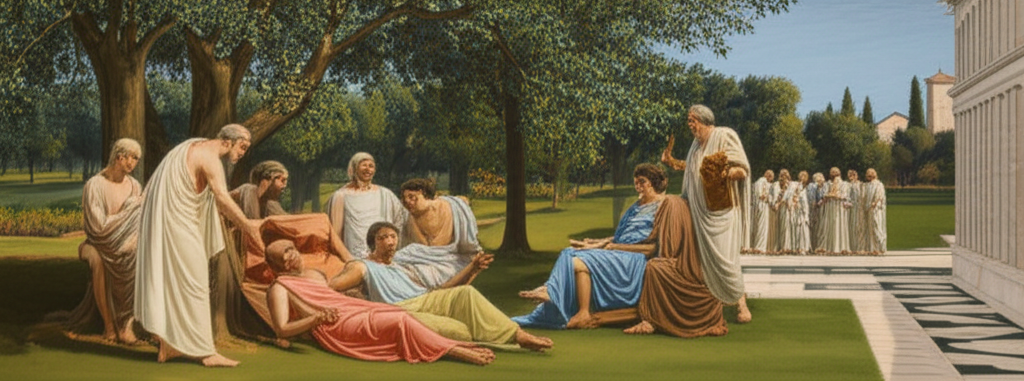
At its core, hedonism posits that pleasure is the highest good and the proper aim of human life. However, even among hedonists, there were significant distinctions.
- Cyrenaics: Advocated for the immediate gratification of bodily pleasures. For Aristippus, the fleeting, intense pleasure of the present moment was paramount, dismissing future consequences as uncertain. This form of hedonism is often criticized for its potential to lead to excess and a life lacking deeper purpose.
- Epicureanism: A more nuanced and enduring form of hedonism, championed by Epicurus. He argued that the highest pleasure was not found in excess but in the absence of pain (aponia) and mental disturbance (ataraxia). Epicurus believed that true pleasure stemmed from tranquility, moderate living, friendship, and philosophical contemplation. He famously stated that "it is not possible to live pleasantly without living prudently and honorably and justly, nor to live prudently and honorably and justly without living pleasantly." This school emphasized the careful calculation of pleasures, often choosing to forgo immediate gratification for long-term peace of mind.
Aristotle's Eudaimonia: Flourishing Beyond Mere Sensation
Contrasting sharply with hedonistic views, Aristotle introduced the concept of eudaimonia, often translated as "flourishing" or "living well." For Aristotle, the good life was not about experiencing pleasure as an end in itself, but about exercising one's rational faculties in accordance with virtue over a complete lifetime.
- Virtue Ethics: Aristotle argued that true happiness (eudaimonia) is achieved through virtuous activity. This involves developing character traits like courage, temperance, justice, and wisdom, finding the "golden mean" between extremes.
- The Role of Reason: Humans are rational animals, and our unique function is to reason. Therefore, a life lived in accordance with reason, particularly through intellectual contemplation, represents the highest form of human flourishing.
- Pleasure as a Consequence: For Aristotle, pleasure was not the goal but a natural accompaniment to virtuous activity. When one lives well and acts virtuously, pleasure naturally follows as a sign that one is fulfilling their true potential.
The distinction between these ancient perspectives is crucial for understanding subsequent philosophical debates:
| Feature | Hedonism (Epicurean) | Eudaimonia (Aristotelian) |
|---|---|---|
| Primary Goal | Absence of pain and mental disturbance (tranquility) | Human flourishing through virtuous activity and reason |
| Nature of Pleasure | The highest good; a state to be achieved | A natural byproduct of living well; not the end goal |
| Path to Good Life | Moderate living, friendship, philosophical study | Cultivation of virtues, rational activity, civic engagement |
| Focus | Individual experience and serenity | Holistic development of character and potential |
The Dichotomy of Pleasure and Pain: Inseparable Twins
The pursuit of pleasure is inextricably linked to the avoidance or mitigation of pain. Philosophers across eras have grappled with this fundamental duality.
- Epicurus saw pain as the primary obstacle to a pleasant life. His philosophy was largely a strategy for minimizing physical discomfort and mental anguish. He believed that understanding the nature of pain could help us endure it, knowing that intense pain is usually short-lived, and chronic pain is often mild.
- Utilitarianism: Later, thinkers like Jeremy Bentham and John Stuart Mill formalized the concept that human actions should aim to maximize pleasure and minimize pain for the greatest number of people. Bentham's "hedonic calculus" sought to quantify pleasure and pain, considering factors like intensity, duration, and certainty. Mill, while still a utilitarian, argued for qualitative differences in pleasure, positing that "it is better to be a human being dissatisfied than a pig satisfied; better to be Socrates dissatisfied than a fool satisfied." This introduced the idea of "higher" (intellectual, moral) versus "lower" (bodily) pleasures.
- Schopenhauer: Offered a profoundly pessimistic view, suggesting that life is fundamentally a struggle against suffering, driven by a blind, irrational "Will." Pleasure, in his view, is merely the temporary cessation of pain, a brief reprieve before the cycle of desire and frustration resumes.
Understanding pleasure and pain as two sides of the same coin is critical. Our appreciation for one often intensifies our experience of the other, forming a constant backdrop to our choices and motivations.
The Relentless Engine of Desire
What propels us towards pleasure and away from pain? It is the powerful force of desire. From the most basic biological urges to the loftiest intellectual aspirations, desire is the fuel of human action.
- Plato: In his Phaedrus, Plato uses the metaphor of the charioteer (reason) guiding two winged horses: one noble (spirit, honor) and one unruly (appetite, desire for bodily pleasures). The good life, for Plato, involves reason bringing these desires into harmony, directing the soul towards the Good. Unchecked desire, however, leads to chaos and a life enslaved to fleeting sensations.
- Augustine: In Confessions, Augustine speaks of the "restless heart" that can only find peace in God. He grapples with the powerful draw of worldly desires and the struggle to align his will with divine purpose. His journey highlights how our desires can be both sources of profound struggle and pathways to deeper meaning.
- Spinoza: Argued that desire (conatus) is the very essence of a being, its endeavor to persist in its own being. For Spinoza, freedom lies not in suppressing desires, but in understanding their causes and aligning them with reason, thereby increasing one's power of acting and experiencing a more complete joy.
The management and understanding of desire are central to any philosophy of the good life. Is it to be suppressed, redirected, or fully embraced? The answer profoundly shapes our experience of pleasure and our path to happiness.
Happiness: The Elusive Zenith of the Good Life
Perhaps no single word encapsulates the ultimate goal of the good life more universally than happiness. Yet, its definition remains stubbornly elusive, varying widely across individuals and philosophical traditions.
- Subjective vs. Objective Happiness: Is happiness a feeling, a state of mind, or an objective condition of flourishing? Modern psychology often views happiness as a subjective emotional state, while many ancient philosophers, particularly Aristotle, saw it as an objective, well-lived life, independent of momentary feelings.
- Utilitarian Happiness: As discussed, for utilitarians, happiness is the maximization of pleasure and minimization of pain for the greatest number. This often leads to a focus on societal structures and policies that promote collective well-being.
- Nietzsche's Challenge: Friedrich Nietzsche challenged conventional notions of happiness, viewing it as a state sought by the "last man," a complacent, uncreative individual. He advocated for a life of struggle, self-overcoming, and the creation of one's own values, even if it meant embracing suffering and rejecting comfortable happiness. For Nietzsche, the good life was about power, creativity, and becoming who one truly is, often through intense effort and discomfort.
- The Stoic Path: For Stoics like Epictetus and Marcus Aurelius, happiness (or eudaemonia) was found in living in accordance with nature and reason, accepting what is beyond one's control, and cultivating inner tranquility. They sought freedom from disturbance by mastering their reactions to external events, thus finding peace even amidst adversity.
The pursuit of happiness is not a singular path but a complex navigation of values, emotions, and external circumstances, deeply informed by our understanding of what it means to be human.
The Shadow of Life and Death: A Finite Pursuit
The ultimate realities of life and death cast a profound shadow over our pursuit of pleasure and the good life, shaping our priorities and giving urgency to our choices.
- Epicurus on Death: Epicurus famously argued that "death is nothing to us; for that which has been dissolved into its elements experiences no sensation, and that which has no sensation is nothing to us." His aim was to free individuals from the fear of death, allowing them to live a tranquil life focused on attainable pleasures. The knowledge of our finite life was meant to encourage living well in the present, rather than fearing an unknowable future.
- Existentialism: Philosophers like Jean-Paul Sartre emphasized the radical freedom and responsibility that comes with the awareness of our finite existence and the absence of inherent meaning. Confronted with the void of death, individuals are tasked with creating their own values and meaning through their choices, often leading to a sense of existential angst but also profound liberation. The good life, in this view, is an authentic one, lived in full awareness of one's freedom and mortality.
- The Urgency of Life: For many, the finite nature of life imbues every moment with significance. The awareness of death can serve as a powerful motivator to seize opportunities, to love deeply, to pursue passions, and to make a meaningful contribution, rather than postponing joy or fulfillment.
The philosophical contemplation of life and death forces us to confront the deepest questions about purpose, value, and the true meaning of a good life. It challenges us to consider not just how we live, but why.
Concluding Reflections: An Ongoing Inquiry
The pursuit of pleasure and the good life is not a problem with a single, definitive answer but a dynamic, ongoing inquiry. From the ancient Greeks who debated the merits of hedonism versus eudaimonia, to the modern thinkers grappling with desire, happiness, and the stark realities of life and death, humanity has continually sought to define what it means to live well.
Ultimately, the good life is a deeply personal odyssey, informed by universal philosophical questions. It demands self-reflection, critical engagement with our desires, an understanding of the interplay of pleasure and pain, and an honest confrontation with our mortality. As we navigate our own existence, the wisdom gleaned from these philosophical traditions serves not as a rigid dogma, but as a compass, guiding us through the complexities of human experience toward a life that is both meaningful and fulfilling.
YouTube Video Suggestions:
-
📹 Related Video: What is Philosophy?
Video by: The School of Life
💡 Want different videos? Search YouTube for: "The Philosophy of Epicurus - The Art of Happiness"
2. ## 📹 Related Video: ARISTOTLE ON: The Nicomachean Ethics
Video by: The School of Life
💡 Want different videos? Search YouTube for: "Aristotle's Ethics: Crash Course Philosophy #38"