

The Pursuit of Pleasure and the Good Life: An Ancient Inquiry
The quest for a fulfilling existence is perhaps the oldest and most enduring philosophical endeavor. At its heart lies a fundamental question: What role does pleasure play in leading a good life? Is pleasure the ultimate good, the sole aim of our desires, or is it merely a fleeting sensation, a distraction from a deeper, more profound form of happiness? From the hedonistic cries of ancient Cyrene to the rigorous ethical frameworks of Aristotle and the serene tranquility sought by Epicurus, thinkers throughout history, whose wisdom is preserved in the Great Books of the Western World, have grappled with the intricate relationship between pleasure and pain, the insatiable pull of desire, and the ultimate meaning of life and death. This pillar page delves into these timeless debates, exploring how different philosophical traditions have sought to define, pursue, and sometimes transcend pleasure in the pursuit of genuine happiness and a truly good life.
The Seduction of Sensation: Hedonism's Enduring Appeal
At first glance, the answer to what constitutes a good life might seem straightforward: a life filled with pleasure and free from pain. This perspective, known as hedonism, has roots stretching back to antiquity. The Cyrenaics, followers of Aristippus, championed immediate gratification, arguing that bodily pleasure, being tangible and direct, was the highest good. For them, the intensity of the moment, the raw experience of sensation, superseded all other considerations.
However, even within the hedonistic tradition, nuances quickly emerged. Epicurus, a towering figure whose philosophy is often misunderstood, also placed pleasure at the center of his ethics, but with a crucial distinction. He advocated for ataraxia (freedom from mental disturbance) and aponia (absence of bodily pain) as the ultimate forms of pleasure. This wasn't about lavish feasts or wild abandon, but rather a serene state achieved through moderation, friendship, and philosophical contemplation. For Epicurus, the greatest pleasure was the absence of pain and fear, cultivating a tranquil mind free from the anxieties of desire and the dread of life and death.
Key Tenets of Early Hedonism:
- Cyrenaics:
- Immediate, intense bodily pleasure is the highest good.
- Focus on the present moment.
- Skepticism about objective knowledge, emphasizing subjective experience.
- Epicureans:
- Pleasure is the goal, but defined as ataraxia (tranquility) and aponia (absence of pain).
- Moderation in all things to avoid future pain.
- Friendship, simple living, and philosophical reflection are key to happiness.
From Fleeting Joy to Lasting Eudaimonia: Aristotle's Vision
While the hedonists focused on pleasure as an end in itself, other philosophers, most notably Aristotle, argued for a more comprehensive understanding of the good life. In his Nicomachean Ethics, Aristotle introduces the concept of eudaimonia, often translated as "human flourishing" or "living well." This is not a state of mere feeling, but an activity, a way of being that involves realizing one's full potential as a rational, social being.
For Aristotle, happiness (eudaimonia) is the highest good, but it is achieved through virtuous activity, not through the passive reception of pleasure. While pleasure can accompany virtuous action, it is not the aim. A virtuous life, characterized by balance, reason, and moral excellence, naturally leads to a fulfilling and good life. The desire for pleasure, if unchecked by reason, can lead us astray from our true purpose. Aristotle posits that humans have a unique function – to reason – and a good life is one that performs this function excellently.
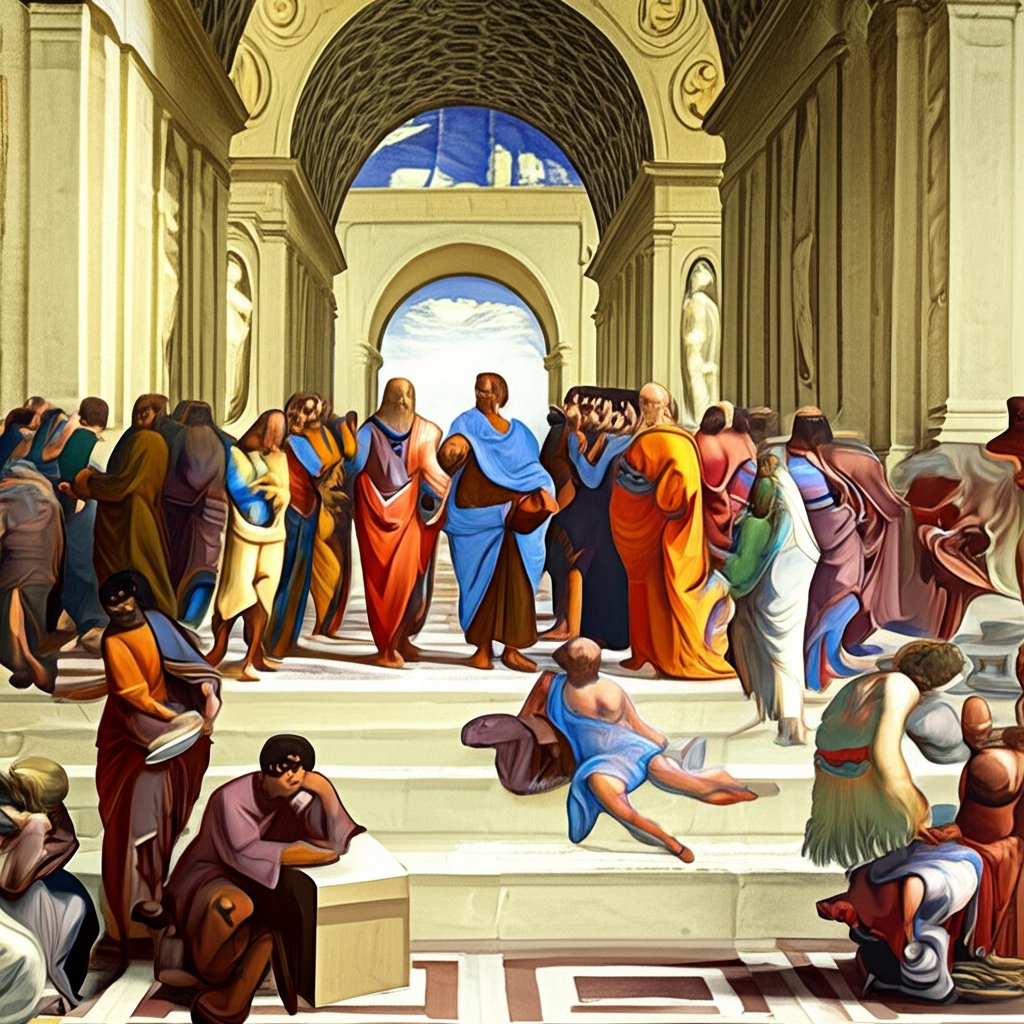
Navigating Desire: Epicurean Tranquility vs. Stoic Apathy
The management of desire is a central theme in the pursuit of the good life, and two prominent schools of Hellenistic philosophy offered contrasting yet equally profound approaches: Epicureanism and Stoicism. Both sought tranquility and freedom from disturbance, but through vastly different means.
Contrasting Approaches to Desire and the Good Life:
| Feature | Epicureanism | Stoicism |
|---|---|---|
| Goal of Life | Ataraxia (tranquility) and Aponia (absence of pain), leading to a serene happiness. | Eudaimonia (flourishing) through virtue, reason, and living in accordance with nature. |
| View of Pleasure | Necessary for the good life, but emphasized as the absence of pain and mental disturbance. Simple pleasures are preferred. | Indifferent; neither good nor bad in itself. True good lies in virtue, not external circumstances or feelings. |
| View of Pain | To be avoided; the primary obstacle to tranquility. | A natural part of life; to be accepted with equanimity. Can be a catalyst for demonstrating virtue. |
| Role of Desire | Manage desires to achieve satisfaction; eliminate unnatural and unnecessary desires. | Eliminate irrational desires; control internal reactions to external events. Desire is often seen as a source of suffering. |
| Approach to Life and Death | Death is not to be feared ("When we are, death is not; when death is, we are not"). Focus on living well in the present. | Accept life and death as part of the natural order (amor fati). Focus on what is within one's control. |
| Key Virtue | Prudence (Phronesis) for choosing pleasures wisely. | Wisdom, Courage, Justice, Temperance. |
Seneca, a prominent Stoic, advocated for an inner citadel of virtue, where one's happiness is immune to external fortune. For the Stoics, controlling one's reactions and judgments, rather than external circumstances or the pursuit of pleasure, was the path to a good life. They trained themselves to accept pain and adversity as natural, even necessary, parts of existence, viewing them as opportunities to practice virtue and strengthen character. The awareness of life and death was not a source of dread, but a reminder to live virtuously in the present moment, accepting what cannot be changed.
The Utilitarian Calculus: Pleasure for the Many
Moving into more modern philosophy, the concept of pleasure and pain takes on a societal dimension with the rise of utilitarianism. Philosophers like Jeremy Bentham and John Stuart Mill proposed that the moral worth of an action is determined by its contribution to overall happiness or utility. The greatest good, they argued, is the greatest happiness for the greatest number.
Mill, in particular, refined Bentham's crude "hedonic calculus" by distinguishing between higher and lower pleasures. He famously stated, "It is better to be a human being dissatisfied than a pig satisfied; better to be Socrates dissatisfied than a fool satisfied." This implies that intellectual, moral, and aesthetic pleasures hold greater value than purely sensual ones, suggesting a quality of pleasure that aligns more closely with Aristotle's idea of a flourishing life than with simple gratification. For utilitarians, the pursuit of individual pleasure is subsumed within the larger goal of collective well-being, where the reduction of pain and the maximization of happiness for society become the ethical imperative.
Confronting Life and Death: The Existential Dimension of Pleasure
The philosophical inquiry into pleasure is inextricably linked to our understanding of life and death. The finiteness of our existence shapes our desires and influences our choices regarding pleasure. Is the pursuit of pleasure a way to distract ourselves from the inevitable end, or does it imbue our limited time with meaning and joy?
Existentialist thinkers, though not directly from the Great Books era, often implicitly engage with these questions by highlighting human freedom and responsibility in the face of an indifferent universe. The awareness of our mortality can either intensify our pursuit of immediate pleasures (carpe diem) or prompt a deeper search for meaning beyond transient sensations. Ancient philosophers like Epicurus directly addressed the fear of death, arguing that it is irrational, as death means the cessation of all sensation, including pain. The Stoics, conversely, saw death as a natural process, to be accepted with equanimity, focusing instead on living virtuously in the time allotted. In both cases, the shadow of life and death profoundly informs the strategies for achieving a good life and managing our relationship with pleasure and pain.
Crafting a Meaningful Existence: Integrating Ancient Wisdom
The journey through philosophical thought reveals that "the good life" is rarely, if ever, synonymous with an unbridled pursuit of pleasure. While pleasure is a natural and often desirable component of human experience, its role is complex and multifaceted. The wisdom gleaned from the Great Books of the Western World suggests that a truly good life is a synthesis of various elements, often requiring careful discernment of desire, a mindful engagement with pleasure and pain, and a profound understanding of our place between life and death.
Key Principles for a Balanced Life:
- Virtuous Action: As Aristotle taught, true happiness (eudaimonia) is found in living virtuously, exercising reason, and fulfilling our human potential.
- Mindful Desire: Learn to distinguish between necessary and unnecessary desires, as Epicurus advised, to achieve tranquility and avoid self-inflicted suffering.
- Resilience to Adversity: Embrace the Stoic wisdom of accepting what cannot be controlled, finding strength and virtue even in the face of pain and misfortune.
- Meaningful Engagement: Seek activities and relationships that provide deeper satisfaction and purpose beyond mere fleeting pleasure.
- Perspective on Mortality: Acknowledge life and death not as sources of dread, but as reminders to live authentically and make the most of our finite time.
Ultimately, the pursuit of pleasure is but one thread in the rich tapestry of the good life. The great philosophers remind us that a life well-lived is a continuous journey of self-reflection, ethical choice, and the cultivation of an inner world resilient to the vicissitudes of fortune, while still appreciating the genuine joys that life offers.
YouTube: "Aristotle Eudaimonia explained"
YouTube: "Epicureanism vs Stoicism philosophy"
📹 Related Video: What is Philosophy?
Video by: The School of Life
💡 Want different videos? Search YouTube for: "The Pursuit of Pleasure and the Good Life philosophy"