

The Pursuit of Pleasure and the Good Life: A Philosophical Journey
The human quest for a life well-lived is as old as thought itself. At its heart lies a fundamental question: Is pleasure the ultimate path to the good life, or is there something more profound, perhaps even transcendent, that defines a life of flourishing? From ancient hedonists to modern utilitarians, from the Stoic's indifference to pleasure to Nietzsche's revaluation of all values, philosophers have grappled with the intricate relationship between pleasure and pain, desire, and the elusive state of happiness. This pillar page delves into these enduring inquiries, exploring how the Great Books of the Western World illuminate our understanding of what it truly means to live a good life, especially in the face of life and death.
Ancient Echoes: Hedonism, Eudaimonia, and the Foundations of Flourishing
The earliest philosophical inquiries into the good life often placed pleasure at the forefront, though with varying interpretations.
The Allure of Pleasure: Early Hedonism
For some, the answer seemed simple: pleasure is good, pain is bad. Aristippus, a student of Socrates and founder of the Cyrenaic school, advocated for immediate gratification, believing that the present moment's pleasure was the only true good. His philosophy was a bold assertion of sensory experience as the benchmark for a desirable existence.
However, a more nuanced form of hedonism emerged with Epicurus. Far from advocating for wild revelry, Epicureanism championed a life of tranquility (ataraxia) and freedom from disturbance. For Epicurus, the greatest pleasure was the absence of pain and mental anguish. This was achieved through simple living, friendship, and philosophical contemplation, not through excessive indulgence. Desire, in this view, was to be managed, distinguishing between natural and necessary desires (like hunger) and those that are neither natural nor necessary (like desire for fame), which only lead to disturbance.
Beyond Mere Pleasure: The Good Life as Eudaimonia
While Epicurus sought tranquility, other giants of Greek philosophy looked beyond pleasure as the sole measure of the good life.
- Plato, in works like Republic and Philebus, explored the nature of pleasure, often concluding that it is a fleeting state, secondary to the pursuit of knowledge, virtue, and the Forms. For Plato, a truly good life involved the harmonious ordering of the soul, where reason governs the appetites and spirited parts, leading to true happiness that transcends mere sensory gratification.
- Aristotle, in his Nicomachean Ethics, introduced the concept of eudaimonia, often translated as "flourishing" or "living well," rather than simply "happiness." For Aristotle, eudaimonia is the highest human good, achieved through virtuous activity in accordance with reason. Pleasure, while often accompanying virtuous action, is not the goal itself. A virtuous person finds pleasure in virtuous acts. Desire is crucial here, as it motivates us, but rational desire, guided by virtue, leads to flourishing.
Stoicism: Virtue as the Sole Good, Pleasure as Indifferent
The Stoics offered a radical departure, asserting that virtue is the only good, and vice the only evil. Everything else—including health, wealth, pleasure and pain, and even life and death—are "indifferents." Figures like Epictetus, Seneca, and Marcus Aurelius taught that true happiness comes from living in harmony with nature and reason, accepting what is beyond our control, and focusing solely on what is within our power: our judgments and actions. Pleasure, for the Stoic, is not inherently bad, but pursuing it as a good makes one vulnerable to external circumstances and thus undermines true freedom and tranquility.
The Modern Predicament: Pleasure, Utility, and the Self
As philosophy moved beyond the classical world, the discussion around pleasure, happiness, and the good life continued to evolve, taking on new dimensions in the Enlightenment and beyond.
Utilitarianism: The Greatest Happiness for the Greatest Number
The 18th and 19th centuries saw the rise of utilitarianism, a moral philosophy that explicitly linked the good life to the maximization of pleasure and minimization of pain.
- Jeremy Bentham famously declared that nature has placed mankind under the governance of two sovereign masters, pain and pleasure. For Bentham, the right action is that which produces the greatest amount of happiness (defined as pleasure) for the greatest number of people. He proposed a "hedonic calculus" to quantify pleasures and pains.
- John Stuart Mill, while a utilitarian, refined Bentham's crude calculus. In Utilitarianism, Mill argued for a qualitative distinction between pleasures, famously stating, "It is better to be a human being dissatisfied than a pig satisfied; better to be Socrates dissatisfied than a fool satisfied." He posited "higher pleasures" (intellectual, moral) as superior to "lower pleasures" (sensory), emphasizing the development of human faculties as central to true happiness.
The Will to Power and the Revaluation of Values
Friedrich Nietzsche, a profound critic of traditional morality, challenged the very notion of pleasure as a primary good. In works like Beyond Good and Evil and Thus Spoke Zarathustra, Nietzsche saw the pursuit of mere comfort and absence of pain as a sign of decline, a "herd morality." For Nietzsche, the good life was not about happiness in the conventional sense, but about the "will to power"—the drive to overcome, to create, to affirm life even in its suffering. The revaluation of values meant embracing struggle and creating one's own meaning, often through experiences that might involve significant pain, but lead to profound growth and self-overcoming. The confrontation with life and death becomes a catalyst for forging one's own values.
The Interplay of Pleasure, Pain, Desire, and Happiness
The philosophical journey reveals that the pursuit of pleasure is rarely straightforward. It is intertwined with our deepest desires, our experiences of pain, and our ultimate understanding of happiness.
The Dual Nature of Desire
Desire is the engine of human action. It can motivate us towards noble goals or lead us down paths of destructive indulgence. Philosophers across the ages have recognized its dual nature:
- As a motivator for growth: The desire for knowledge, for connection, for mastery can lead to profound satisfaction and contribute to a good life.
- As a source of suffering: Unchecked or misguided desires, especially for things beyond our control, can lead to endless frustration and pain. The Epicureans sought to limit desires, while the Stoics aimed to control our reactions to their fulfillment or non-fulfillment.
The Paradox of Happiness
Many thinkers suggest that happiness is often a byproduct of living well, rather than a goal to be directly pursued. If one relentlessly chases pleasure, it can often prove elusive or unsatisfying. Instead, focusing on virtue, meaningful work, strong relationships, and personal growth often leads to a deeper, more sustainable sense of happiness. The experience of pain, too, plays a crucial role, often highlighting what we value, fostering resilience, and providing contrast necessary for appreciating pleasure.
| Philosophical School | View on Pleasure | View on the Good Life | Role of Desire | Key Thinkers |
|---|---|---|---|---|
| Cyrenaicism | Immediate good, primary goal. | Maximizing present sensory pleasure. | Indulge natural desires. | Aristippus |
| Epicureanism | Absence of pain (ataraxia) and mental disturbance. | Tranquility, simple living, friendship. | Manage and limit desires, especially unnecessary ones. | Epicurus |
| Platonism | Secondary, often fleeting. | Harmonious soul, pursuit of knowledge and virtue. | Reason should govern appetites. | Plato |
| Aristotelianism | Accompanies virtuous activity, not the goal. | Eudaimonia (flourishing) through virtuous rational activity. | Motivator for virtuous action, guided by reason. | Aristotle |
| Stoicism | Indifferent; not inherently good or bad. | Living in accordance with reason and virtue. | Control reactions to desires; virtue is the only good. | Epictetus, Seneca, Marcus Aurelius |
| Utilitarianism | The ultimate good; maximize for the greatest number. | Greatest happiness for the greatest number. | To fulfill desires leading to overall pleasure. | Bentham, Mill |
| Nietzscheanism | Often a sign of decline; to be overcome for growth. | Affirmation of life, creation of values, "will to power." | To overcome and create, rather than satisfy for comfort. | Nietzsche |
Navigating Life and Death in the Pursuit of Goodness
The finite nature of our existence, the inescapable reality of life and death, profoundly shapes our philosophical inquiries into the good life.
Mortality as a Catalyst for Meaning
Awareness of our mortality, a recurring theme in texts from Ecclesiastes to Montaigne, often serves as a powerful impetus to consider what truly matters. How we spend our limited time, what values we uphold, and what legacy we leave behind are questions intensified by the knowledge of our eventual end. For some, like the Epicureans, understanding death (as merely the cessation of sensation) frees one from fear and allows for a more tranquil life. For others, like Nietzsche, the brevity of life demands a fierce affirmation and creation of meaning.
The Ethical Dimension: Pleasure vs. Virtue
Ultimately, the pursuit of the good life often boils down to a tension between immediate gratification and enduring virtue. Can a life solely focused on maximizing pleasure, even if achieved, be considered truly "good" if it neglects moral duties, personal growth, or the well-being of others? The Great Books consistently challenge us to look beyond superficial happiness and consider the ethical responsibilities inherent in our existence. The good life, it seems, is not merely about what makes us feel good, but about what makes us be good, in the fullest sense of the word.
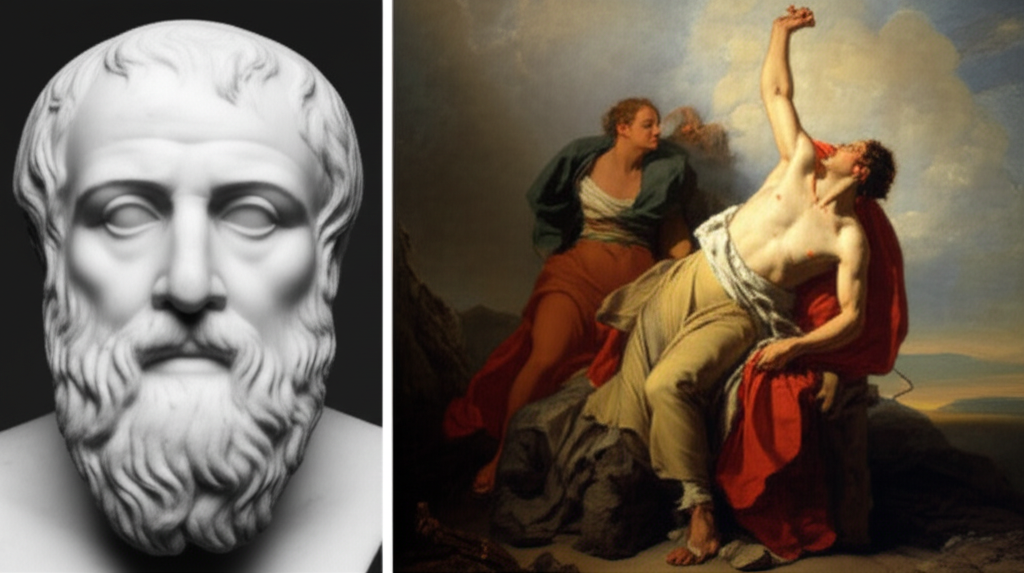
The pursuit of pleasure and the good life remains one of humanity's most enduring and complex questions. While pleasure can certainly be a component of a well-lived life, the philosophical tradition, from ancient Greece to the modern era, consistently points towards a richer, more multifaceted understanding of human flourishing—one that often embraces virtue, meaning, and the courageous navigation of desire, pain, and the profound realities of life and death.
📹 Related Video: ARISTOTLE ON: The Nicomachean Ethics
Video by: The School of Life
💡 Want different videos? Search YouTube for: ""Aristotle Nicomachean Ethics Eudaimonia Summary""
📹 Related Video: What is Philosophy?
Video by: The School of Life
💡 Want different videos? Search YouTube for: ""Epicurus Hedonism Ataraxia Philosophy Explained""