

The Pursuit of Pleasure and the Good Life: An Odyssey Through Philosophical Thought
The human experience, at its core, is often characterized by an oscillating dance between pleasure and pain. From the simplest biological imperative to the most profound spiritual yearning, our lives seem to be oriented towards the avoidance of suffering and the attainment of something we vaguely define as "the good life." But what, precisely, is this good life? Is it synonymous with the relentless accumulation of pleasure, or does true happiness lie in something far more enduring, perhaps even in the transcendence of desire itself? This pillar page embarks on a philosophical journey, delving into the rich tapestry of Western thought to explore how thinkers from antiquity to modernity have grappled with these fundamental questions, ultimately seeking to delineate the intricate relationship between our pursuit of fleeting delights and our quest for a life truly worth living, a quest ever framed by the inescapable realities of life and death.
The Elusive Definitions: Pleasure, Happiness, and Desire
Before we can truly engage with the pursuit, we must first confront the slippery nature of our terms. What do we mean by "pleasure," and how does it relate to the broader concept of "happiness" or "the good life"?
- Pleasure: Often understood as a sensation, a feeling of enjoyment or delight, typically arising from the gratification of an impulse or a need. It can be sensory (eating, touch), emotional (joy, amusement), or intellectual (solving a puzzle). Its nature is often immediate, intense, and transient.
- Happiness (Eudaimonia): Far more complex, this concept, particularly in ancient Greek thought, refers not merely to a feeling but to a state of flourishing, living well, or having a good spirit. It implies a deeper, more stable condition, often associated with virtue, purpose, and living in accordance with reason. It is a state of being, not merely a passing sensation.
- Desire: The fundamental engine of our pursuit. Desire is the longing or craving for something, the impulse that propels us towards pleasure and away from pain. Philosophers have long debated whether desires are inherently good, neutral, or potentially problematic, leading to endless cycles of dissatisfaction.
The distinction between pleasure and happiness is crucial. While pleasure can contribute to happiness, it is rarely considered its sole component. Indeed, many philosophical traditions suggest that an uncritical pursuit of pleasure can actually detract from true happiness, leading instead to a life of perpetual longing and unfulfillment.
Ancient Echoes: Pleasure's Place in the Good Life
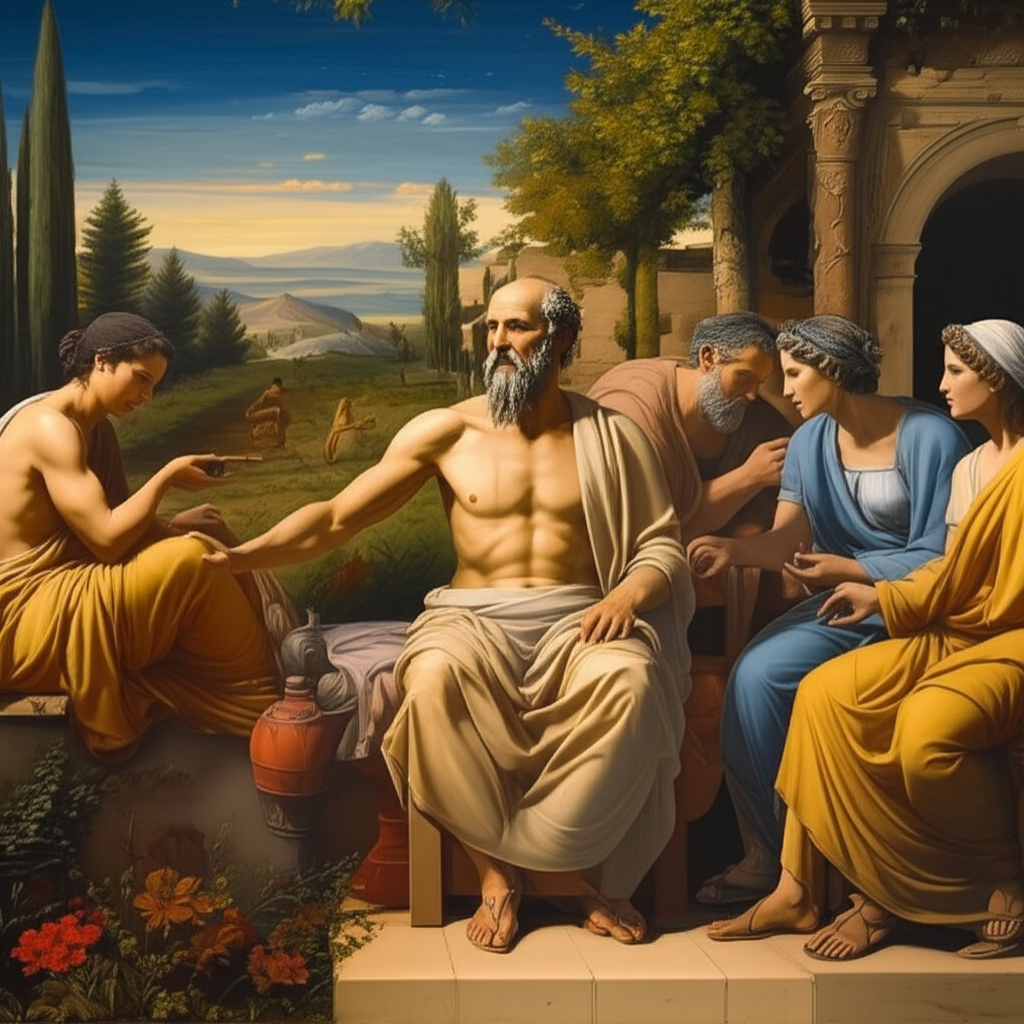
The earliest Western philosophers laid the groundwork for our understanding of pleasure and the good life, offering diverse and often contrasting perspectives that continue to resonate today. Drawing from the Great Books of the Western World, we find profound insights.
Plato and Aristotle: Reason, Virtue, and the Highest Good
For Plato, as seen in dialogues like Philebus, pleasure is a complex phenomenon. He distinguishes between true and false pleasures and argues that the highest good cannot be pleasure alone, as pleasure often comes mixed with pain or arises from ignorance. True good, for Plato, is found in the realm of Forms, accessible through reason and contemplation, where the Good itself is paramount, transcending mere sensation.
Aristotle, in his Nicomachean Ethics, offers a more nuanced view. He acknowledges that pleasure is an important aspect of life, often accompanying virtuous activity, but it is not the chief good. Instead, he posits eudaimonia—often translated as "flourishing" or "living well"—as the highest human good. Eudaimonia is achieved through virtuous activity in accordance with reason over a complete life. For Aristotle, the rational pursuit of virtue, not the unbridled pursuit of pleasure, leads to genuine happiness.
The Epicureans: Tranquility Through Calculated Pleasure
In stark contrast to the intellectual rigors of Plato and Aristotle, Epicurus and his followers proposed a philosophy centered on pleasure, but not in the hedonistic sense often misunderstood. For Epicurus, the highest good was ataraxia (freedom from disturbance) and aponia (absence of bodily pain). This was achieved not through lavish indulgence, but through:
- Simple Pleasures: Moderation in all things, appreciating simple food, friendship, and intellectual conversation.
- Freedom from Fear: Overcoming the fear of gods and death (which he argued were irrational).
- Limiting Desires: Recognizing that many desires are unnatural and unnecessary, leading only to dissatisfaction.
Epicurus advocated for a life free from pain and fear, believing this state to be the truest form of pleasure. His philosophy, though often mischaracterized, was a call for a tranquil, measured existence, carefully calculating the consequences of desire to avoid future pain.
The Stoics: Virtue as the Sole Good, Indifference to Pleasure and Pain
The Stoics, notably figures like Epictetus and Seneca, offered perhaps the most radical departure from a pleasure-centric view. For them, virtue was the sole good, and everything else—including pleasure, pain, wealth, poverty, life and death—were indifferents. While some indifferents (like health) were "preferred," they held no intrinsic moral value.
Stoicism teaches that true happiness comes from living in accordance with nature and reason, accepting what is beyond our control, and cultivating inner tranquility. The wise person remains unaffected by external circumstances, finding contentment in their own virtuous actions and judgments, demonstrating a profound indifference to both pleasure and pain.
The Christian Synthesis and the Modern Turn
The philosophical landscape shifted dramatically with the advent of Christianity and later, with the Enlightenment and modern thought, each re-evaluating the role of pleasure in the good life.
Augustine and Aquinas: Heavenly Bliss and Earthly Imperfections
St. Augustine, in his Confessions, grappled intensely with the allure of earthly pleasures, ultimately concluding that true and lasting happiness could only be found in God. Earthly pleasures, while not inherently evil, were fleeting and could lead one astray from the ultimate good. The "good life" became redefined as a life lived in devotion and anticipation of eternal bliss.
St. Thomas Aquinas, synthesizing Aristotelian thought with Christian theology in his Summa Theologica, also placed the ultimate good in the contemplation of God. He recognized that humans seek happiness, but argued that perfect happiness is not attainable in this life, as no earthly good—including pleasure—can fully satisfy the human desire for the infinite.
Utilitarianism: The Greatest Good for the Greatest Number
With the Enlightenment, philosophers like Jeremy Bentham and John Stuart Mill (in Utilitarianism) introduced a radically different framework. Utilitarianism posits that the morally right action is the one that produces the greatest good for the greatest number. Here, "good" is often equated with happiness, and happiness with pleasure and the absence of pain.
Mill refined Bentham's crude calculus of pleasures, introducing the concept of higher and lower pleasures. He argued that intellectual and moral pleasures (e.g., reading poetry, engaging in meaningful conversation) are qualitatively superior to mere bodily pleasures (e.g., eating, drinking). For Mill, a life pursuing higher pleasures, leading to the greatest overall happiness for society, constituted the good life. This perspective directly connects the pursuit of pleasure to a broader ethical and societal framework.
The Shadow of Suffering: Pleasure, Pain, and the Human Condition
The philosophical discussion of pleasure is incomplete without acknowledging its intrinsic counterpart: pain. The human condition is defined by both, and our understanding of one often illuminates the other.
- Pain as a Teacher: From the Stoic endurance of suffering to Nietzsche's assertion that "what does not kill me makes me stronger," pain is often viewed not merely as an antagonist to pleasure but as a catalyst for growth, understanding, and resilience. It forces introspection and can recalibrate our desires.
- Life and Death: The Ultimate Context: The finitude of life and death profoundly shapes our pursuit of pleasure and the good life. Epicurus sought to mitigate the fear of death to achieve tranquility. Existentialists emphasize that our mortality gives urgency and meaning to our choices, including how we seek happiness. The awareness of death can either propel us into hedonistic abandon or inspire a deeper search for purpose beyond fleeting pleasures.
The Great Books remind us that the human experience is not merely a quest for uninterrupted bliss, but a complex navigation of joy and sorrow, gain and loss, ultimately seeking meaning within the boundaries of our existence.
Synthesizing the Pursuit: A Path Towards Flourishing
So, can the pursuit of pleasure truly align with the good life? The philosophical tradition suggests that while pleasure is a natural and often desirable component of life, it is rarely, if ever, the sole or highest good. A balanced perspective often emerges, advocating for a life that integrates pleasure within a broader framework of virtue, reason, purpose, and community.
Diverse Perspectives on Pleasure and Happiness
To illustrate the breadth of thought, consider this comparative table:
| Philosophical School | Primary View of Pleasure | Relationship to Happiness/Good Life | Key Takeaway |
|---|---|---|---|
| Platonism | Often misleading, lower than intellectual/spiritual good | Subordinate to Reason and the Good; true happiness is intellectual. | Reason over sensation. |
| Aristotelianism | Accompanies virtuous activity, but not the chief good. | Happiness (Eudaimonia) is virtuous activity in accordance with reason. | Virtue is key to flourishing. |
| Epicureanism | Absence of pain (aponia) and mental disturbance (ataraxia) | The highest good is tranquility achieved through simple pleasures. | Calculated moderation, freedom from fear. |
| Stoicism | An "indifferent" – neither good nor bad in itself. | Virtue is the sole good; happiness is living in accordance with reason. | Cultivate inner resilience, accept what is beyond control. |
| Christianity | Earthly pleasures are secondary; true bliss is divine. | Ultimate happiness is found in God, often in the afterlife. | Spiritual fulfillment transcends material pleasure. |
| Utilitarianism | The sum of pleasures minus pain; higher vs. lower. | Greatest good for the greatest number; happiness as collective pleasure. | Ethical consideration of pleasure's impact on society. |
This intellectual lineage reveals a recurring theme: true happiness or the good life is not merely an accumulation of pleasant sensations. Instead, it involves a deeper engagement with our existence, demanding reflection, ethical choices, and an understanding of our place in the cosmos. The pursuit of pleasure, when unmoored from these considerations, can become a source of profound dissatisfaction and a distraction from genuine flourishing.
YouTube: "Epicureanism vs. Stoicism: Ancient Philosophies for Modern Life"
YouTube: "What is Eudaimonia? Aristotle's Philosophy of Flourishing"
Conclusion: The Ongoing Quest
The pursuit of pleasure and the good life remains an enduring human endeavor, a question that each individual, consciously or unconsciously, must answer for themselves. From the contemplative wisdom of Plato and Aristotle to the tranquil pragmatism of Epicurus, the resilient virtue of the Stoics, and the societal calculus of the Utilitarians, philosophy offers not definitive answers but profound frameworks for understanding.
Ultimately, the journey through these philosophical landscapes suggests that a truly good life may not be found in the relentless chase for immediate gratification, but in the considered cultivation of virtue, the pursuit of meaningful purpose, the acceptance of pain as an inevitable part of life and death, and the wise governance of our desires. It is a continuous process of inquiry, reflection, and living, inviting us all to engage with the timeless question: What truly makes a life good?
📹 Related Video: What is Philosophy?
Video by: The School of Life
💡 Want different videos? Search YouTube for: "The Pursuit of Pleasure and the Good Life philosophy"