

The Elusive Quest: Unpacking Happiness and the Good Life
From the dawn of philosophy, humanity has grappled with two profound questions: what is happiness, and what constitutes a good life? These aren't mere academic exercises but fundamental inquiries that shape our values, decisions, and ultimately, our existence. This article delves into the rich tapestry of philosophical thought, drawing from the "Great Books of the Western World," to explore how thinkers across millennia have approached the pursuit of happiness, examining its intricate relationship with pleasure and pain, good and evil, and the inescapable realities of life and death. We will discover that the answer is rarely simple, often nuanced, and always deeply personal.
Ancient Echoes: Defining Eudaimonia
The concept of happiness, as understood by the ancients, often diverged significantly from our modern, often fleeting, notion of contentment. For many, it wasn't a temporary emotion but a state of being, a flourishing.
Aristotle's Flourishing: The Path of Virtue
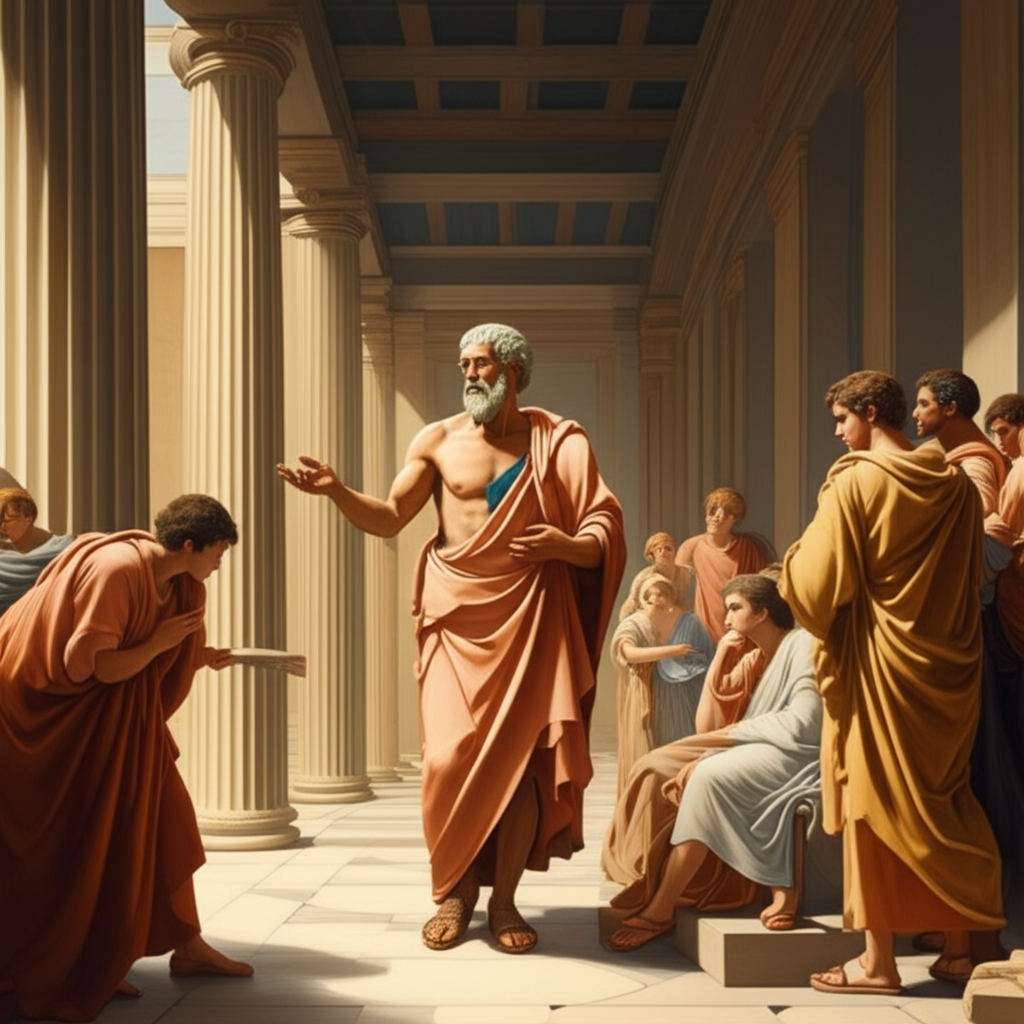
In his Nicomachean Ethics, Aristotle famously articulated eudaimonia, often translated as "human flourishing" or "living well." For Aristotle, happiness was not simply a feeling but an activity of the soul in accordance with virtue. It wasn't about seeking pleasure alone, but about living a life of purpose, rationality, and moral excellence. A truly good life, in this view, involved cultivating virtues like courage, temperance, justice, and wisdom, and exercising them consistently over a complete lifetime. The virtuous person finds joy not in external goods, but in the internal harmony achieved through living rightly.
Plato's Ideal State of Being
Plato, through the dialogues recorded in works like The Republic, also linked happiness to virtue and the proper ordering of the soul. For Plato, a truly happy individual was one whose soul—composed of reason, spirit, and appetite—was balanced and governed by reason. This internal harmony was analogous to the ideal state, where justice prevailed. An unjust soul, driven by unchecked appetites or spirit, could never achieve true happiness, regardless of external circumstances. Here, the concepts of good and evil are inextricably tied to one's capacity for inner peace and fulfillment.
The Dance of Pleasure and Pain
The role of pleasure and pain in the pursuit of happiness has been a perennial debate, dividing philosophers into distinct camps. Is pleasure the ultimate goal, or merely a byproduct of a well-lived life?
Epicurean Tranquility vs. Hedonistic Excess
Epicurus, often misunderstood, argued that pleasure was indeed the highest good, but he defined it not as wild indulgence, but as the absence of pain in the body and disturbance in the soul (ataraxia). For Epicurus, the good life was one of moderate pleasures, friendship, and philosophical contemplation, free from fear (especially of death and the gods). His philosophy was a rational pursuit of tranquility, a far cry from the unbridled hedonism often mistakenly attributed to his name. He understood that excessive pursuit of certain pleasures could lead to greater pain.
Stoic Resilience: Beyond Immediate Sensation
In stark contrast, the Stoics (think Seneca, Epictetus, Marcus Aurelius) taught that true happiness comes from living in accordance with nature and reason, accepting what is beyond our control, and cultivating inner virtue. For them, external circumstances—including pleasure and pain—were indifferent. The wise person finds contentment not by chasing pleasure or avoiding pain, but by mastering their reactions to life's inevitable ups and downs. Their focus was on developing resilience and an unshakeable inner calm, recognizing that much of human suffering stems from our judgments about events, rather than the events themselves.
Morality's Compass: Good, Evil, and True Contentment
The question of whether happiness can truly be achieved without adhering to some moral framework is central to many philosophical traditions. Can one be truly happy while committing acts considered evil?
Many philosophers, from Plato and Aristotle to Kant, argued that genuine happiness is intrinsically linked to moral living. For Kant, acting from duty and according to the moral law was paramount, and while he didn't promise happiness as a direct reward, he believed that a rational being would strive for a state where virtue and happiness were aligned. The pursuit of the good life often entails a commitment to ethical principles that transcend individual desires, recognizing our interconnectedness and responsibilities within a community. To choose evil is to corrupt the soul, making true, lasting happiness impossible.
The Shadow of Life and Death
The finite nature of our existence profoundly shapes our understanding of happiness and the good life. How does the awareness of life and death influence our priorities and our quest for meaning?
The contemplation of mortality has spurred countless philosophical reflections. For some, like the Epicureans, understanding that death is merely the cessation of sensation frees us from its fear, allowing us to enjoy life more fully. For others, like existentialists, the finitude of life imbues our choices with immense responsibility, urging us to create meaning in a world that offers none inherently. The good life might then be defined by how authentically we live, how we confront our mortality, and what legacy we leave behind. The urgency to live a life of purpose, to experience profound joy, and to contribute meaningfully, often intensifies when we truly grasp the precious brevity of our time.
Charting Your Own Course: A Modern Synthesis
The journey through these philosophical landscapes reveals a consistent theme: happiness is rarely a passive state but an active pursuit, deeply intertwined with our values, choices, and understanding of ourselves.
| Philosophical Approach | Key Tenet | Relationship to Happiness |
|---|---|---|
| Aristotelian | Virtue, reason, human flourishing (eudaimonia) | Achieved through living a life of moral excellence and purpose |
| Epicurean | Absence of pain, tranquility (ataraxia) | Found in moderate pleasures, friendship, and freedom from fear |
| Stoic | Virtue, reason, acceptance of fate | Internal state of calm, impervious to external circumstances |
| Kantian | Duty, moral law, good will | Aligned with moral living, though not its direct goal |
While the modern world often equates happiness with fleeting pleasure or material accumulation, the wisdom of the "Great Books" calls us to a deeper understanding. It suggests that a truly good life is one of mindful engagement, ethical conduct, resilience in the face of adversity, and a constant striving for what is truly meaningful. It is a synthesis of purpose, virtue, and a profound appreciation for the precious gift of life.
📹 Related Video: ARISTOTLE ON: The Nicomachean Ethics
Video by: The School of Life
💡 Want different videos? Search YouTube for: ""Aristotle Nicomachean Ethics Summary""
📹 Related Video: STOICISM: The Philosophy of Happiness
Video by: The School of Life
💡 Want different videos? Search YouTube for: ""Stoicism for a Good Life""