

The Pursuit of Happiness and the Good Life: A Philosophical Odyssey
The quest for happiness and the good life is perhaps the most enduring and universal human endeavor, a profound inquiry that has captivated philosophers from antiquity to the present day. This article delves into the rich tapestry of Western thought, drawing from the Great Books of the Western World, to explore how thinkers have grappled with defining happiness, understanding its relationship to pleasure and pain, confronting the stark reality of life and death, and navigating the complex terrain of good and evil in the pursuit of a meaningful existence. We will see that the good life is rarely a simple destination, but rather a dynamic process of ethical reflection, self-cultivation, and an ongoing engagement with the fundamental questions of human flourishing.
The Eternal Quest for Eudaimonia: Beyond Fleeting Joy
For millennia, humanity has sought to understand what constitutes a truly fulfilling existence. Is happiness merely a fleeting emotion, a burst of joy, or something more profound and sustainable? The Great Books reveal that philosophers have largely leaned towards the latter, introducing concepts far richer than simple contentment.
In ancient Greece, particularly with Aristotle, the concept of eudaimonia emerged as the pinnacle of human aspiration. Often translated as "flourishing" or "living well," eudaimonia is not a momentary feeling but a state of being, achieved through virtuous activity in accordance with reason. It is a life lived excellently, where one realizes their full potential. This stands in stark contrast to a purely hedonistic view, which equates happiness solely with the accumulation of pleasure and pain avoidance.
Defining Happiness: More Than Just Fleeting Pleasure
The distinction between superficial pleasure and profound happiness is a recurring theme in philosophical discourse. While pleasure is often sensory, immediate, and transient, true happiness, as understood by many classical thinkers, involves deeper engagement with one's rational and moral faculties.
- Aristotle's Virtue Ethics: For Aristotle, happiness (eudaimonia) is the telos (end goal) of human life. It is attained through the consistent practice of virtues – courage, temperance, justice, wisdom – which represent the "mean" between extremes. A life of virtue is inherently a good life, leading to flourishing.
- Epicurean Tranquility: Epicurus, while often misunderstood as a hedonist, advocated for a life free from pain (aponia) and mental disturbance (ataraxia). His pursuit of pleasure was not about excess, but about the absence of suffering and the cultivation of simple, natural pleasures, emphasizing friendship and philosophical contemplation. He sought a state of calm contentment, recognizing that intense pleasures often lead to greater pains.
- Stoic Resilience: The Stoics, like Seneca and Marcus Aurelius, taught that true happiness comes from living in accordance with nature and reason, accepting what cannot be changed, and focusing on what one can control: one's judgments and actions. For them, virtue was the sole good, and external circumstances, including pleasure and pain, were indifferent.
The journey through these philosophies reveals a consistent message: the good life is not passively received, but actively constructed through deliberate choices and a cultivated inner state.
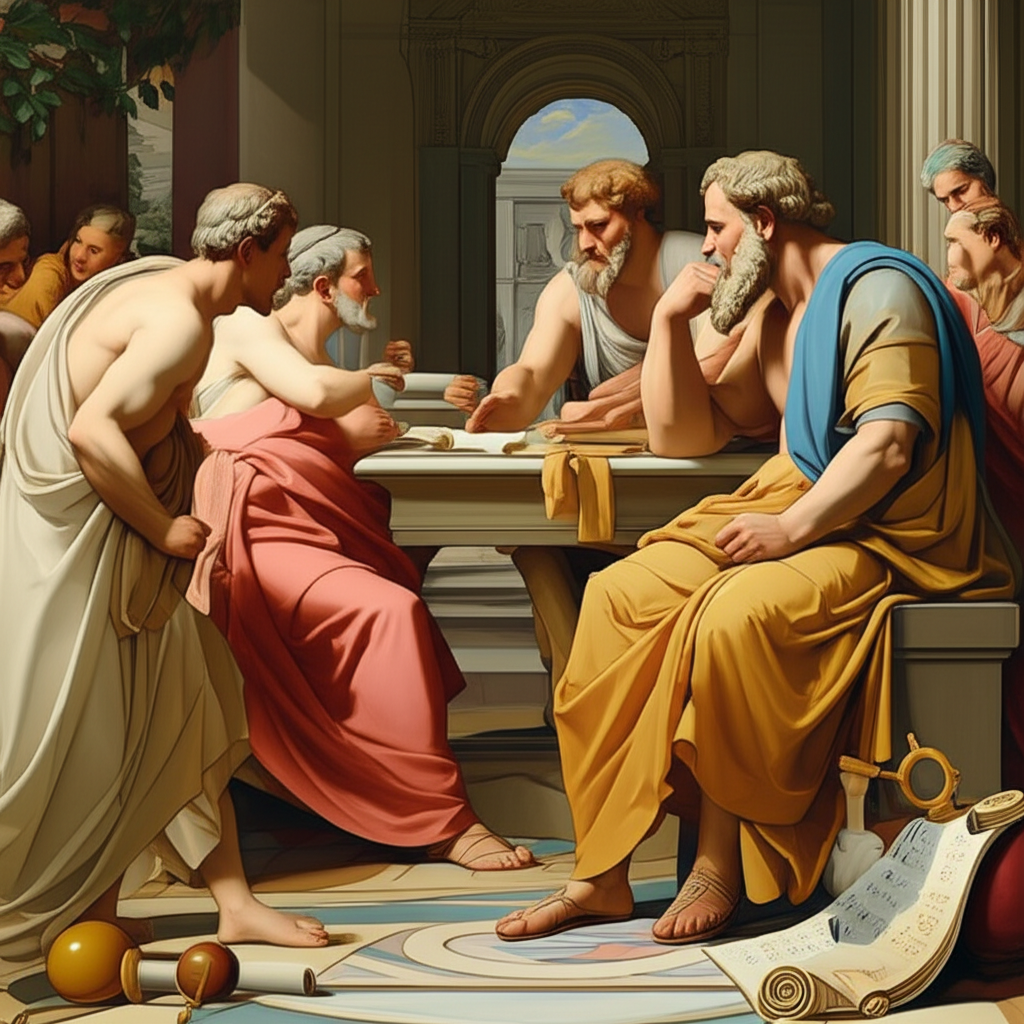
The Shadow of Life and Death: A Catalyst for Meaning
The finite nature of our existence, the inescapable reality of life and death, casts a profound shadow—and simultaneously, a brilliant light—on our pursuit of happiness. How does the awareness of our mortality shape our values and our definition of the good life?
Philosophers like Plato, in works such as Phaedo, explored the immortality of the soul, suggesting that the true philosopher prepares for death by detaching from bodily desires and focusing on intellectual and moral purity. For others, the brevity of life serves as a powerful impetus to live fully and meaningfully. Montaigne, reflecting on the human condition, saw death not as an end to be feared, but as an integral part of life to be contemplated and accepted, thus enriching the present moment.
The recognition of our limited time often forces a re-evaluation of what truly matters, pushing us beyond transient pleasures towards more enduring values and contributions. It can transform the pursuit of happiness from a self-centered endeavor into a quest for a life of purpose and legacy.
**## 📹 Related Video: What is Philosophy?
Video by: The School of Life
💡 Want different videos? Search YouTube for: ""Great Books of the Western World philosophy death""**
Navigating Good and Evil: The Moral Compass of the Good Life
Can one truly be happy if one is not good? This question lies at the heart of many philosophical systems and forms an undeniable link between ethics and flourishing. The concepts of good and evil are not merely abstract ideas but practical guides for living a life worthy of the name "good."
- Plato's Ideal Forms: For Plato, the ultimate Good is a transcendent Form, an ideal that illuminates all other goods. To live a good life is to strive towards this ideal, through reason and justice, allowing the rational part of the soul to govern the appetitive and spirited parts. A truly happy individual, for Plato, is one whose soul is ordered and harmonious, reflecting the cosmic order.
- Aristotle's Virtuous Character: As mentioned, Aristotle believed that a life of virtue is the good life. Virtuous actions are not just means to an end; they are constitutive of happiness. Acting justly, courageously, and temperately is not merely doing good but being good, which leads to flourishing.
- Kantian Duty: Immanuel Kant later argued that moral actions are those done out of duty, in accordance with universalizable principles (the Categorical Imperative), rather than inclination or the pursuit of happiness. While not directly equating happiness with goodness, Kant posited that a rational being's ultimate goal is the "highest good," which is virtue combined with happiness.
These perspectives underscore that the good life is inextricably intertwined with moral rectitude. A life devoid of ethical consideration, no matter how materially prosperous, would be seen by many as fundamentally lacking in true happiness.
Pathways to the Good Life: Diverse Philosophical Perspectives
The Great Books of the Western World offer a rich tapestry of approaches to achieving the good life. While their methods and emphases differ, they all share a common thread: the importance of thoughtful engagement with one's existence.
| Philosopher/School | Core Concept of Good Life | Key Practices/Beliefs | Relationship to Happiness |
|---|---|---|---|
| Plato | Harmonious Soul, Pursuit of the Good | Reason, Justice, Knowledge, Detachment from bodily desires | True happiness comes from an ordered soul aligned with the Form of the Good. |
| Aristotle | Eudaimonia (Flourishing) | Virtue (Golden Mean), Rational Activity, Community | Happiness is the result of living a life of virtuous activity in accordance with reason. |
| Epicurus | Ataraxia (Tranquility), Aponia (Absence of Pain) | Simple pleasures, Friendship, Philosophical contemplation, Freedom from fear | Happiness is a state of calm contentment, achieved by minimizing pain and maximizing natural, necessary pleasures. |
| Stoics | Virtue, Living in Accordance with Nature | Acceptance of fate, Control over inner judgments, Indifference to externals | Happiness is found in virtue alone, independent of external circumstances or emotions. |
| Christian Thought | Salvation, Union with God | Faith, Hope, Charity, Following Divine Law | Ultimate happiness (beatitude) is found in spiritual fulfillment and eternal life. |
**## 📹 Related Video: What is Philosophy?
Video by: The School of Life
💡 Want different videos? Search YouTube for: ""What is the Good Life philosophy summary""**
Conclusion: An Ongoing Inquiry
The pursuit of happiness and the good life remains an ongoing, deeply personal, yet universally human inquiry. The Great Books of the Western World provide not definitive answers, but rather a profound framework for asking the right questions. They challenge us to look beyond superficial pleasures, to confront the realities of life and death, to grapple with the complexities of good and evil, and to actively cultivate a life of meaning and purpose. As Daniel Sanderson, I believe that this philosophical journey is not merely an academic exercise, but an essential component of living a truly examined and flourishing existence in our modern world. The good life, it seems, is less a destination to be reached, and more a path to be walked with wisdom, courage, and an open heart.