

The Enduring Quest: Navigating Happiness and the Good Life
From the dawn of reasoned thought, humanity has grappled with two profound questions: What is happiness? and How ought one live a good life? These are not mere academic exercises but existential inquiries that shape our daily choices and ultimate destinies. This article delves into the rich tapestry of Western philosophical thought, drawing from the Great Books of the Western World, to explore how various thinkers have conceived of happiness, the role of pleasure and pain, the nature of good and evil, and the inescapable shadow of life and death in our relentless pursuit of eudaimonia—a flourishing, well-lived existence. We shall discover that the path to the good life is rarely straightforward, often necessitating a profound re-evaluation of our deepest desires and societal constructs.
Ancient Wisdom: Foundations of Flourishing
The earliest philosophers laid critical groundwork for understanding happiness, often intertwining it with virtue and the very purpose of human existence.
Aristotle and Eudaimonia: Living Fully
For Aristotle, as articulated in his Nicomachean Ethics, happiness (eudaimonia) is not a fleeting emotion but a state of human flourishing, achieved through virtuous activity in accordance with reason. It is the telos (end goal) of human life. He argued that truly living a good life means exercising our unique human capacity for reason, cultivating virtues like courage, temperance, and justice, and engaging in contemplation.
- Virtue as the Path: Aristotle posited that virtues are means between two extremes (e.g., courage is the mean between cowardice and recklessness).
- The Complete Life: Eudaimonia requires a complete life, as one cannot be called happy until death, much like a swallow does not make a summer. This concept profoundly links life and death to the final assessment of one's flourishing.
- External Goods: While virtue is primary, Aristotle acknowledged that certain external goods—friends, wealth, health—are necessary for the full expression of virtue, though they are not happiness itself.
Epicurus: The Serenity of Ataraxia
In stark contrast to popular misconceptions, Epicurus, whose philosophy is preserved through fragments and later accounts, did not advocate for unbridled sensual indulgence. Instead, his pursuit of happiness centered on ataraxia (freedom from disturbance) and aponia (absence of pain). For Epicurus, the good life was one where pleasure and pain were carefully managed.
- Prudent Hedonism: True pleasure, according to Epicurus, was found in tranquility, friendship, and intellectual pursuits, rather than lavish feasts.
- Minimizing Pain: The goal was to avoid physical pain and mental distress, often through simple living and philosophical contemplation. Fear of death, he argued, was irrational, as "death is nothing to us; for that which is dissolved, is without sensation; and that which is without sensation is nothing to us." This direct address to life and death was central to his philosophy of peace.
- Limits of Desire: Understanding and limiting desires was key to avoiding the pain of unfulfilled wants.
The Stoics: Virtue, Reason, and Resilience
The Stoics, like Seneca and Epictetus, held that happiness is found in living in harmony with nature and reason. They emphasized virtue as the sole good, and vice as the sole evil. External events, including pleasure and pain, were considered indifferents—neither good nor evil in themselves—and should not dictate our inner peace.
- Control What You Can: The Stoics taught that we have control only over our judgments and reactions, not over external circumstances.
- Virtue is Sufficient: A virtuous life, lived according to reason, was sufficient for happiness, regardless of external fortune.
- Acceptance of Fate: Embracing the natural order of the cosmos, including the inevitability of life and death, was crucial for inner tranquility.
Medieval Perspectives: The Divine Good
With the advent of Christianity, the concept of the good life and happiness took on a transcendent dimension, intertwining with divine will and eternal salvation.
Augustine: The Quest for God
St. Augustine, in works like Confessions and City of God, argued that true happiness cannot be found in earthly pleasures or achievements, for these are fleeting and ultimately unsatisfying. The human heart is restless, he famously wrote, "until it rests in You [God]."
- Ultimate Good: For Augustine, God is the ultimate good, and aligning one's will with divine will is the path to true blessedness.
- Original Sin and Redemption: The presence of evil in the world and within humanity necessitates redemption, with the good life being one lived in faith and striving for grace.
- Eternal Life: The ultimate fulfillment of happiness is found not in this temporal existence but in the eternal life and death cycle culminating in union with God.
Modern Challenges: Duty, Will, and Revaluation
The Enlightenment and subsequent philosophical movements brought new perspectives, questioning traditional foundations and offering radical reinterpretations of happiness and morality.
Kant: Duty, Reason, and the Moral Law
Immanuel Kant, in his Critique of Practical Reason, famously argued that morality is not about achieving happiness, but about acting from duty, according to universalizable moral laws (the Categorical Imperative). While happiness is a natural human desire, it cannot be the basis for moral action, as it is too subjective and contingent.
- Good Will: The only thing unconditionally good is a good will, one that acts purely out of respect for the moral law.
- Moral Worth: An action's moral worth comes from the maxim (rule) by which it is performed, not its consequences or the pleasure it might bring.
- Postulates of Practical Reason: Kant posited the necessity of freedom, immortality (linking to life and death), and the existence of God to make sense of moral striving and the hope for a proportionate happiness in the afterlife.
Nietzsche: Overcoming and the Will to Power
Friedrich Nietzsche radically challenged conventional notions of good and evil, happiness, and the good life. For Nietzsche, much of traditional morality was a "slave morality," born of resentment and weakness.
- Revaluation of Values: He called for a "revaluation of all values," asserting that true flourishing comes from the "will to power"—not domination over others, but self-overcoming, creativity, and the affirmation of life in all its challenging, tragic glory.
- Beyond Good and Evil: Nietzsche's work, Beyond Good and Evil, critiques the simplistic binaries of traditional morality, suggesting that what is conventionally called "good" might in fact be life-denying.
- Eternal Recurrence: The concept of eternal recurrence, where one lives every moment as if it would repeat endlessly, serves as a test of one's affirmation of life and death, and whether one has truly embraced their existence.
The Interplay of Pleasure, Pain, Good, and Evil
Throughout history, philosophers have grappled with the complex relationship between our sensations and our moral compass.
| Philosophical Approach | View on Pleasure | View on Pain | Role of Good & Evil |
|---|---|---|---|
| Aristotle | A natural accompaniment to virtuous activity, but not the goal. | An impediment to flourishing, but not defining. | Virtue is good, vice is evil; defined by reason. |
| Epicurus | The absence of pain and mental disturbance (ataraxia). | To be avoided; key to achieving tranquility. | Defined by what leads to or detracts from ataraxia. |
| Stoics | An indifferent; not inherently good or bad. | An indifferent; to be endured with equanimity. | Virtue is the sole good, vice the sole evil; internal. |
| Augustine | Fleeting and ultimately unsatisfying; can distract from God. | A consequence of sin; can lead to spiritual growth. | God is the ultimate good; evil is the privation of good. |
| Kant | Not the basis for moral action; can be a consequence of virtue. | To be avoided, but not at the expense of duty. | Defined by moral law and duty, not subjective feelings. |
| Nietzsche | Can be embraced as part of life's affirmation. | Can be embraced as part of growth and overcoming. | Revalued; often tied to strength vs. weakness, life-affirmation vs. life-denial. |
The diverse perspectives on pleasure and pain highlight a fundamental tension: Is happiness found in maximizing pleasure and minimizing pain, or do these sensations serve a deeper purpose in the cultivation of virtue or the affirmation of existence? Similarly, how we define good and evil profoundly dictates the parameters of our pursuit, shaping what we deem worthy goals and what we deem destructive temptations.
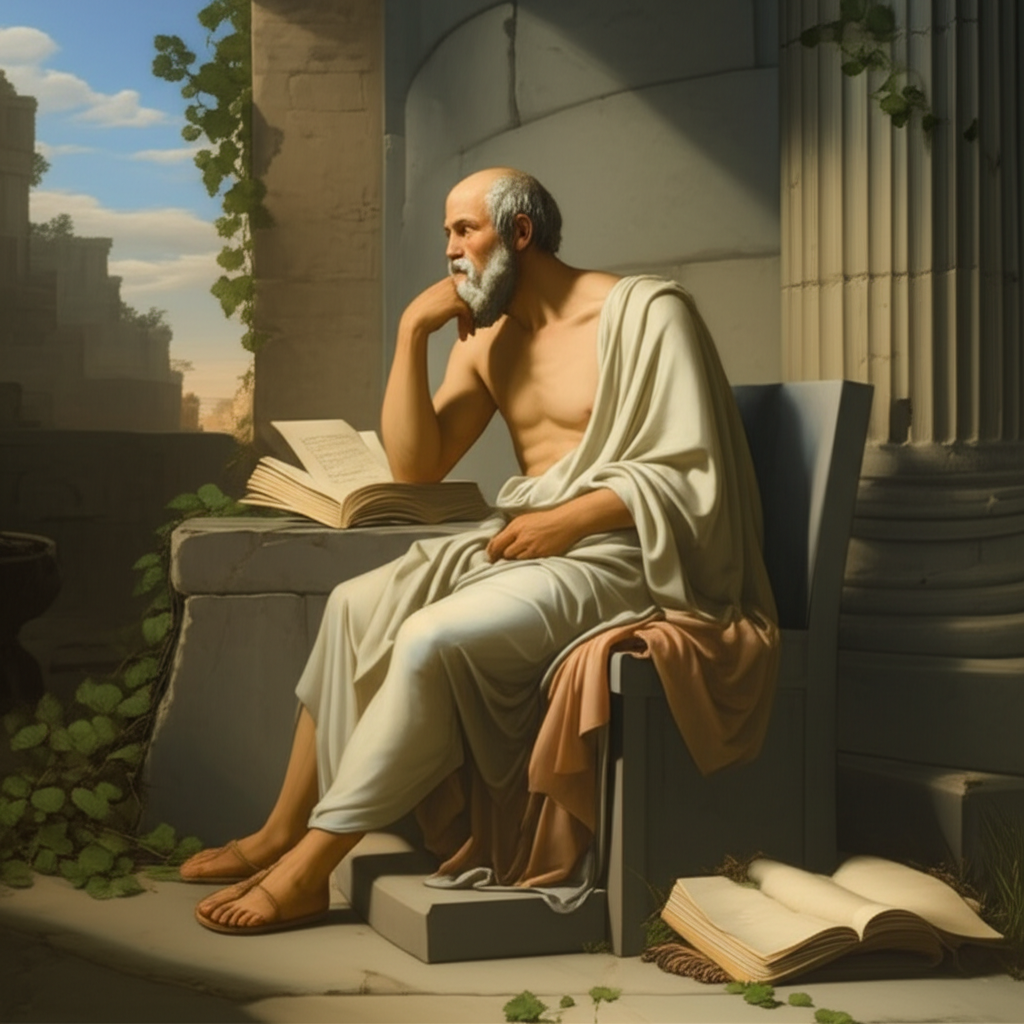
Life and Death: The Ultimate Framework
The finite nature of human existence—the certainty of life and death—provides the ultimate framework for our pursuit of the good life. For some, like Epicurus, understanding mortality liberates us from fear. For Aristotle, a full life must be lived before its final assessment. For Augustine, death is a transition to eternal truth. For Nietzsche, the acceptance of death empowers a radical affirmation of life itself.
The awareness of our limited time compels us to consider what truly matters, what legacy we wish to leave, and how we can live most authentically and meaningfully in the time allotted. It transforms the abstract philosophical question into an urgent personal imperative.
Conclusion: An Ongoing Journey
The pursuit of happiness and the good life remains one of humanity's most enduring and complex endeavors. From Aristotle's virtuous flourishing to Epicurus's tranquil ataraxia, from Augustine's divine love to Kant's unwavering duty, and Nietzsche's radical self-overcoming, the Great Books of the Western World offer not definitive answers, but profound insights and challenging questions.
Ultimately, the journey toward the good life is a deeply personal one, informed by these historical dialogues but ultimately forged in the crucible of individual experience. It demands continuous reflection on our values, our actions, and our understanding of pleasure and pain, good and evil, and the profound significance of life and death. It is a testament to the human spirit's relentless quest for meaning and fulfillment, a quest that continues to unfold with every conscious breath.
📹 Related Video: ARISTOTLE ON: The Nicomachean Ethics
Video by: The School of Life
💡 Want different videos? Search YouTube for: ""Aristotle Nicomachean Ethics Summary""
📹 Related Video: STOICISM: The Philosophy of Happiness
Video by: The School of Life
💡 Want different videos? Search YouTube for: ""Stoicism for Beginners - Ancient Philosophy""