

The Elusive Quest: Navigating Happiness and the Good Life
Summary: A Perennial Pursuit
From the earliest philosophical inquiries to our contemporary struggles, humanity has been captivated by the twin concepts of happiness and the good life. This article delves into how some of the greatest minds in Western thought, as chronicled in the Great Books of the Western World, have grappled with these profound questions. We will explore the nuanced distinctions between fleeting pleasure and pain and enduring well-being, the role of good and evil in shaping our existence, and how the inescapable reality of life and death frames our understanding of what it means to live a life truly worth living. The journey reveals that the pursuit of happiness is not a simple path, but a complex, multifaceted endeavor deeply interwoven with virtue, reason, and our very essence.
Introduction: The Universal Longing
What does it truly mean to live a good life? Is happiness merely a subjective feeling, a fleeting emotion, or something more substantial, more enduring? These questions have echoed through the ages, forming the bedrock of philosophical inquiry. For Daniel Sanderson, and indeed for all of us at planksip, understanding these fundamental inquiries means turning to the foundational texts that have shaped our intellectual heritage. The answers, as we shall see, are rarely simple, often contradictory, and perpetually invite further contemplation.
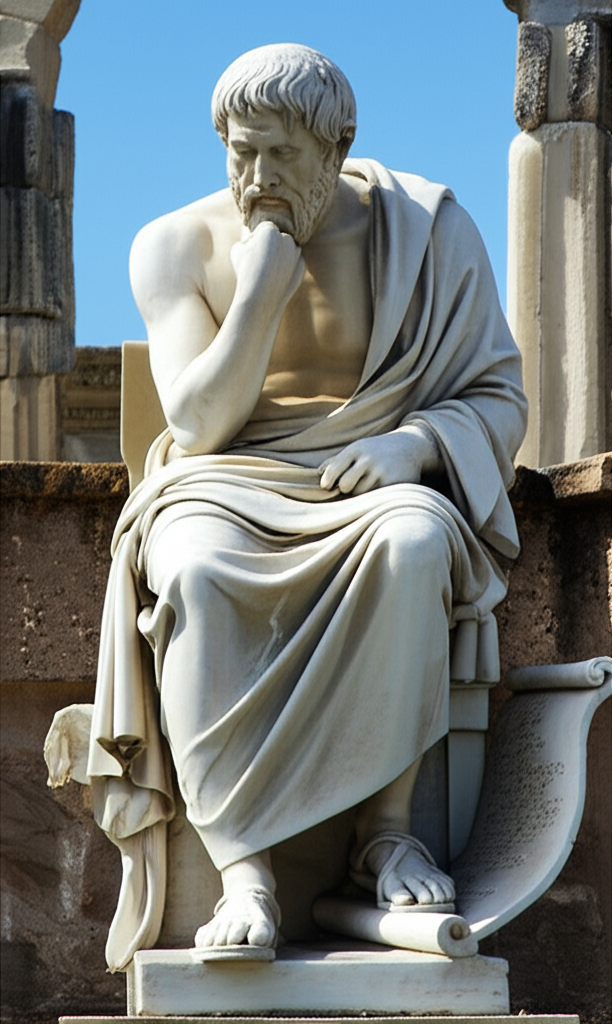
Ancient Wisdom on Eudaimonia: More Than Mere Feeling
The ancient Greeks, in particular, laid much of the groundwork for our understanding of the good life. They distinguished sharply between transient pleasure and a deeper, more profound state of flourishing.
Aristotle and the Flourishing Life
In his seminal work, Nicomachean Ethics, Aristotle meticulously dissects the concept of eudaimonia, often translated as "happiness" but more accurately understood as "human flourishing" or "living well." For Aristotle, eudaimonia is not a passive state but an activity of the soul in accordance with virtue. It's not about feeling good, but about doing good and being good.
- Virtue as the Path: Aristotle argued that true happiness is achieved through the cultivation of virtues – courage, temperance, justice, wisdom, among others. These virtues represent a "golden mean" between extremes, guiding us toward excellent character.
- Reason and Function: Humans, uniquely endowed with reason, find their highest function in rational activity. A life lived according to reason, exercising intellectual and moral virtues, is the most fulfilling.
- The Complete Life: Eudaimonia requires a complete life, as "one swallow does not make a summer." It's a lifelong endeavor, not a momentary triumph.
This perspective emphasizes that the pursuit of happiness is inherently tied to ethical living and the development of one's full human potential. It’s a robust, active engagement with the world, guided by principles of good and evil rather than simply avoiding pain.
The Hedonistic Calculus: Pleasure and Pain
While Aristotle championed virtue, other schools of thought placed a different emphasis on the role of pleasure.
Epicurus and the Pursuit of Tranquility
Epicurus, another towering figure from the Great Books of the Western World, offered a nuanced view on pleasure. Often misunderstood as advocating for unrestrained indulgence, Epicureanism, in fact, emphasized the absence of pain (aponia) in the body and tranquility of mind (ataraxia) as the highest good.
- Types of Pleasures: Epicurus distinguished between kinetic pleasures (active, fleeting joys) and katastematic pleasures (static, lasting states of contentment). He advocated for the latter, achieved through moderation and philosophical reflection.
- Minimizing Pain: The good life, for Epicurus, was largely about intelligent choices that minimize suffering. This meant satisfying natural and necessary desires simply, avoiding desires that lead to distress, and cultivating friendships.
- Freedom from Fear: A significant source of pain and unhappiness, according to Epicurus, was fear – particularly the fear of the gods and the fear of death. Philosophy, he believed, could liberate us from these anxieties, allowing us to enjoy the present.
This perspective highlights that the relationship between pleasure and pain is central to our experience of happiness. It's not just about maximizing pleasure, but intelligently managing it to achieve a deeper, more stable state of contentment.
The Shadow of Existence: Life and Death's Influence
Our understanding of happiness and the good life is inextricably linked to our awareness of mortality. The finite nature of existence forces us to confront what truly matters.
Stoicism and Accepting Fate
The Stoics, including figures like Seneca and Marcus Aurelius, found their path to the good life through acceptance and resilience. For them, true happiness (or eudaemonia) was found in living in harmony with nature and reason, accepting what is beyond our control, and focusing solely on what is within our power – our judgments, our desires, our actions.
| Stoic Principle | Relation to Happiness & Good Life |
|---|---|
| Dichotomy of Control | Focus on internal virtues; external events are indifferent. |
| Virtue is the Only Good | Good and evil are internal states, not external circumstances. |
| Memento Mori | Awareness of life and death fosters appreciation and urgency. |
| Amor Fati | Loving one's fate, accepting all that happens as necessary. |
This philosophy directly confronts the reality of life and death, arguing that much of our suffering comes from resisting what is inevitable. By accepting our mortality and the unpredictable nature of life, we can find a profound sense of peace and purpose.
Confronting Mortality: An Existential Lens
The awareness of life and death casts a long shadow, but also illuminates the path to meaning. For many thinkers, from ancient philosophers to modern existentialists, the finitude of life imbues our choices with profound significance. It compels us to ask: What will I do with the precious, limited time I have? This urgency can be a powerful motivator for pursuing a life of purpose, connection, and genuine happiness.
The Moral Compass: Good and Evil in the Pursuit
The quest for the good life is fundamentally a moral one. How we define good and evil directly shapes our actions and, consequently, our well-being.
Plato's Forms and the Virtuous Soul
Plato, through the dialogues in his Republic and other works, argued that true happiness (or eudaimonia) is intrinsically linked to justice and the proper ordering of the soul. For Plato, there exists an ultimate Form of the Good, an objective standard against which all actions and virtues are measured.
- Justice in the Soul: A just individual, like a just city, has their soul's parts (reason, spirit, appetite) in harmony, with reason ruling. This internal balance is the source of true well-being, irrespective of external circumstances.
- Knowledge and Virtue: To know the Good is to do the Good. Ignorance is the root of vice and unhappiness. The philosopher, through contemplation of the Forms, strives for this knowledge.
- The Ring of Gyges: Plato's famous thought experiment challenges us to consider whether we would still choose good over evil if we could act with impunity. His conclusion: the just life is inherently better, even if unseen by others.
Plato's work underscores that a life of genuine happiness cannot be divorced from a commitment to good and evil as objective realities, rather than mere conventions.
The Modern Dilemma: Subjectivity vs. Objectivity
While the ancients often posited objective standards for good and evil, modern philosophy has grappled with the increasing subjectivity of moral values. This shift presents a unique challenge to defining the good life. If good and evil are relative, how can we universally define happiness or a flourishing existence? This ongoing debate highlights the enduring complexity of these questions, urging us to continually examine our own moral frameworks.
Synthesizing the Threads: A Path Forward
The Great Books of the Western World offer not a single, definitive answer to the pursuit of happiness and the good life, but a rich tapestry of perspectives. From these venerable texts, we can glean several enduring insights:
- Happiness is an Active Pursuit: It's rarely a passive state but requires effort, reflection, and consistent action.
- Virtue is Paramount: Whether defined by Aristotle's golden mean, Plato's Forms, or Stoic resilience, character and ethical living are crucial.
- Mindful Engagement with Pleasure and Pain: Not all pleasures are equal, and understanding how to navigate suffering is key to tranquility.
- Embracing Life and Death: Our mortality is not a curse but a catalyst for living a meaningful, purposeful existence.
- The Moral Dimension: Our understanding and commitment to good and evil fundamentally shapes the quality of our lives.
The journey towards the good life is deeply personal, yet universally shared. It demands introspection, courage, and a willingness to engage with the profound questions that have occupied humanity for millennia.
Conclusion: The Ongoing Dialogue
As Daniel Sanderson, I find myself continually drawn back to these foundational texts, not for definitive answers, but for the clarity of their questions and the intellectual rigor of their pursuit. The quest for happiness and the good life is an ongoing dialogue, a conversation between the ancients and us, between our inner selves and the world. It reminds us that to live well is to think well, to question deeply, and to strive continually for a life lived with purpose, integrity, and profound awareness.
📹 Related Video: ARISTOTLE ON: The Nicomachean Ethics
Video by: The School of Life
💡 Want different videos? Search YouTube for: ""Aristotle Nicomachean Ethics explained" "Epicurus philosophy of happiness""