

The Psychological Basis of Emotion: A Philosophical Inquiry into the Human Heart
Emotion, far from being a mere visceral ripple, stands as a cornerstone of the human experience, deeply intertwined with the very fabric of the Mind and the essence of Man. This article delves into the philosophical journey of understanding emotion, tracing its psychological underpinnings from ancient thought to the early modern period, drawing extensively from the intellectual heritage preserved within the Great Books of the Western World. We will explore how thinkers grappled with the interplay between reason and passion, the body and the soul, and the seemingly inexplicable forces that drive our inner lives, touching upon the very Physics of our being. By examining these profound inquiries, we gain a richer appreciation for the complex, multifaceted nature of our feelings and their enduring significance.
The Enduring Riddle of the Human Heart: An Overture
For millennia, philosophers have gazed inward, seeking to unravel the mysteries of human emotion. Is it a disruptive force, leading Man astray from the path of reason, or an indispensable guide, illuminating the path to meaning and connection? The answer, as we shall see, is rarely simple, residing in the intricate dance between our rational faculties and the powerful currents that surge within our souls. This exploration is not merely an academic exercise; it is an attempt to understand ourselves, to chart the contours of our inner landscape, and to situate our lived experience within the grand tapestry of philosophical thought.
Classical Echoes: Reason, Spirit, and Appetite
The earliest philosophical inquiries into emotion often sought to categorize and control these powerful forces.
-
Plato's Chariot Analogy: In Phaedrus, Plato famously depicts the soul as a charioteer (reason) guiding two winged horses: one noble and spirited (honor, courage), the other unruly and appetitive (desire, passion). For Plato, true virtue and harmony arise when reason effectively steers these powerful emotions, preventing them from veering off course. The psychological basis here is a tripartite soul, where balance is key to well-being.
-
Aristotle's Eudaimonia and the Passions: Aristotle, in his Nicomachean Ethics, offers a more nuanced view. Emotion for Aristotle is not inherently good or bad, but rather a capacity that can be cultivated towards virtue. He examines specific emotions—anger, fear, pity—and how their expression, in the right measure, at the right time, and for the right reasons, contributes to eudaimonia, or human flourishing. His psychological insights reveal that emotions are tied to our perceptions of good and bad, pleasure and pain, and are essential components of our moral character.
- Aristotle's Classification of Affective States:
- Passions (Pathê): Feelings such as appetite, anger, fear, confidence, envy, joy, love, hatred, longing, emulation, pity. These are accompanied by pleasure or pain.
- Faculties (Dynameis): The capacities by virtue of which we are said to be capable of feeling these passions.
- States of Character (Heis): The dispositions by virtue of which we are well or ill disposed in respect of the passions.
- Aristotle's Classification of Affective States:
The Dawn of Modernity: Descartes, Spinoza, and the Mind-Body Nexus
The 17th century brought a revolutionary shift, as philosophers grappled with the emerging scientific understanding of the body and the enduring mystery of the Mind.
- Descartes' Mechanical Soul and the Pineal Gland: René Descartes, in The Passions of the Soul, attempted to explain emotion through a mechanistic lens, positing that passions are "perceptions, sensations, or commotions of the soul which are referred to it in particular and are caused, maintained, and strengthened by some movement of the spirits." He famously located the interaction point between the immaterial Mind and the material body in the pineal gland. For Descartes, emotions are fundamentally bodily movements that affect the soul, and reason's role is to control or redirect these movements. His inquiry bridges the gap between the physiological and the psychological, attempting to understand the physics of how the body influences the soul.
- Spinoza's Geometric Ethics: Emotions as Affections of the Body: Baruch Spinoza, in his monumental Ethics, presents a radical departure. He views emotion (or "affections") not as something separate from reason, but as inherent aspects of our being, arising from the interaction of our bodies with the world. He famously defines emotion as "the affections of the body, by which the body's power of acting is increased or diminished, aided or restrained, and at the same time, the ideas of these affections." Spinoza's system, akin to a geometric proof, seeks to understand human Man as part of a deterministic universe where emotions are natural consequences of our striving for self-preservation (conatus). His work is a profound attempt to apply a kind of physics to the human spirit, outlining the necessary laws governing our affections.
Hume's Radical Empiricism: Reason's Subservience to Passion
David Hume, an 18th-century empiricist, presented another profound challenge to the traditional view of reason's supremacy. In A Treatise of Human Nature, Hume famously declared that "Reason is, and ought only to be the slave of the passions, and can never pretend to any other office than to serve and obey them." For Hume, emotion or "sentiment" is the primary motivator of human action and morality. Moral judgments, for instance, are not derived from abstract reason but from our sympathetic feelings. This perspective shifts the psychological basis of Man's decision-making firmly into the realm of feeling, re-evaluating the long-held belief in the Mind's rational dominance.
The Physics of Feeling: A Metaphorical Inquiry
When we speak of the "physics" of emotion, we are not merely referring to the neurochemical reactions within the brain, though these are undeniably part of the contemporary understanding. Rather, the great philosophers, particularly those of the early modern era, sought to understand the mechanics or causal forces at play. Descartes' "animal spirits" flowing through nerves, Spinoza's deterministic system where emotions are "affections" governed by the same laws as physical phenomena—these were early attempts to describe the underlying "how" of our feelings. They sought the principles that govern the inner world, much as physicists seek principles governing the outer world. The Mind, in its interaction with the body, was seen as a system of forces, reactions, and influences, determining the very nature of Man.
Conclusion: The Unfolding Drama of Man's Inner World
From Plato's charioteer striving for balance to Spinoza's geometric understanding of affections, the philosophical inquiry into the psychological basis of emotion reveals a rich and evolving understanding of Man. These foundational texts from the Great Books of the Western World remind us that emotions are not mere fleeting sensations but complex phenomena deeply interwoven with our reason, our morality, and our very definition of self. They are the driving forces, the subtle currents, and the powerful tides that shape our experience, challenging the Mind to comprehend its own intricate workings and forever reminding us of the profound mystery at the heart of human existence.
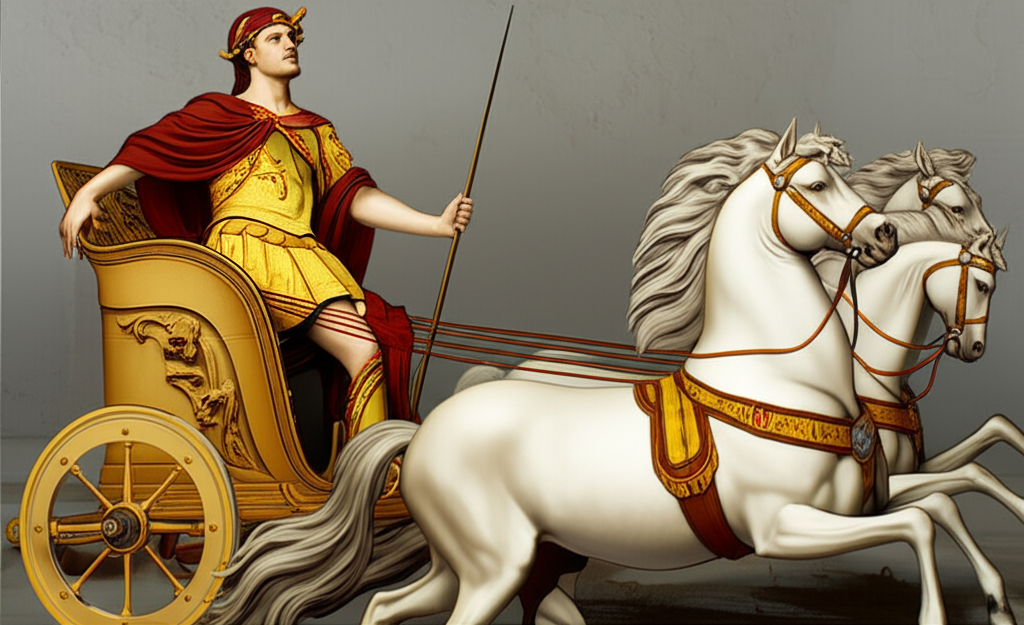 struggling to control two horses, one white and noble (Spirit) and one dark and unruly (Appetite/Passion), set against a classical landscape.)
📹 Related Video: ARISTOTLE ON: The Nicomachean Ethics
Video by: The School of Life
💡 Want different videos? Search YouTube for: ""Spinoza's Ethics explained" or "Descartes Passions of the Soul analysis""