

The Labyrinth of Feeling: Unpacking the Psychological Basis of Emotion
Summary
Emotion, a fundamental aspect of human experience, has perplexed philosophers and scientists alike for millennia. This article delves into the psychological basis of emotion, tracing its conceptual evolution from ancient philosophical inquiries into the soul and its passions to more modern understandings of the intricate interplay between the Mind, the Man, and the underlying Physics of our being. We explore how thinkers from the Great Books of the Western World grappled with the nature of feeling, attempting to categorize, explain, and ultimately understand its profound impact on human reason, action, and perception of reality.
Introduction: The Primal Language of the Soul
To be Man is to feel. From the earliest stirrings of consciousness, our existence is saturated with the vibrant, often chaotic, hues of Emotion. Joy, sorrow, anger, fear, love, disgust – these are not mere fleeting sensations but profound states that shape our perceptions, drive our actions, and define our very understanding of the world. Yet, what exactly are these powerful internal forces? Are they purely products of the Mind, or do they possess a deeper, perhaps even physical, substrate? The quest to uncover the psychological basis of emotion is a journey into the heart of human nature, a philosophical and scientific endeavour that continues to challenge our most fundamental assumptions about the self.
For centuries, philosophers have wrestled with the elusive nature of emotion, attempting to situate it within the grand architecture of the soul, the rational faculty, or the physical body. Their insights, drawn from the foundational texts of Western thought, offer a rich tapestry of perspectives that continue to resonate with contemporary psychological theories.
Early Philosophical Inquiries: From Humors to Rationality
The ancient Greeks, particularly Plato and Aristotle, laid much of the groundwork for understanding emotion. For Plato, as articulated in works like The Republic, the soul was tripartite: reason, spirit (thumos), and appetite. Emotions often resided in the spirited and appetitive parts, requiring the guiding hand of reason to maintain harmony. Unchecked emotions were seen as disruptive, leading to irrational behaviour.
Aristotle, in his Nicomachean Ethics and Rhetoric, offered a more nuanced view. He recognized emotions (pathê) not merely as irrational forces but as crucial components of human character and moral action. He meticulously analyzed specific emotions, describing their causes, objects, and effects, emphasizing their role in motivating virtue or vice. For Aristotle, emotions were often accompanied by bodily changes, hinting at an early connection between the Mind and the Physics of human experience.
| Philosopher | Key Concept of Emotion | Relationship to Reason |
|---|---|---|
| Plato | Part of the spirited or appetitive soul; passions. | Needs to be controlled or guided by reason. |
| Aristotle | Pathê; crucial for moral action; often accompanied by bodily changes. | Can be rational or irrational; can inform virtuous action. |
| Stoics | Perturbations of the soul; irrational judgments. | To be eradicated or minimized through reason and virtue. |
Later, Augustine of Hippo, heavily influenced by Platonic thought but recontextualized within a Christian framework, explored emotions (or "affections") in Confessions and The City of God. For Augustine, emotions were intimately tied to love – either love of God or love of self – and could lead humanity towards salvation or sin. His focus shifted the internal landscape of emotion towards moral and spiritual significance.
The Cartesian Divide and Spinozan Synthesis: Mind, Body, and the Laws of Affect
The advent of modern philosophy brought a radical re-evaluation of emotion, particularly with René Descartes. In his Passions of the Soul, Descartes famously posited a dualism between the immaterial, thinking Mind (res cogitans) and the material, extended body (res extensa). Emotions, or "passions," were primarily seen as affections of the soul caused by movements of the "animal spirits" within the body, influencing the pineal gland, which he believed was the seat of the soul. This marked a profound attempt to connect the Physics of the body's mechanics with the subjective experience of Emotion. He sought to understand how physical changes could give rise to mental states and vice-versa, offering a mechanistic explanation for human feelings.
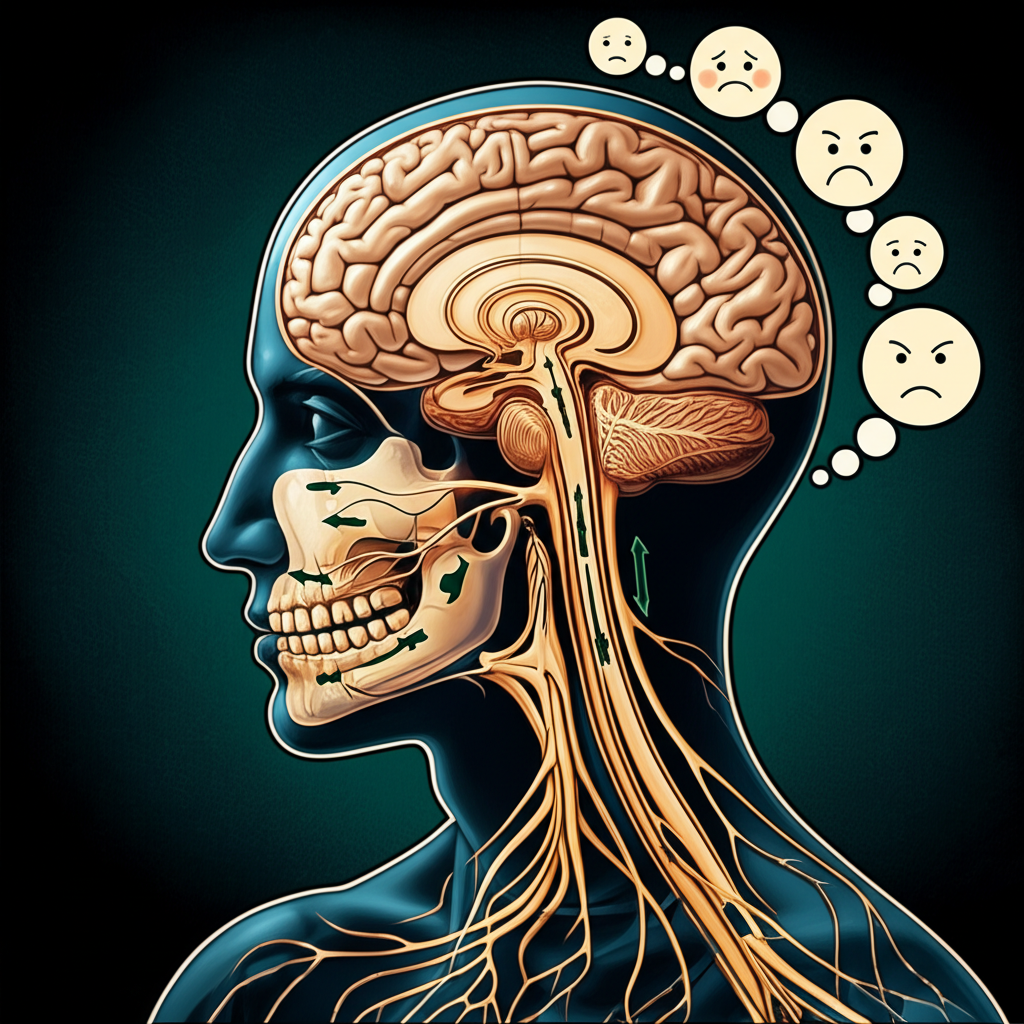
Baruch Spinoza, a contemporary critic of Cartesian dualism, offered a powerful alternative in his Ethics. For Spinoza, mind and body were not separate substances but two attributes of a single, unified substance – God or Nature. Emotions (or "affects") were understood as modifications of the body and corresponding ideas in the Mind, following precise, almost geometric, laws of cause and effect. He approached Emotion with a kind of philosophical Physics, seeking to understand human passions as systematically as one might understand natural phenomena. For Spinoza, freedom came not from suppressing emotions, but from understanding their necessary causes and effects, thus allowing reason to guide the Man towards greater power and clarity.
Hume's Impressions and Kant's Moral Compass: Emotion as Experience and Duty
David Hume, a pivotal figure in empiricism, radically shifted the focus of understanding the Mind. In A Treatise of Human Nature, he argued that all our knowledge stems from "impressions" (vivid sensations and emotions) and "ideas" (fainter copies of impressions). For Hume, Emotion was a direct impression, a fundamental part of our experience, and crucially, "reason is, and ought only to be the slave of the passions." This perspective challenged the long-standing philosophical tradition that prioritized reason over emotion, suggesting that our moral judgments and actions are often driven by feeling rather than pure rationality.
In contrast, Immanuel Kant, while acknowledging the power of feeling, sought to establish a foundation for morality rooted in universal reason and duty. For Kant, true moral action stemmed not from inclination or Emotion, but from acting in accordance with the categorical imperative – a duty derived from reason. While he recognized the psychological reality of emotions, his philosophical project aimed to elevate the rational Mind above the contingent affects of human experience when it came to moral decision-making, ensuring that the Man acted from principles rather than fleeting sentiments.
The Enduring Quest: Emotion in the Modern Mind
The philosophical journey through the psychological basis of emotion reveals a persistent tension: is emotion a disruptive force to be controlled, a natural phenomenon to be understood, or an essential guide to human flourishing? Modern psychology and neuroscience continue to build upon these historical foundations, exploring the neural circuits of fear, the evolutionary advantages of empathy, and the cognitive appraisals that shape our emotional responses. Yet, the core questions remain: How does the subjective experience of Emotion arise from the objective Physics of the brain? What role does our Mind play in interpreting and regulating these powerful states? And how does understanding emotion ultimately illuminate the very essence of Man?
The answers, as always, are complex and multifaceted, reminding us that the human interior remains one of philosophy's most fertile and challenging territories.
Conclusion: The Human Condition and the Science of the Self
From the ancient Greek concept of the soul's passions to Spinoza's geometric analysis of affects, and Hume's radical empiricism, the philosophical exploration of Emotion has consistently sought to grasp one of the most enigmatic aspects of the human condition. These foundational inquiries, often grappling with the interplay between the immaterial Mind and the material Physics of the body, continue to inform our contemporary understanding. Ultimately, to delve into the psychological basis of emotion is to embark on a profound journey into the self, recognizing that our capacity to feel is not merely an incidental feature but a defining characteristic of what it means to be Man.
YouTube Video Suggestions:
-
📹 Related Video: What is Philosophy?
Video by: The School of Life
💡 Want different videos? Search YouTube for: ""Great Philosophers on Emotion" or "History of Emotion Philosophy""
-
📹 Related Video: ARISTOTLE ON: The Nicomachean Ethics
Video by: The School of Life
💡 Want different videos? Search YouTube for: ""Descartes Passions of the Soul explained" or "Spinoza Ethics Emotion""