

The Enduring Question of Progress: Medicine's Philosophical Journey
The story of medicine is often told as a triumphant march of progress, a relentless ascent driven by science from superstition to sophisticated intervention. Yet, for the discerning mind, the advancements in our ability to heal, to prolong life, and to confront death directly invite a deeper, more philosophical inquiry. This article aims to explore not just how medicine has progressed, but what that progress means for humanity, drawing upon the enduring wisdom found within the Great Books of the Western World.
From Humors to HeLa: A Shifting Understanding of the Body
Our journey into the progress of medicine begins not with microscopes and MRI machines, but with observation and philosophical contemplation. For centuries, as chronicled in the Great Books, the understanding of the human body was inextricably linked to broader cosmological and philosophical systems.
- Ancient Foundations: Figures like Hippocrates, whose aphorisms and ethical principles still resonate, viewed health as a balance within the body, influenced by environment and lifestyle. His emphasis on observation and prognosis, while lacking modern science, laid a crucial groundwork. Galen, building upon this, developed a complex system of humors, a theoretical framework that dominated medical thought for over a millennium. This was medicine as an art, guided by philosophy and empirical observation, albeit limited by the tools of the era.
- The Renaissance Awakening: The anatomical studies of Vesalius, challenging Galen's long-held authority through direct dissection, marked a pivotal shift. This was an early demonstration of how empirical science would begin to dismantle venerable, but incorrect, philosophical assumptions about the body. The discovery of blood circulation by William Harvey further solidified this move towards a mechanistic understanding, treating the body less as a microcosm of the cosmos and more as a complex machine.
Key Shifts in Medical Understanding
| Era | Dominant Approach | Key Figures/Concepts | Philosophical Implications |
|---|---|---|---|
| Ancient Greece | Humoral Theory, Holistic Balance | Hippocrates, Galen | Health as cosmic harmony; physician as interpreter of nature. |
| Renaissance | Anatomical Observation, Mechanism | Vesalius, Harvey | Body as a machine; shift towards empirical evidence. |
| Modern Era | Germ Theory, Molecular Biology | Pasteur, Koch, Watson & Crick | Disease as external invasion; life as reducible to chemistry. |
The Triumph of Science: Reshaping Life and Death
The scientific revolution, particularly from the 19th century onwards, unleashed an unprecedented wave of progress in medicine. The germ theory of disease, pioneered by Pasteur and Koch, transformed our understanding of illness from an internal imbalance to an external invasion. This paradigm shift was nothing short of revolutionary, leading to:
- Preventative Medicine: Vaccines, sanitation, and public health initiatives dramatically reduced mortality from infectious diseases. The idea that entire populations could be protected from scourges that once dictated the course of life and death was a profound leap.
- Surgical Advancements: Anesthesia and antiseptic techniques made complex surgeries possible, saving countless lives and mitigating suffering.
- Pharmacology: The development of antibiotics, followed by a plethora of other drugs, offered specific interventions against disease, fundamentally altering the experience of illness.
This era witnessed medicine's growing power to extend life and postpone death. Diseases that once carried near-certain fatality became treatable conditions. Yet, this very success compels us to ask: What are the philosophical consequences of this extended lease on life?
The Ethical Crucible: Navigating Modern Medical Progress
As medicine continues its rapid progress, driven by ever more sophisticated science (genomics, artificial intelligence, regenerative medicine), it increasingly pushes the boundaries of what it means to be human, challenging our ingrained notions of life and death.
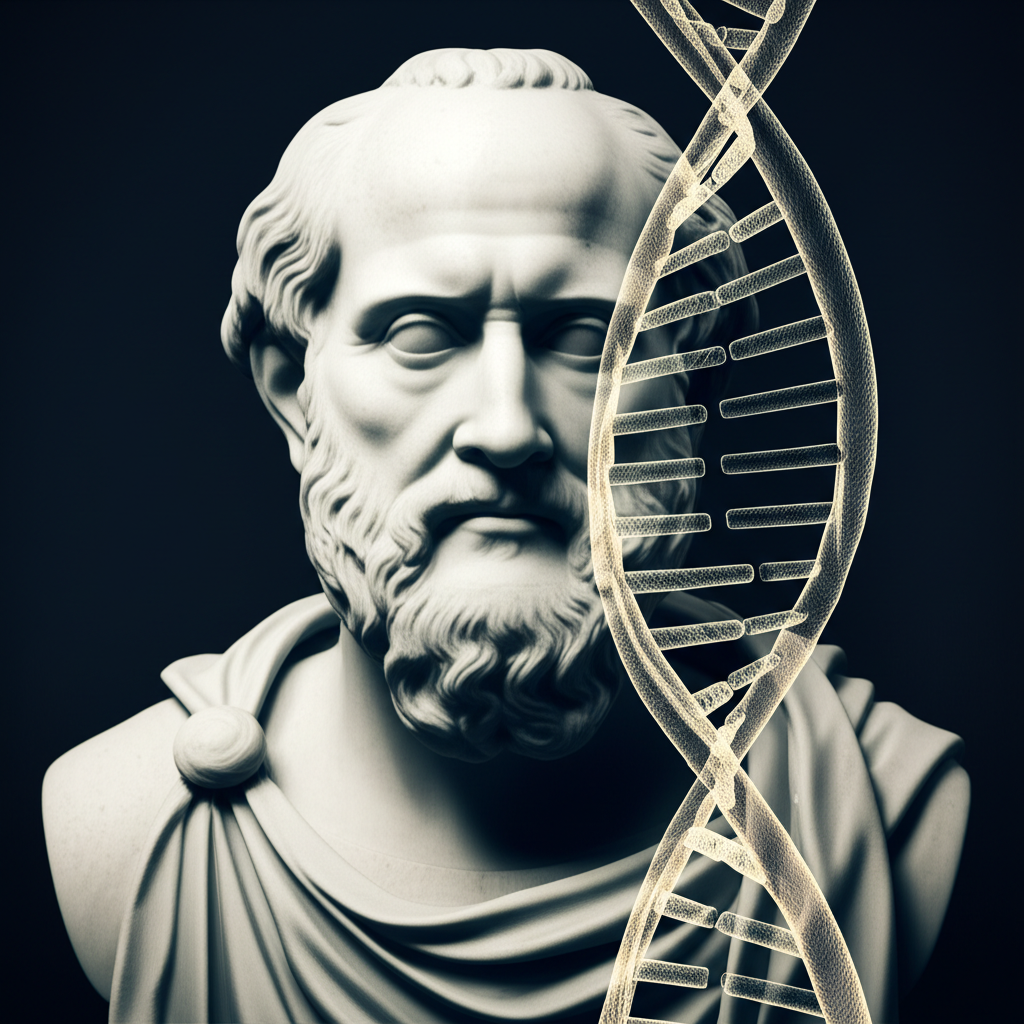
Consider the profound ethical dilemmas posed by contemporary medicine:
- Genetic Engineering: The ability to edit genes in humans raises questions about identity, disability, and the very definition of "natural." Are we playing God, or merely exercising our scientific capacity to alleviate suffering and improve life?
- End-of-Life Care: With the power to prolong life almost indefinitely, the concept of a "good death" becomes paramount. When does intervention become an impediment to dignity? The existential realities of death are often obscured by the medical imperative to keep fighting.
- Artificial Intelligence in Diagnosis and Treatment: While promising efficiency and accuracy, the increasing reliance on AI in medicine raises questions about human intuition, empathy, and the doctor-patient relationship—a relationship historically rich with ethical and philosophical weight.
These are not merely technical challenges; they are fundamental philosophical questions about human agency, the limits of intervention, and our responsibilities to future generations. The Great Books offer no direct answers to CRISPR technology, but they provide frameworks for ethical reasoning, discussions on human nature, and reflections on the meaning of life and the inevitability of death that remain profoundly relevant.
The Unending Dialogue Between Science and Soul
The progress of medicine is an undeniable testament to human ingenuity and the power of science. It has liberated us from countless afflictions, extended our lifespans, and offered hope in the face of despair. Yet, as we stand at the precipice of ever more astonishing breakthroughs, the philosophical questions only intensify.
The Great Books remind us that understanding life and death is not solely a biological or chemical endeavor, but a deeply human one. While medicine can mend the body, it cannot fully address the existential questions of purpose, meaning, and our place in the cosmos. True progress in medicine must therefore be a dialogue – a continuous negotiation between scientific capability and philosophical wisdom, ensuring that our pursuit of longer life does not diminish the quality or meaning of that life, nor obscure the profound significance of death.
Further Philosophical Inquiry
📹 Related Video: ARISTOTLE ON: The Nicomachean Ethics
Video by: The School of Life
💡 Want different videos? Search YouTube for: ""Philosophy of Medicine: Ethics of Life Extension""
📹 Related Video: What is Philosophy?
Video by: The School of Life
💡 Want different videos? Search YouTube for: ""Ancient Greek Medicine and Philosophy: Hippocrates to Galen""