

The Unfolding Tapestry of Healing: Medicine's Philosophical March
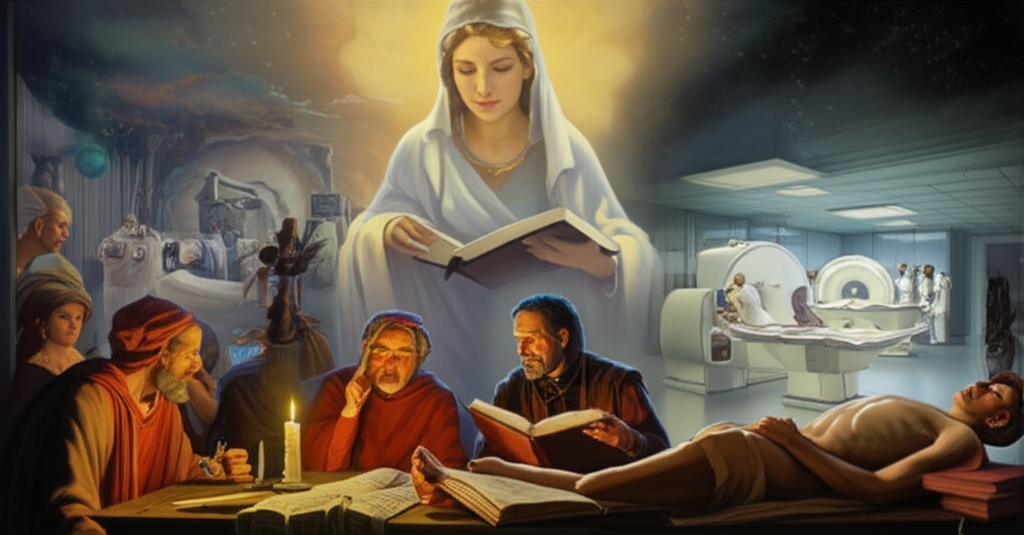
Summary: The progress of medicine is not merely a chronicle of scientific discovery but a profound philosophical journey, deeply interwoven with humanity's evolving understanding of life and death. From ancient empirical observations to the molecular marvels of today, medicine’s relentless advancement, driven by the spirit of science, continually redefines the human condition, challenging our ethical frameworks and our very concept of existence. This article explores medicine's historical progress through a philosophical lens, drawing upon the intellectual heritage of the Great Books of the Western World.
From Miasma to Molecules: A Philosophical Ascent
The history of medicine is, in many respects, the history of human progress itself. It is a testament to our enduring quest to alleviate suffering, prolong life, and understand the intricate mechanisms that govern our bodies and minds. This journey, however, is far more than a technical narrative of cures and discoveries; it is a philosophical odyssey, profoundly shaping our perspectives on life and death, our relationship with nature, and the very essence of human dignity. As we trace medicine's evolution, we find it continually pushing the boundaries of what it means to be alive, well, and mortal.
Ancient Insights and the Dawn of Observation
Before the rigorous application of science as we know it, the practice of healing was often intertwined with superstition, religion, and rudimentary observation. Yet, even in antiquity, the seeds of rational inquiry were sown.
- The Hippocratic Revolution: Figures like Hippocrates, whose works are foundational within the Great Books, championed the idea of disease having natural causes, not divine wrath. His emphasis on observation, prognosis, and ethical conduct (the Hippocratic Oath) laid the groundwork for medical science. He sought to understand the body's humors, an early, albeit flawed, attempt at systematic biological theory. This represented a critical leap towards a more empirical understanding of life and death in health and sickness.
- Aristotle's Biological Investigations: Aristotle, a titan among the Great Books authors, dedicated significant effort to biological studies, dissecting animals and meticulously categorizing species. His emphasis on teleology—the study of purpose—influenced medical thought for centuries, shaping how scholars viewed the body's design and function. While not a physician, his systematic approach to natural philosophy profoundly influenced subsequent medical inquiry.
These early thinkers, through their attempts to understand the natural world, began to separate the domain of medicine from purely supernatural explanations, initiating a long, slow march towards empirical science.
The Medieval Interlude and Renaissance Reawakening
For centuries, much of Western medical thought was dominated by the teachings of Galen, whose comprehensive, yet often flawed, anatomical and physiological theories held sway.
- Galen's Enduring Legacy: Galen, a prolific writer whose works were preserved and studied, synthesized Greek and Roman medical knowledge. His influence, though immense, also led to a period where direct observation was sometimes superseded by adherence to authoritative texts. This intellectual stasis highlights the philosophical tension between tradition and innovation.
- Vesalius and the Rebirth of Anatomy: The Renaissance brought a renewed spirit of inquiry, best exemplified by Andreas Vesalius. His groundbreaking work, De humani corporis fabrica (On the Fabric of the Human Body), meticulously detailed human anatomy based on actual dissection, correcting many of Galen's errors. This was a monumental act of scientific courage, prioritizing direct observation over ancient authority, and marking a crucial step in the progress of medicine towards modern science. It was a philosophical declaration: the body itself, not just ancient texts, held the keys to understanding life and death.
The Enlightenment and the Mechanistic View
The Scientific Revolution and the Enlightenment further accelerated medical progress, fundamentally altering how life was perceived.
- Descartes and the Body as Machine: René Descartes, another pillar of the Great Books, famously proposed a mind-body dualism, but his view of the body as a complex machine, subject to mechanical laws, profoundly influenced physiological understanding. This mechanistic perspective, while perhaps reducing the spiritual aspect of life, provided a powerful framework for scientific investigation into bodily functions and dysfunctions.
- Bacon and the Empirical Method: Francis Bacon's advocacy for inductive reasoning and systematic experimentation provided the philosophical blueprint for modern science. His call for empirical observation and hypothesis testing became the bedrock upon which future medical advancements would be built, moving medicine from speculative philosophy to rigorous scientific discipline.
Modern Marvels: The Age of Germs, Genes, and Ethical Quandaries
The 19th and 20th centuries witnessed an explosion of medical progress, transforming the landscape of life and death.
- Key Milestones in Medical Science:
- Germ Theory (Pasteur, Koch): Revolutionized understanding of disease causation, leading to antiseptics (Lister) and vaccines.
- Anesthesia (Morton, Long): Transformed surgery from a brutal ordeal to a manageable procedure, profoundly impacting suffering and quality of life.
- Antibiotics (Fleming): Ushered in an era where bacterial infections, once death sentences, became treatable.
- DNA Structure (Watson & Crick): Unlocked the secrets of heredity, paving the way for genetics, personalized medicine, and gene therapies.
- Imaging Technologies: X-rays, MRI, CT scans provided unprecedented insights into the living body without invasive procedures.
This rapid progress has not only extended human life expectancy but also forced us to confront profound ethical dilemmas. The ability to sustain life artificially, to transplant organs, to manipulate genes, and to redefine fertility challenges our traditional notions of personhood, autonomy, and the natural order of life and death.
The Philosophical Heart of Medical Progress: Redefining Life and Death
The relentless march of medicine has fundamentally altered our relationship with mortality. Where once disease was often accepted as fate, it is now viewed as a challenge to be overcome by science.
- Prolonging Life, Redefining Death: Modern medicine blurs the lines of life and death. What constitutes death when machines can maintain vital functions? When does the pursuit of prolonging life become an undue burden? These are not merely clinical questions but deeply philosophical ones, forcing us to re-evaluate our values and priorities.
- The Ethics of Intervention: With power comes responsibility. The Great Books, from Plato's Republic discussing the ideal society to Kant's Critique of Practical Reason on moral duty, provide frameworks for navigating these complex ethical landscapes. Genetic engineering, reproductive technologies, and end-of-life care all present dilemmas that demand philosophical reflection alongside scientific expertise.
- Humanity's Struggle with Suffering: At its core, medicine is an attempt to mitigate suffering. Its progress offers hope, but also exposes the limits of human control over nature. The ultimate reality of death remains, even as its timing is often delayed. This ongoing dialogue between human ambition and existential limitations is a central theme in philosophical thought, from Montaigne's essays on mortality to modern existentialism.
Conclusion: An Ongoing Dialogue
The progress of medicine is a continuous, dynamic narrative that transcends mere technological advancement. It is a story of intellectual curiosity, ethical struggle, and an evolving understanding of what it means to be human in the face of life and death. As science continues to unlock new secrets, the philosophical questions will only deepen, demanding that we, like the great thinkers before us, engage in a perpetual dialogue about our values, our responsibilities, and the ultimate purpose of our relentless pursuit of healing and knowledge. The Great Books remind us that while the tools change, the fundamental questions of existence remain eternal.
YouTube Video Suggestions:
-
📹 Related Video: ARISTOTLE ON: The Nicomachean Ethics
Video by: The School of Life
💡 Want different videos? Search YouTube for: ""History of Medicine documentary philosophical perspective""
2. ## 📹 Related Video: ARISTOTLE ON: The Nicomachean Ethics
Video by: The School of Life
💡 Want different videos? Search YouTube for: ""Bioethics dilemmas modern medicine philosophy""