

The Unfolding Tapestry of Healing: A Philosophical Inquiry into Medical Progress
The journey of medicine is not merely a chronicle of scientific discovery but a profound philosophical odyssey, tracing humanity's evolving relationship with life and death, suffering, and the very concept of progress. From the earliest incantations and herbal remedies to the marvels of modern biotechnology, our quest to understand and mend the human body has consistently challenged our worldview, reshaped our ethics, and redefined what it means to live a flourishing existence. This article explores the philosophical underpinnings of medical advancement, examining how science has transformed our understanding of health and illness, and the enduring questions that progress in healing continues to pose.
The Ancient Roots of Healing: From Superstition to Observation
For millennia, human suffering was often attributed to divine displeasure, malevolent spirits, or an imbalance of elemental forces. Early healing practices were thus intertwined with religious rites, mysticism, and a rudimentary understanding of natural remedies. Yet, even in antiquity, the seeds of empirical science were sown, beginning a slow but inexorable shift towards observation and reason.
Early Understandings of Illness and Wellness
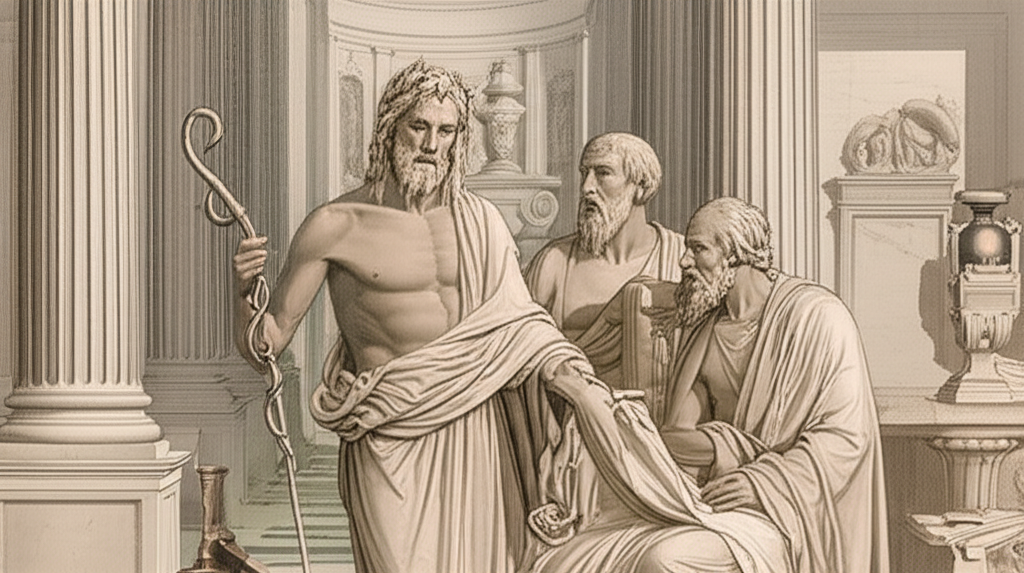
Ancient civilizations, as reflected in texts from the Great Books of the Western World, grappled with the ephemeral nature of health. Philosophers like Plato, in works such as The Republic and Timaeus, discussed the body as distinct from the soul, and health as a state of harmony. Aristotle, in his biological treatises, meticulously observed living organisms, laying groundwork for systematic inquiry. However, it was the figure of Hippocrates, often considered the "Father of Medicine," whose works, compiled in the Hippocratic Corpus, marked a pivotal moment. His emphasis on natural causes of disease, clinical observation, and the physician's ethical duty moved medicine away from pure superstition towards a more rational, albeit still rudimentary, science.
Key Shifts in Ancient Medical Thought:
- From Divine Intervention to Natural Causes: Illness as a natural phenomenon, not solely a punishment.
- From Ritual to Observation: Emphasis on examining symptoms, recording patient history.
- From Mysticism to Ethics: The development of professional conduct and patient care principles.
The Dawn of Scientific Medicine: Reason's Embrace of the Body
The Renaissance brought a resurgence of inquiry, challenging established dogmas and paving the way for revolutionary advancements. This period saw the human body become an object of intense anatomical and physiological study, laying the groundwork for true scientific progress in medicine.
The Renaissance and the Anatomical Revolution
Figures like Andreas Vesalius, whose De humani corporis fabrica (On the Fabric of the Human Body) meticulously detailed human anatomy through dissection, shattered centuries of unchallenged Galenic theory. William Harvey's discovery of blood circulation in the 17th century further demonstrated the body as a complex, mechanistic system, amenable to scientific investigation. This era marked a profound shift: the body was no longer solely a vessel for the soul but a biological entity whose workings could be understood, dissected, and potentially repaired. This new understanding had immense implications for how society viewed life and death, disease, and the role of the physician.
The Enlightenment and the Germ Theory
The true acceleration of medical progress arrived with the Enlightenment and the subsequent scientific revolutions of the 19th century. Louis Pasteur's germ theory of disease, followed by Joseph Lister's antiseptic surgery, transformed our understanding of infection. Suddenly, unseen enemies were identified, and science offered tangible methods for prevention and cure. The impact on public health, the reduction of mortality rates, and the extension of life was unprecedented, forever altering the human experience of death.
Modern Medicine: A Double-Edged Sword of Progress
The 20th and 21st centuries have witnessed an explosion of medical innovation, pushing the boundaries of what was once imaginable. Antibiotics, vaccines, advanced surgical techniques, organ transplantation, and genetic therapies have fundamentally reshaped our relationship with disease and mortality.
Technological Marvels and Ethical Labyrinths
Modern medicine, driven by relentless scientific progress, has achieved remarkable feats: eradicating diseases, extending lifespans, and alleviating suffering on a scale previously unknown. Yet, this very progress has introduced complex ethical dilemmas, challenging our core philosophical tenets regarding life and death. Questions arise concerning:
- The Definition of Life: When does life truly begin or end, especially with advanced life support or in vitro fertilization?
- The Right to Die: If medicine can prolong life indefinitely, where lies the line between preserving life and prolonging suffering?
- Genetic Engineering: To what extent should we intervene in the human genome, and what are the long-term implications for humanity?
- Access and Equity: As treatments become more sophisticated and expensive, how do we ensure equitable access to the benefits of medical progress?
These are not merely scientific questions but deeply philosophical ones, requiring a continuous re-evaluation of our values, as explored by contemporary philosophers engaging with bioethics.
The Philosophical Quandary of Defining "Progress"
Is medical progress solely measured by technological advancement or the extension of life? Or does it encompass a deeper understanding of human flourishing, well-being, and the quality of life? The Great Books tradition, through thinkers like Aristotle, who emphasized eudaimonia (human flourishing), compels us to ask if our pursuit of longevity sometimes overshadows the pursuit of a meaningful life. The constant push against death forces us to confront the very nature of our mortality and what it means to live well, not just long.
Medicine's Future: Beyond the Cure
As we look ahead, the trajectory of medicine suggests a future where the lines between prevention, cure, and enhancement may blur even further. The philosophical challenges will only intensify.
Holistic Approaches and Preventive Care
There is a growing recognition that true medical progress extends beyond merely treating illness. A holistic approach, focusing on preventive care, mental health, and environmental factors, reflects a more comprehensive understanding of human well-being. This echoes ancient philosophical concerns for a balanced life and the interconnectedness of mind and body. The aim shifts from simply fighting death to promoting robust life.
Confronting Mortality in an Age of Longevity
Even with unprecedented advancements, death remains the ultimate certainty. The philosophical challenge for future medicine will be to reconcile the human desire for eternal life with the inevitability of mortality. How do we embrace the finitude of existence while leveraging science to alleviate suffering and enhance the quality of our finite time? This ongoing dialogue, rooted in the foundational questions of human existence, will continue to shape the very fabric of medical progress.
The progress of medicine is a testament to human ingenuity and the relentless pursuit of knowledge. Yet, it is also a mirror reflecting our deepest fears, our highest aspirations, and our ever-evolving understanding of life and death. As science continues to unlock the secrets of the body, philosophy must remain our guiding compass, ensuring that our advancements serve not just to extend life, but to enrich it with meaning and wisdom.
📹 Related Video: PLATO ON: The Allegory of the Cave
Video by: The School of Life
💡 Want different videos? Search YouTube for: ""Plato on the body and soul philosophy""
📹 Related Video: ARISTOTLE ON: The Nicomachean Ethics
Video by: The School of Life
💡 Want different videos? Search YouTube for: ""Ethics of modern medicine philosophy""