

The relentless march of progress in medicine is not merely a tale of scientific advancement; it is a profound philosophical narrative, intricately woven with the evolution of human knowledge. From ancient empirical observations to the sophisticated biotechnologies of today, each breakthrough illuminates our understanding of life and death, forcing us to confront fundamental questions about human existence, suffering, and our place in the natural order. This article explores how the pursuit of healing has consistently pushed the boundaries of our intellect, transforming not only our physical well-being but also the very fabric of our philosophical inquiry.
The Unfolding Tapestry of Medical Progress
The history of medicine is a testament to humanity's enduring quest for understanding and control over our biological destiny. It's a journey from rudimentary herbal remedies and superstitious beliefs to complex surgical procedures and genetic therapies, each step propelled by an insatiable thirst for knowledge.
Early Foundations:
Drawing from the Great Books of the Western World, we see the nascent stages of medical thought emerging from the mists of antiquity. Figures like Hippocrates, often considered the "Father of Medicine," advocated for empirical observation and rational inquiry, moving away from purely divine explanations for illness. His emphasis on diagnosis, prognosis, and ethical practice laid foundational stones. Plato and Aristotle, while not physicians themselves, contributed to the philosophical framework that would later inform scientific method, emphasizing logic, classification, and the pursuit of truth. This early period was characterized by:
- Observation: Careful study of symptoms and outcomes.
- Classification: Attempts to categorize diseases and remedies.
- Ethical Considerations: The Hippocratic Oath marking the beginning of professional medical ethics.
The Enlightenment and the Scientific Revolution:
The Enlightenment period marked a radical shift, where reason and empirical evidence became paramount. Thinkers like Descartes, with his mechanistic view of the body, and later, the systematic scientific inquiry championed by figures such as Francis Bacon, profoundly impacted medical methodology. The development of anatomy, physiology, and later, germ theory, fundamentally reshaped our understanding of disease. This era saw:
- The birth of modern anatomy and physiology.
- The development of the scientific method applied to biological systems.
- A move from abstract philosophical speculation to concrete, verifiable knowledge.
Modern Medicine: Redefining Life and Death:
The 20th and 21st centuries have witnessed an acceleration of medical progress unparalleled in history. Vaccinations, antibiotics, organ transplantation, advanced imaging, and genetic engineering have not only prolonged average lifespans but also fundamentally altered our perception of what constitutes health, disease, life, and death. This era brings with it unprecedented ethical dilemmas, forcing philosophy to keep pace with scientific capability.
Knowledge as the Engine of Medical Advancement
The symbiotic relationship between medicine and knowledge is undeniable. Every medical breakthrough is predicated on an advancement in fundamental scientific understanding, and conversely, the challenges posed by disease often spur new avenues of inquiry.
Consider the following cycle:
- Observation & Inquiry: A medical problem (e.g., a mysterious plague) prompts intense scientific investigation.
- Hypothesis & Experimentation: New theories are formulated, and experiments are designed to test them, leveraging existing knowledge from biology, chemistry, and physics.
- Discovery & Application: Successful experiments lead to new knowledge (e.g., the identification of bacteria as pathogens), which is then applied to develop medical solutions (e.g., antibiotics).
- Philosophical Reflection: The new medical capability (e.g., extending life significantly) raises profound ethical and existential questions, driving further philosophical discourse.
This continuous feedback loop demonstrates that progress in medicine is not just about treating illness; it's about expanding the very frontiers of human knowledge. Each successful intervention, each deeper understanding of biological processes, adds another layer to our collective wisdom, challenging previous assumptions and opening new vistas for exploration.
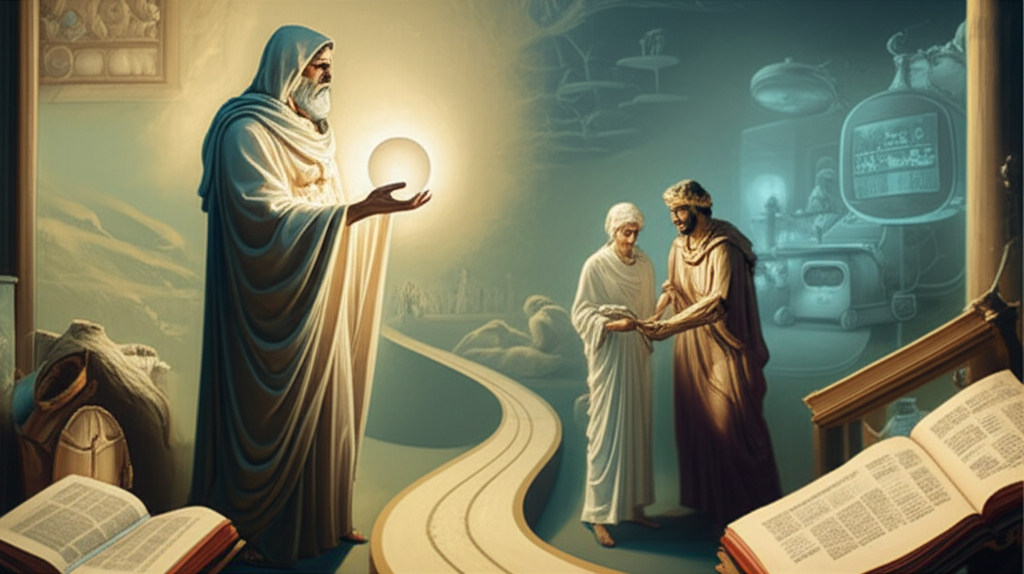
Navigating the Ethical Labyrinth: Life and Death Reimagined
Perhaps the most profound impact of medical progress lies in its redefinition of life and death. Where once the boundaries were stark and immutable, modern medicine has introduced shades of gray, prompting intense philosophical debate.
Key Areas of Philosophical Contention:
- Prolonged Life: With increasing lifespans, questions arise about the quality of extended life, the allocation of resources, and the societal implications of an aging population. What constitutes a "good life" when medical interventions can sustain existence far beyond natural limits?
- Defining Death: The advent of life support systems has necessitated a re-evaluation of the definition of death. Is it the cessation of all biological functions, or specifically brain activity? These distinctions have profound legal, ethical, and personal ramifications.
- Genetic Engineering: The ability to alter the human genome presents unprecedented ethical challenges. While offering cures for genetic diseases, it also raises specters of "designer babies" and the potential for exacerbating social inequalities. Our knowledge now allows us to tinker with the very blueprint of life, forcing us to consider our responsibilities as creators.
- Pain and Suffering: The capacity of modern medicine to alleviate pain and suffering has shifted our understanding of human dignity and autonomy. Debates around euthanasia and assisted dying are direct consequences of our enhanced ability to manage, or prolong, suffering.
These are not merely scientific quandaries; they are deeply philosophical questions, rooted in our understanding of human nature, morality, and the purpose of existence. The Great Books, with their timeless explorations of justice, virtue, and the human condition, offer invaluable frameworks for navigating these contemporary dilemmas, even if they could not have foreseen the specific technologies.
The Enduring Quest for Understanding
The progress of medicine is a testament to humanity's tireless pursuit of knowledge, a journey that continually reshapes our understanding of life and death. It is a dynamic interplay where scientific breakthroughs fuel philosophical inquiry, and ethical considerations, in turn, guide the direction of future research. As Daniel Sanderson, I contend that this journey is not merely about conquering disease, but about continually refining what it means to be human in an ever-evolving world. The quest for healing is, at its core, a quest for deeper understanding—a perpetual engagement with the profound mysteries that define our existence.
YouTube Video Suggestions:
-
📹 Related Video: ARISTOTLE ON: The Nicomachean Ethics
Video by: The School of Life
💡 Want different videos? Search YouTube for: ""The Philosophy of Medicine: Ethics and Progress""
2. ## 📹 Related Video: PLATO ON: The Allegory of the Cave
Video by: The School of Life
💡 Want different videos? Search YouTube for: ""Great Books of the Western World: Science and Human Nature""