

The Elusive Flow: Confronting the Problem of Time in Physics
Summary: Time, that seemingly universal and immutable aspect of our existence, presents one of the most profound and persistent problems in physics. From its role as a fundamental quantity in classical mechanics to its relativistic elasticity and enigmatic behavior in quantum realms, the very nature of time remains a contentious philosophical and scientific frontier. This article explores how physics struggles to reconcile our lived experience of time with its theoretical descriptions, highlighting the deep conceptual challenges that continue to baffle the greatest minds.
Introduction: The Unseen Current
We all experience time as a relentless, forward-moving current, carrying us from past to future. It's the backdrop against which all events unfold, a silent arbiter of change and decay. Yet, for all its apparent self-evidence, time is anything but simple when subjected to the rigorous scrutiny of physics. Philosophers and scientists alike, from the ancient Greeks to modern cosmologists, have grappled with its essence. As we delve into the Great Books of the Western World, we find Augustine, in his Confessions, famously articulating the paradox: "What then is time? If no one asks me, I know what it is. If I wish to explain it to him who asks, I do not know." This sentiment resonates deeply with the contemporary problem of time in physics, where our sophisticated models often contradict our intuitive understanding.
Time as a Physical Quantity: From Newton to Einstein
Historically, physics treated time as a straightforward, absolute quantity. Isaac Newton conceived of absolute, true, and mathematical time as flowing uniformly without relation to anything external. It was a universal clock, ticking away identically for everyone, everywhere. This foundational view allowed for the incredible successes of classical mechanics, where time was merely a parameter, a 't' in equations, allowing us to predict the motion of planets and projectiles with astonishing accuracy.
However, the 20th century shattered this serene picture. Albert Einstein's theories of relativity introduced a radical re-evaluation:
- Special Relativity (1905): Time is not absolute but relative. Its passage depends on the observer's motion. Time dilation means that clocks in motion run slower than stationary ones, and length contraction occurs in the direction of motion. This inextricably links time with space, creating spacetime.
- General Relativity (1915): Gravity is not a force but a curvature of spacetime caused by mass and energy. This means that gravity also affects time; clocks run slower in stronger gravitational fields. The universe is a dynamic, evolving tapestry where time itself can be stretched, compressed, and even warped.
This revolutionary shift transformed time from a mere backdrop into an active participant in the cosmic drama. The idea of time as an objective, universally agreed-upon quantity began to unravel, replaced by a more fluid, observer-dependent reality.
The Problem Deepens: Time in the Quantum Realm
If relativity made time relative, quantum mechanics seems to make it even more elusive. At the subatomic level, the rules change dramatically, and the very concept of time faces new challenges.
- No "Time Operator": Unlike position or momentum, there's no standard "time operator" in quantum mechanics. Time is typically treated as an external, classical parameter, rather than a dynamic quantity described by quantum states. This is a significant conceptual hurdle when trying to unify quantum mechanics with general relativity.
- Quantum Foam and Loop Quantum Gravity: In theories attempting to reconcile general relativity with quantum mechanics (like loop quantum gravity), time often seems to disappear from the fundamental equations. This leads to the "problem of time" where the universe appears static at its most fundamental level, only for time to emerge in some classical approximation. This raises profound questions about whether time is truly fundamental or an emergent property of a more basic, timeless reality.
The Arrow of Time: Why Only Forward?
One of the most perplexing aspects of the problem of time is its unidirectional flow. We remember the past, but we cannot remember the future. We age, we don't de-age. This fundamental asymmetry, known as the arrow of time, is not inherently present in most fundamental laws of physics. Newton's laws, Einstein's equations, and even the core equations of quantum mechanics are largely time-symmetric; they work just as well if time runs backward.
So, why does time only move forward?
- Thermodynamic Arrow: The most common explanation points to the second law of thermodynamics: entropy, or disorder, always increases in a closed system. This irreversible increase in entropy gives time its direction. A broken glass doesn't spontaneously reassemble; the universe tends towards greater disorder.
- Cosmological Arrow: Related to the expansion of the universe. The universe started in a low-entropy state (the Big Bang) and is expanding, increasing its entropy.
- Psychological Arrow: Our subjective experience of time, tied to memory and expectation.
This list highlights the various facets of the problem:
- The Disappearance of Time: In certain quantum gravity theories, time appears to vanish from the fundamental equations.
- The Unidirectionality of Time: Why does time possess a distinct arrow, always moving from past to future?
- The Nature of the "Now": Does a distinct "present moment" exist physically, or is it merely a psychological construct?
- Time as Emergent vs. Fundamental: Is time a basic building block of reality or an illusion arising from more fundamental, timeless processes?
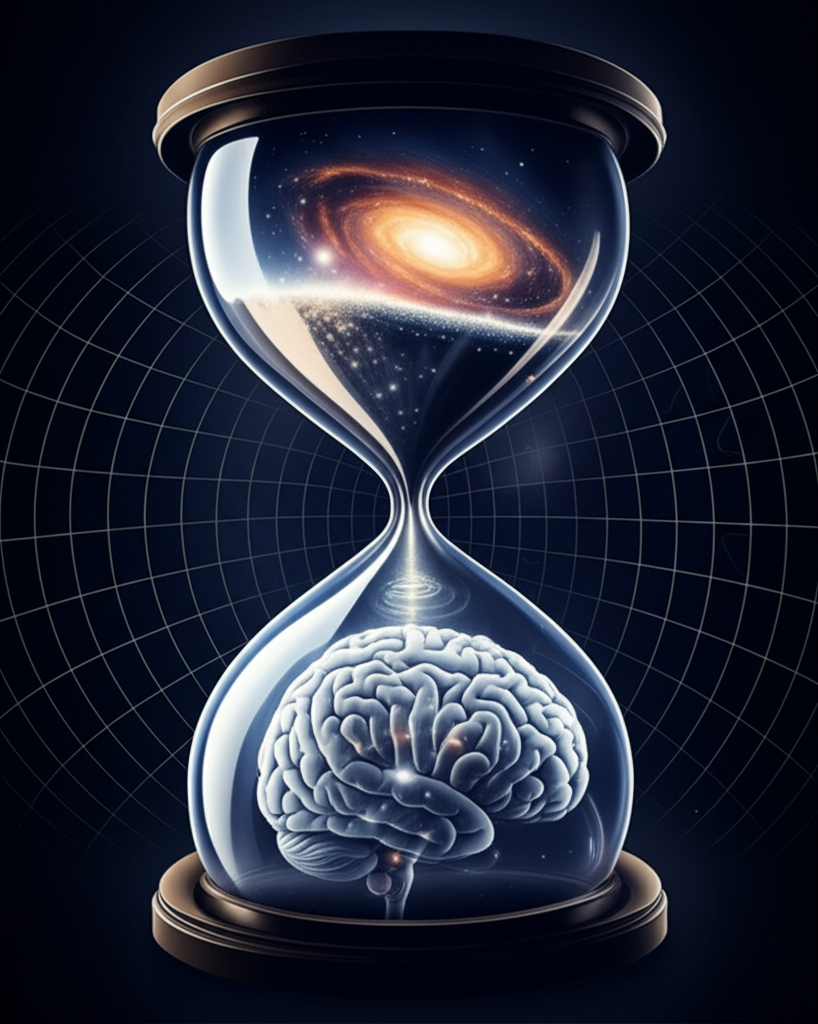
Conclusion: The Enduring Mystery of Time
The problem of time in physics is far more than a mere academic curiosity; it strikes at the heart of our understanding of reality. From Aristotle's contemplation of time as a measure of motion in his Physics to the mind-bending implications of quantum gravity, humanity has wrestled with this elusive concept. Time, once thought to be a simple, universal quantity, has revealed itself to be a complex, multifaceted phenomenon – relative, emergent, and perhaps even an illusion at the deepest levels of reality.
The ongoing quest to unify general relativity with quantum mechanics, to find a "theory of everything," often hinges on resolving the problem of time. Until we can fully grasp its true nature, our picture of the cosmos, and our place within it, will remain incomplete. The journey to understand time is, in essence, a journey to understand everything.
YouTube Video Suggestions:
-
📹 Related Video: ARISTOTLE ON: The Nicomachean Ethics
Video by: The School of Life
💡 Want different videos? Search YouTube for: ""Carlo Rovelli The Problem of Time""
-
📹 Related Video: PLATO ON: The Allegory of the Cave
Video by: The School of Life
💡 Want different videos? Search YouTube for: ""Brian Greene Is Time Fundamental""