

The Enduring Enigma: Unpacking the Problem of Time and Space
Summary: The problem of time and space is one of philosophy's most persistent and profound challenges, questioning whether these fundamental aspects of reality are objective substances, subjective constructs, or merely relations between events and objects. From ancient Greek contemplation to the seminal debates of the Enlightenment, philosophers have grappled with their nature, their quantity, their finitude, and their very existence, forcing us to confront the limits of human understanding concerning the fabric of our universe.
Hello, fellow travelers on the philosophical journey! Have you ever paused to consider the very ground beneath your feet, or the relentless march of moments we call "time"? We use these concepts daily, almost instinctively, yet upon closer inspection, they unravel into some of the most perplexing problems in the history of thought. We're talking, of course, about The Problem of Time and Space. It's not just a curiosity; it's a fundamental challenge that forces us to question the very nature of reality itself.
Ancient Echoes: The Genesis of the Problem
Our exploration of this profound problem begins, as so many philosophical inquiries do, in ancient Greece. The thinkers of this era laid the groundwork for centuries of debate, grappling with concepts that felt both utterly self-evident and deeply mysterious.
- Plato's Cosmic Canvas: In his dialogue Timaeus, Plato famously describes time as a "moving image of eternity." For him, true reality resides in the eternal Forms, and time is merely an imitation, a measure of the orderly motion of the heavens. Space, or what he called the "receptacle," was a formless, invisible medium that received the impressions of the Forms, allowing the visible world to come into being. This early perspective already hints at the problem of whether time and space are real entities or merely aspects of a deeper reality.
- Aristotle's Empirical Lens: Aristotle, ever the keen observer, approached time and space with a more empirical focus in his Physics. He defined time as the number of motion with respect to "before" and "after." Crucially, for Aristotle, there could be no time without change, and no change without motion. Similarly, space (or "place") was not an empty void, but rather the inner boundary of the containing body. This relational view suggests that time and space are not independent substances, but rather derive their existence from the objects and events within them. The quantity of time, for Aristotle, was intrinsically linked to the quantity of motion.
The Great Enlightenment Debate: Absolute vs. Relational
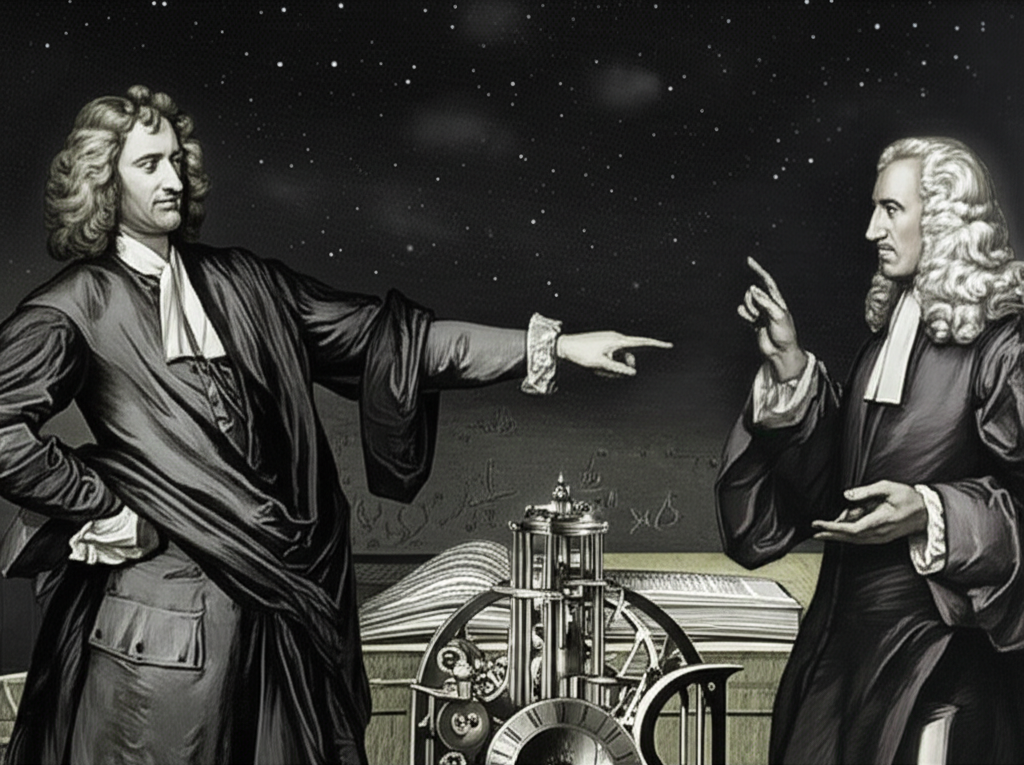
Fast forward to the 17th and 18th centuries, and the problem of time and space ignited one of the most famous philosophical clashes in Western thought, involving two intellectual giants.
| Philosopher | Viewpoint and so much more. This is why we're exploring The Problem of Time and Space, a truly captivating area of philosophical inquiry that challenges our most basic assumptions.
Kant's Revolution: Time and Space as Forms of Intuition
The debate between Newton and Leibniz set the stage for Immanuel Kant, who offered a truly revolutionary perspective in his Critique of Pure Reason. Kant argued that time and space are not features of the world as it is in itself (the noumenal world), but rather a priori forms of our intuition.
- Subjective Conditions for Objective Experience: For Kant, we don't perceive objects and then locate them in time and space; rather, time and space are the very frameworks through which any perception or experience is possible. They are the lenses through which we structure sensory data, making any coherent experience of an "external" world possible. This means they are not empirical concepts derived from experience, but rather preconditions for experience. This radical shift relocates the problem from the external world to the very structure of the human mind.
Key Facets of the Problem of Time and Space
The ongoing philosophical problem of time and space branches into several distinct, yet interconnected, inquiries. Understanding these facets helps us appreciate the depth of the challenge.
- Substance vs. Relation:
- Substantivalism: Time and space exist independently of objects and events, like empty containers waiting to be filled (e.g., Newton).
- Relationalism: Time and space are merely systems of relations between objects and events; they would not exist without them (e.g., Aristotle, Leibniz).
- Finitude vs. Infinitude: Are time and space boundless, extending infinitely, or do they have ultimate limits? The concept of a boundary to space or a beginning/end to time raises equally perplexing questions.
- Discreteness vs. Continuity (The Quantity Question):
- Are time and space composed of indivisible "atoms" (like discrete points or moments)?
- Or are they infinitely divisible, continuous manifolds, meaning that between any two points, there is always another point? This question directly impacts how we understand the quantity of time and space – can they be truly measured, or are they inherently unquantifiable at their most fundamental level? Zeno's paradoxes famously highlight the problems arising from infinite divisibility.
- Objectivity vs. Subjectivity: Are time and space truly "out there" in the world, independent of any observer, or are they fundamentally products of our consciousness and perception (e.g., Kant)?
- The Arrow of Time: Why does time appear to flow in only one direction, from past to future? What gives time its asymmetry, despite many physical laws being time-symmetric?
The Enduring Challenge
Even with the advent of Einstein's relativity, which profoundly altered our scientific understanding of time and space by unifying them into spacetime, the philosophical problem persists. Relativity describes how they behave, but not necessarily what they fundamentally are. Are they emergent properties of a more basic reality? Do they exist at the quantum level? These are questions that continue to animate contemporary philosophy.
The problem of time and space forces us to look beyond our everyday assumptions. It challenges us to think critically about the very foundations of our existence, reminding us that the most familiar concepts can often harbor the deepest mysteries. It's a testament to the enduring power of philosophical inquiry, drawing from the wisdom of the Great Books of the Western World to illuminate the fabric of reality itself.
Further Exploration:
-
📹 Related Video: What is Philosophy?
Video by: The School of Life
💡 Want different videos? Search YouTube for: ""The Philosophy of Time and Space - Crash Course Philosophy""
-
📹 Related Video: KANT ON: What is Enlightenment?
Video by: The School of Life
💡 Want different videos? Search YouTube for: ""Newton vs Leibniz on Time and Space: A Philosophical Debate""