

The Enduring Conundrum: The Problem of Time and Infinity in Metaphysics
Summary: The concepts of time and infinity stand as two of the most profound and perplexing challenges within metaphysics. From ancient Greek thought to contemporary cosmology, philosophers have grappled with their elusive nature, attempting to define, comprehend, and reconcile their implications for existence, causality, and human experience. This article delves into the core problem of understanding these intertwined notions, exploring how their inherent complexities continue to shape our philosophical inquiries.
Unraveling the Fabric of Reality: Time, Infinity, and the Human Mind
Since the dawn of philosophical inquiry, humanity has sought to understand the fundamental building blocks of reality. Among the most obstinate and fascinating of these are time and infinity. They are not merely abstract mathematical concepts but rather deeply embedded aspects of our lived experience and our models of the cosmos. Yet, the moment we attempt to pin them down, to articulate their essence, they slip through our grasp. This is the enduring problem that has captivated thinkers across millennia, prompting profound questions about the nature of existence itself.
The philosophical journey through time and infinity is not a linear path but a winding exploration, marked by paradoxes, competing theories, and moments of profound insight. It forces us to confront the limits of human reason and the boundless scope of the universe.
The Elusive Nature of Time: A Philosophical Quagmire
What exactly is time? This question, deceptively simple, has plagued philosophers for centuries. Saint Augustine, in his Confessions, famously articulated the problem: "What then is time? If no one asks me, I know; if I wish to explain it to one who asks, I know not." This candid admission highlights the intuitive grasp we have of time, contrasted with the immense difficulty in providing a rigorous, satisfactory definition.
Philosophical inquiries into time often branch into several key areas:
- Substantivalism vs. Relationalism: Is time a fundamental entity or "container" in which events occur (substantivalism), or is it merely a system of relations between events (relationalism)? Aristotle, for instance, viewed time primarily as "the number of motion with respect to before and after," suggesting a relational understanding tied to change.
- The Direction of Time: Why does time seem to flow from past to future? Is this an intrinsic property or an emergent phenomenon related to entropy?
- The Reality of Past, Present, and Future:
- Presentism: Only the present moment is real. The past is no more, and the future is not yet.
- Eternalism (or Block Universe Theory): Past, present, and future are equally real and exist simultaneously within a four-dimensional spacetime block. This view often aligns with a deterministic perspective.
- Growing Block Theory: The past and present are real, but the future is not yet determined or actualized.
The problem of time is inextricably linked to our experience of change, causality, and memory. Without a clear understanding of time, our grasp of the universe's dynamic nature remains fundamentally incomplete.
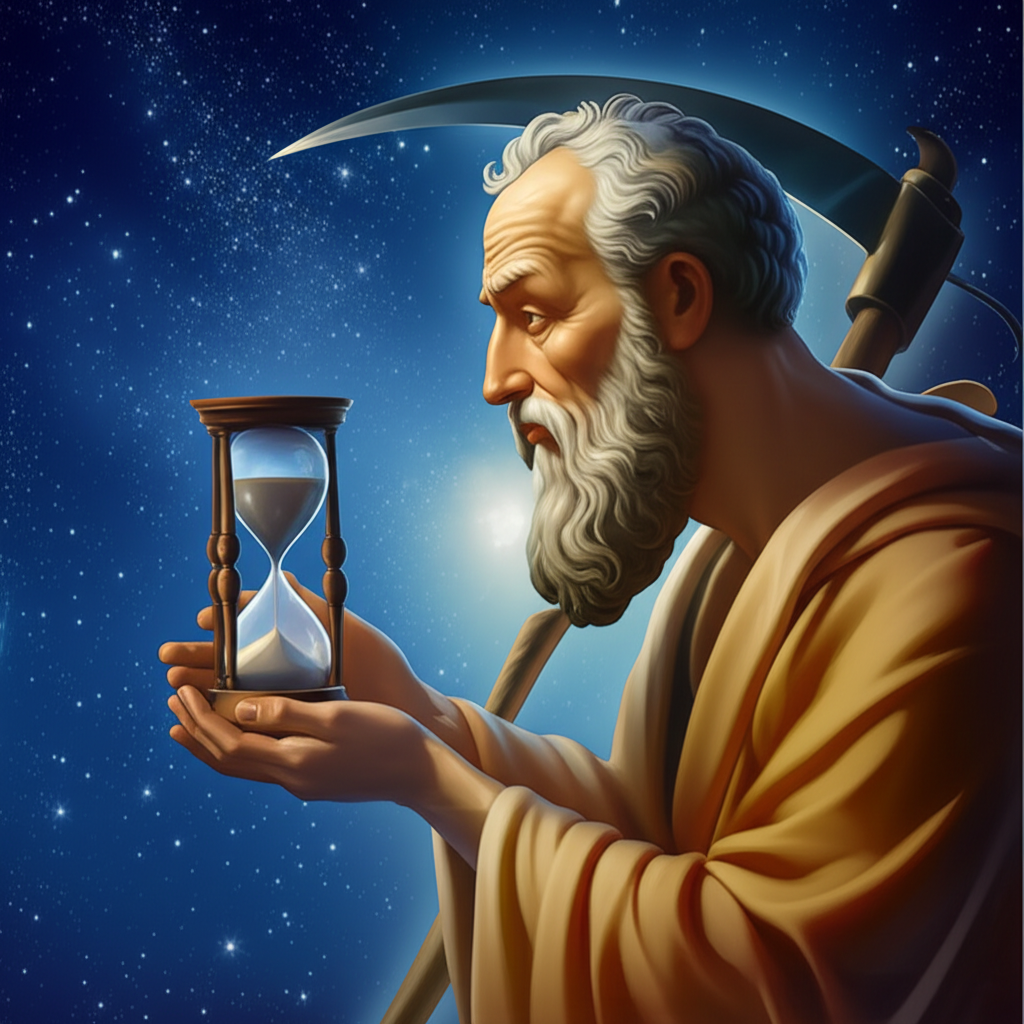
Grappling with Infinity: A Concept Beyond Measure
If time is elusive, infinity is even more so, challenging our finite minds with its boundless scope. The problem of infinity arises in various forms, from the infinitely large to the infinitely small, and has profound implications for metaphysics.
Types of Infinity:
- Potential Infinity: A process that can continue indefinitely, but never reaches an end. For example, counting numbers (1, 2, 3...) is potentially infinite. Aristotle favored this concept, arguing against the actual existence of an infinite magnitude or number, as it would imply the completion of an unending process.
- Actual Infinity: A completed totality that is infinite. This is the infinity we encounter in set theory (e.g., the set of all natural numbers) or in some cosmological models. The existence of actual infinities often leads to paradoxes, famously explored by Zeno of Elea.
Zeno's Paradoxes: These ancient paradoxes, such as Achilles and the Tortoise or the Dichotomy Paradox, highlight the problem of dividing space and time into an infinite number of smaller segments. If one must traverse an infinite number of points to reach a destination, how can motion ever begin or end? These paradoxes force us to reconsider our assumptions about continuous quantities and the nature of motion itself.
The concept of an infinite regress is another significant problem. If every event or entity requires an antecedent cause or explanation, and this chain continues infinitely, does it truly explain anything? This challenge is central to many cosmological arguments for a first cause, such as those put forth by Aquinas, which seek to avoid an infinite regress by positing an uncaused Mover or Being.
The Intersecting Problem: Time, Infinity, and the Cosmos
The true problem emerges when time and infinity collide. Consider the question of the universe's past:
- An Infinite Past: If the universe has an infinite past, does this mean an infinite number of events have already occurred? If so, how could we ever arrive at the present moment? This was a central concern for Kant in his Critique of Pure Reason. He argued that reason, when attempting to understand the world as a totality, falls into antinomies – equally compelling but contradictory arguments. One such antinomy concerns whether the world had a beginning in time (finite past) or is infinite in time (infinite past).
- The Beginning of Time: If time had a beginning (e.g., with the Big Bang), what existed "before" time? This question often leads to conceptual difficulties, as "before time" seems to be a self-contradictory notion.
These questions are not merely academic; they touch upon our understanding of causality, determinism, and the very possibility of ultimate origins. An infinite past might imply that every event is merely a link in an endless chain, while a finite past necessitates a discussion of what initiated that chain.
Modern Metaphysical Debates and Lingering Questions
Contemporary metaphysics continues to grapple with these concepts, often informed by advances in physics and cosmology. Theories like eternal inflation or cyclic universes reintroduce the possibility of actual infinities in space and time, albeit in new forms. The philosophical implications of quantum mechanics, with its non-classical understanding of time, further complicate the picture.
The problem of time and infinity remains an active frontier of philosophical inquiry, pushing the boundaries of our conceptual frameworks. It compels us to ask:
- Can our finite minds ever truly grasp the infinite?
- Is time a fundamental aspect of reality, or an artifact of our perception?
- What does the nature of time and infinity imply for free will and determinism?
These are not questions with easy answers, but their enduring presence in philosophical discourse underscores their fundamental importance to our understanding of the universe and our place within it.
Conclusion: An Enduring Quest
The problem of time and infinity represents one of the most profound and persistent challenges in metaphysics. From the ancient Greeks who pondered Zeno's paradoxes and Aristotle's views on motion, to Augustine's spiritual reflections, to Kant's critical analysis of reason's limits, these concepts have consistently defied simple explanation. They force us to confront the very architecture of reality and the limitations of human comprehension. While science offers models, philosophy continues to probe the fundamental why and what of these omnipresent, yet ultimately mysterious, dimensions of existence. The quest to understand them is, perhaps, itself an infinite journey.
YouTube Video Suggestions:
-
📹 Related Video: PLATO ON: The Allegory of the Cave
Video by: The School of Life
💡 Want different videos? Search YouTube for: ""Augustine on Time Explained""
2. ## 📹 Related Video: KANT ON: What is Enlightenment?
Video by: The School of Life
💡 Want different videos? Search YouTube for: ""Kant's Antinomies of Pure Reason Explained""