

The Enduring Riddle: Confronting the Problem of Slavery and Liberty
From the dawn of civilization, humanity has grappled with a profound contradiction: the inherent desire for freedom juxtaposed with the pervasive reality of subjugation. The Problem of Slavery and Liberty is not merely a historical footnote but a timeless philosophical challenge, one that has shaped our understanding of justice, human dignity, and the very essence of what it means to be a Man. This article delves into how the luminaries of the Great Books of the Western World have wrestled with this fundamental tension, charting a course from ancient justifications to modern calls for universal emancipation, revealing an ongoing quest to define and secure true freedom for all.
I. Antiquity's Paradox: Reason, Order, and the Subjugated Man
The earliest philosophical inquiries into society and governance often confronted the institution of slavery not as an anomaly, but as an integral, if problematic, part of the social fabric.
- Aristotle and the "Natural Slave": In his Politics, Aristotle famously posited the concept of the "natural slave"—individuals he believed were inherently suited for servitude due to a supposed lack of deliberative faculty, existing as "living tools" for the master. While controversial and deeply flawed, this argument highlights an early attempt to rationalize the subjugation of one Man by another, framing it within a hierarchical view of nature and social order. For Aristotle, the master-slave relationship was a form of household management, essential for the liberty of the citizen to engage in politics and philosophy.
- Plato's Republic and Social Stratification: While Plato's Republic doesn't explicitly endorse chattel slavery as Aristotle does, its rigid class structure and the assignment of individuals to specific roles based on their perceived natural abilities (gold, silver, bronze souls) implicitly allows for a form of societal constraint that limits individual liberty in the modern sense. The focus was on the harmony of the whole, often at the expense of individual autonomy.
- Stoic Inner Freedom: Amidst the widespread practice of slavery in the Roman world, Stoic philosophers like Epictetus, himself a former slave, offered a radical counter-narrative. They argued that true liberty resided not in external circumstances but in one's inner disposition, the freedom to control one's judgments and reactions. While not directly challenging the institution of slavery, Stoicism provided a powerful philosophical refuge and a conceptual distinction between physical bondage and spiritual freedom, emphasizing the unbreakable sovereignty of the mind.
This ancient period presents a profound paradox: brilliant minds grappling with the ideals of reason and order, yet often justifying or overlooking the profound denial of liberty inherent in slavery. The Problem was less about abolishing the practice and more about understanding its place within a cosmic or social hierarchy.
II. The Enlightenment's Earthquake: Inalienable Rights and the Call for Abolition
Centuries later, the intellectual ferment of the Enlightenment dramatically reshaped the philosophical landscape, laying the groundwork for a revolutionary understanding of liberty and an uncompromising condemnation of slavery.
- Locke and Natural Rights: John Locke's Two Treatises of Government articulated the concept of natural rights—life, liberty, and property—as inherent to every Man, bestowed by nature or God, and not by any government. He argued that no one could justly be subjected to the "absolute, arbitrary power" of another. This provided a powerful philosophical weapon against slavery, asserting that freedom was not a privilege but an inalienable right.
- Rousseau and the Social Contract: Jean-Jacques Rousseau, in The Social Contract, famously declared that "Man is born free; and everywhere he is in chains." He explored how societal structures and corrupt institutions could enslave individuals, even those ostensibly "free." His work emphasized popular sovereignty and the collective liberty of a people, further fueling arguments against all forms of subjugation.
- The Abolitionist Movement's Philosophical Roots: Drawing heavily on these Enlightenment ideals, the abolitionist movements of the 18th and 19th centuries built their case on the universal dignity of the Man. Thinkers like Montesquieu, while not always consistent, criticized the economic and moral bankruptcy of slavery. Later, figures like William Wilberforce and Frederick Douglass articulated compelling moral and philosophical arguments that ultimately led to the legal dismantling of chattel slavery in many parts of the world.
The Enlightenment marked a critical turning point, transforming slavery from a societal fixture into a moral and philosophical Problem of the highest order, challenging the very foundations of power and privilege.
III. Defining Liberty: More Than Just the Absence of Chains
The philosophical exploration of liberty goes far beyond merely being free from physical slavery. As thinkers delved deeper, they recognized the multifaceted nature of human freedom.
- Negative Liberty (Freedom From): Coined by Isaiah Berlin in "Two Concepts of Liberty," negative liberty refers to the absence of external obstacles, barriers, or constraints on a Man's actions. It is the freedom from interference by others, whether individuals or the state. For instance, freedom from arbitrary arrest, freedom from censorship, or freedom from forced labor are all aspects of negative liberty.
- Positive Liberty (Freedom To): In contrast, positive liberty refers to the capacity and opportunity for a Man to act upon his own free will, to be his own master, and to realize his full potential. It involves the presence of conditions that enable self-realization, such as education, healthcare, and economic opportunity. A person might be "free from" chains (negative liberty) but still lack the resources or knowledge to truly shape their own life (lacking positive liberty).
- The Problem of Internal Slavery: This distinction highlights that even in the absence of legal slavery, individuals can be profoundly unfree. Poverty, ignorance, addiction, or systemic discrimination can act as invisible chains, preventing a Man from exercising true liberty and self-determination. This expands the scope of the Problem beyond physical bondage to encompass broader societal and individual constraints.
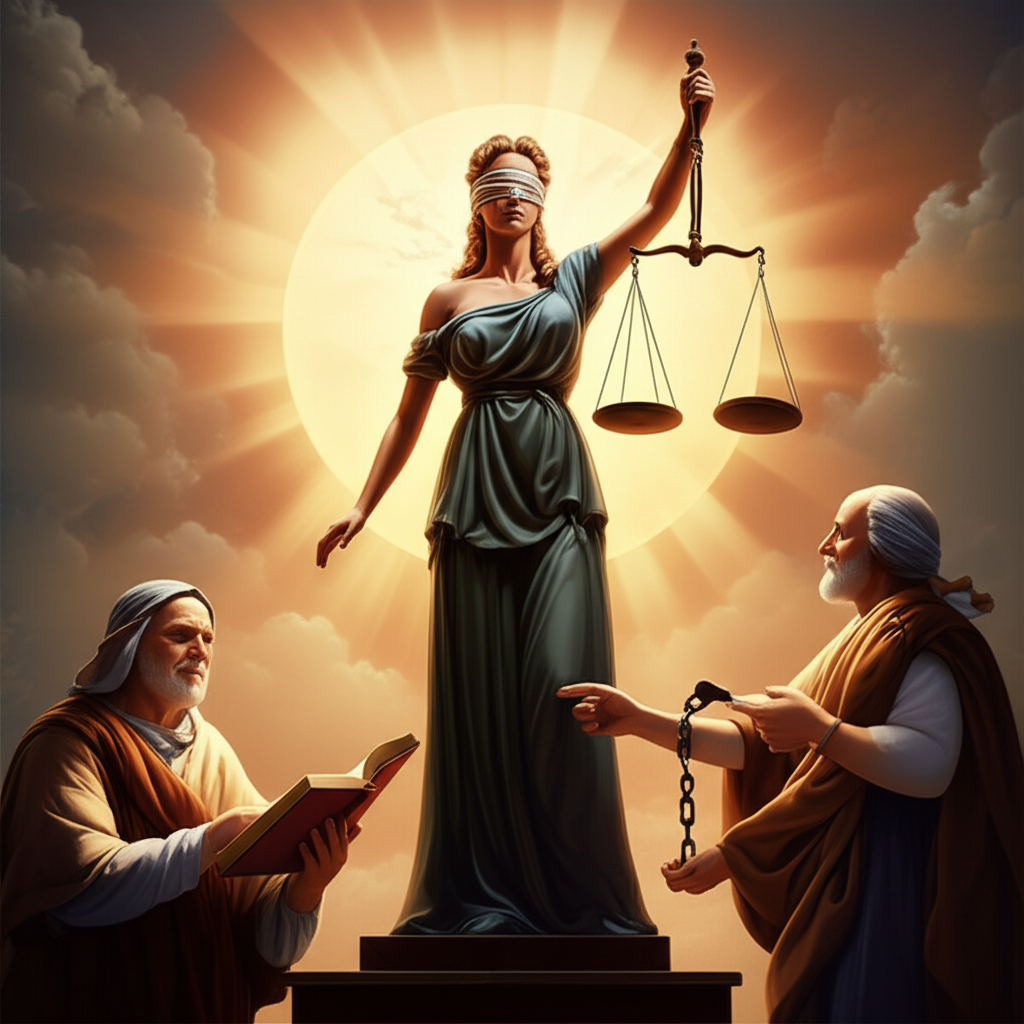
IV. The Man and the Master: A Dialectical Struggle for Recognition
The relationship between master and slave is not merely a legal or economic one; it is a profound existential and psychological dynamic that shapes the identities of both.
- Hegel's Master-Slave Dialectic: In his Phenomenology of Spirit, Georg Wilhelm Friedrich Hegel presented a seminal analysis of this relationship. He argued that consciousness seeks recognition from another consciousness. The master initially achieves recognition by risking his life and forcing the slave to work, thereby dominating nature through the slave's labor. However, the slave, by transforming nature through work, comes to understand himself as an independent being, while the master, dependent on the slave's labor, becomes alienated and ultimately less free. The Problem here is that true liberty and self-consciousness can only be achieved through mutual recognition, not through domination.
- Marx and Economic Slavery: Karl Marx extended this analysis to the economic sphere. While not chattel slavery, he argued that the capitalist system, with its exploitation of labor and alienation of the worker from the fruits of his toil, constituted a form of economic slavery. The proletariat, though legally "free," was bound by the necessity of selling their labor power to survive, thus lacking true liberty over their own productive activity. For Marx, the Problem of slavery persisted in new guises, demanding a revolutionary transformation of economic structures.
These philosophical perspectives reveal how deeply intertwined the concepts of slavery and liberty are with power dynamics, social structures, and the very formation of human identity.
V. Contemporary Echoes: The Unfinished Business of Freedom
Even in an age where chattel slavery is globally condemned, the Problem of slavery and the struggle for liberty remain profoundly relevant.
- Modern Slavery and Human Trafficking: Shockingly, millions of individuals today are trapped in various forms of modern slavery: human trafficking, forced labor, debt bondage, and child servitude. These are not relics of the past but urgent contemporary issues that deny fundamental liberty to countless men, women, and children. The philosophical arguments against slavery are as vital now as they ever were.
- Erosion of Liberty in Digital Age: In ostensibly free societies, new challenges to liberty emerge. Mass surveillance, algorithmic control, the spread of misinformation, and the erosion of privacy through digital technologies raise questions about the nature of freedom in the 21st century. Are we becoming "digital slaves" to systems we barely understand?
- Systemic Inequities: Persistent systemic inequalities—racial, economic, gender-based—continue to limit the positive liberty of many, preventing them from achieving their full potential and participating fully in society. The philosophical quest for true liberty for every Man demands an ongoing examination of these subtle yet powerful forms of constraint.
The journey through the Great Books reveals that the Problem of Slavery and Liberty is not a closed chapter but an ongoing narrative. It is a testament to the human spirit's relentless pursuit of freedom, a pursuit that demands constant vigilance, critical thought, and a commitment to justice.
Conclusion: The Unfinished Quest for Freedom
From Aristotle's attempts to categorize the "natural slave" to Hegel's dialectic of recognition, and from Locke's assertion of inalienable rights to Marx's critique of economic alienation, the Great Books offer a rich tapestry of thought on the Problem of Slavery and Liberty. They reveal that true liberty is not a simple state of being but a complex, multifaceted ideal, constantly challenged and perpetually redefined.
The philosophical journey underscores that the Man is inherently a creature striving for freedom, yet constantly facing forces—both external and internal—that seek to diminish it. As we navigate the complexities of our modern world, the insights gleaned from these timeless texts serve as a powerful reminder: the fight against slavery in all its forms, and the unwavering pursuit of genuine liberty for every individual, remains one of humanity's most crucial and unfinished tasks. The Problem persists, calling each of us to engage, to question, and to champion the cause of human freedom.
📹 Related Video: What is Philosophy?
Video by: The School of Life
💡 Want different videos? Search YouTube for: ""Great Books of the Western World on Slavery" OR "Hegel Master-Slave Dialectic Explained Philosophy""
📹 Related Video: What is Philosophy?
Video by: The School of Life
💡 Want different videos? Search YouTube for: ""John Locke Natural Rights and Liberty" OR "Ancient Greek Philosophy on Freedom""