

The Enduring Enigma: Navigating the Problem of Sin and Will
The problem of sin and will stands as one of philosophy's most profound and persistent challenges, weaving through centuries of human thought, theology, and ethics. At its core, this dilemma grapples with the intricate relationship between human agency, moral failing, and the very nature of good and evil. How can we reconcile our profound sense of personal responsibility with the myriad forces—both internal and external—that seem to shape our choices? Is sin an inevitable consequence of our flawed will, or a deliberate act of defiance against a higher moral order? This pillar page delves into the historical and philosophical journey of this complex problem, exploring how thinkers from ancient Greece to the modern era have grappled with the origins of moral transgression, the nature of human freedom, and the implications for our understanding of ourselves and the cosmos.
Unpacking the Core Concepts: Sin, Will, Good, and Evil
To fully appreciate the philosophical weight of this problem, we must first establish a clear understanding of its constituent elements. These terms, while seemingly straightforward, carry layers of historical and conceptual nuance.
| Concept | Primary Philosophical/Theological Interpretation | Key Questions Posed |
|---|---|---|
| Sin | A transgression against divine or moral law; a deviation from the good; an act stemming from a flawed or misguided will. | Is sin an act of ignorance, weakness, or malice? Is it universal? |
| Will | The faculty of mind by which one decides on and initiates actions; the capacity for choice and self-determination. | Is the will truly free, or is it determined by prior causes? What is its relationship to reason and desire? |
| Good | That which is morally right, beneficial, virtuous, or desirable; an ultimate end or standard of value. | Is good objective or subjective? How do we come to know what is good? |
| Evil | That which is morally wrong, harmful, or destructive; the absence or privation of good; a deliberate intention to cause harm. | Is evil an active force or merely the absence of good? What are its origins? |
The tension arises precisely where these concepts intersect: If the will is free, why does it choose sin? If God is omnibenevolent and omnipotent, why does evil persist, and how can human sin be accounted for without implicating the divine?
Ancient Echoes: Ignorance, Virtue, and the Dawn of Will
The earliest philosophical inquiries into human failing often centered on ignorance rather than a corrupted will.
- Socrates and Plato: For Socrates, famously, "no one does evil willingly." Evil acts stemmed from a lack of knowledge of the good. If one truly understood what was good, they would inevitably pursue it. Plato, in works like The Republic (part of the Great Books of the Western World), explored the tripartite soul, where reason, spirit, and appetite vie for control. Moral failings arose when reason failed to govern the lower parts of the soul, leading to imbalance and injustice, rather than a malicious will.
- Aristotle: In his Nicomachean Ethics (another foundational text in the Great Books of the Western World), Aristotle emphasized the development of virtuous habits. While acknowledging that some acts are involuntary (done under compulsion or ignorance), he focused on voluntary actions as the basis for moral praise or blame. He recognized that individuals could act against their better judgment (akrasia or weakness of will), but the concept of a "bad will" in the sense of choosing evil for its own sake was less central than the failure to cultivate practical wisdom and virtue.
- The Stoics: Emphasizing living in accordance with nature and reason, Stoicism focused on controlling what is within our power—our judgments, desires, and aversions. Sin, in this view, was a consequence of faulty judgments and passions, a failure to align one's will with the rational order of the cosmos.
The Augustinian Revolution: The Centrality of Will
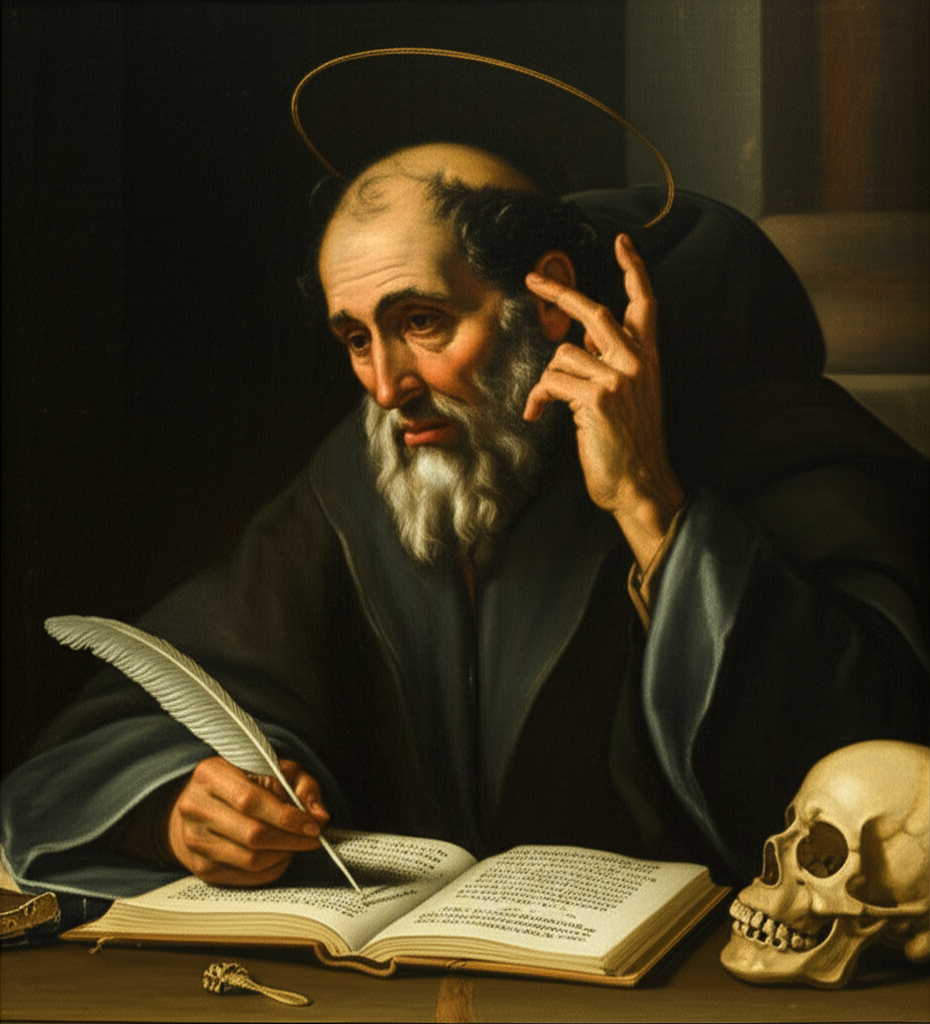
It was with Augustine of Hippo (354-430 CE) that the concept of will truly ascended to the forefront of the problem of sin and evil. His personal struggles, vividly chronicled in his Confessions (a cornerstone of the Great Books of the Western World), led him to a profound re-evaluation.
Augustine introduced the notion of liberum arbitrium (free judgment or free choice), arguing that God granted humanity a free will as a good thing. However, it was the misuse of this free will that led to sin. Sin was not a substance or an external force, but a privation of the good, an "aversion from the immutable Good and a conversion to mutable goods." The fall of Adam was not due to ignorance, but a deliberate turning away from God. This marked a significant shift: sin was no longer merely a failure of intellect but an act of the will.
Medieval Scholasticism: Reason, Grace, and Divine Will
The medieval period saw Christian philosophers, most notably Thomas Aquinas, grapple with Augustine's legacy, attempting to reconcile classical reason with Christian doctrine.
- Thomas Aquinas: In his Summa Theologica (a monumental work in the Great Books of the Western World), Aquinas meticulously analyzed the relationship between intellect and will. He argued that the will is a rational appetite, always moving towards what it apprehends as good. Sin, therefore, occurs when the intellect presents a lesser good as if it were the ultimate good, or when the will chooses to follow a disordered appetite against the dictates of reason and divine law. Aquinas maintained that humans retain free will even after the Fall, though it is weakened and prone to error, requiring divine grace to consistently choose the good.
- Duns Scotus and William of Ockham: Later medieval thinkers, particularly voluntarists like Scotus and Ockham, placed greater emphasis on the primacy of God's will. For Ockham, an action is good because God wills it, not because it is inherently good. This placed human will in a direct relationship with divine command, suggesting that the problem of sin is fundamentally about obedience to an absolute, divinely ordained moral order.
The Enlightenment and Beyond: Autonomy, Determinism, and Radical Evil
The Enlightenment ushered in new perspectives, often challenging traditional theological frameworks and placing human reason and autonomy at the forefront.
- René Descartes: While focusing on epistemology, Descartes touched upon the will in his account of error. Error, he suggested, arises when the will (which is infinite and free) makes judgments before the intellect (which is finite) has clear and distinct perceptions.
- Baruch Spinoza: A staunch determinist, Spinoza argued that free will is an illusion. All events, including human actions, are determined by prior causes. Freedom, for Spinoza, lies not in choosing otherwise, but in understanding the necessity of things and acting in accordance with reason. From this perspective, sin would be understood as acting from inadequate ideas or passions, rather than a failure of a truly free will.
- Gottfried Leibniz: In confronting the problem of evil within a divinely created "best of all possible worlds," Leibniz argued that God permits evil as a necessary condition for greater goods or as a consequence of finite free creatures. Human will, while free, is also inclined towards the good, but its finitude allows for moral error.
- Immanuel Kant: Kant's philosophy dramatically re-centered the will as the locus of moral agency. In works like the Groundwork of the Metaphysics of Morals and the Critique of Practical Reason (both essential Great Books of the Western World texts), he argued for the autonomy of the will—its capacity to legislate moral law for itself. A moral action is one performed from duty, meaning the will acts out of respect for the moral law, embodied in the Categorical Imperative. Kant also grappled with the problem of "radical evil" in human nature, suggesting that there is a fundamental propensity within us to subordinate the moral law to self-love, even when we know what is right. This radical evil is a choice of the will, a reversal of the proper order of incentives.
Modern and Contemporary Perspectives: Existential Freedom and Neurological Determinism
The 19th and 20th centuries continued to explore the problem of sin and will, often with radical departures from earlier traditions.
- Friedrich Nietzsche: Challenging traditional notions of good and evil, Nietzsche, in works like Thus Spoke Zarathustra and Beyond Good and Evil (Great Books of the Western World), advocated for a "revaluation of all values." He viewed Christian morality, with its emphasis on sin and guilt, as a "slave morality" that stifled the human "will to power." For Nietzsche, genuine freedom lay in creating one's own values and overcoming conventional moral strictures.
- Existentialism (e.g., Jean-Paul Sartre): Existentialists championed radical freedom and responsibility. Sartre famously declared that humans are "condemned to be free," meaning we are entirely responsible for our choices and actions, with no pre-given essence or divine guidance. Sin, in this framework, might be understood as "bad faith"—the attempt to deny one's freedom and responsibility by blaming external forces or claiming a fixed nature.
- Analytic Philosophy and Neuroscience: Contemporary debates often focus on the scientific implications for free will. Neuroscientific discoveries about brain mechanisms underlying decision-making have fueled arguments for determinism, challenging the very notion of a free will capable of choosing sin. Philosophers in this tradition continue to debate compatibilism (free will and determinism can coexist), libertarianism (free will exists and is incompatible with determinism), and hard determinism (free will is an illusion).
The Enduring Problem: Why It Still Matters
The problem of sin and will remains as vital and perplexing today as it was millennia ago. Its implications ripple through various facets of human experience:
- Moral Responsibility: Our legal and ethical systems are predicated on the assumption of free will and moral accountability. If sin is merely a determined outcome, what becomes of blame, punishment, and forgiveness?
- Personal Ethics: Understanding the nature of our choices—whether they stem from a free will, a flawed nature, or external pressures—is crucial for self-improvement, character development, and living a meaningful life.
- Theology and Faith: For religious traditions, the problem of sin and evil is central to understanding the nature of God, divine justice, and the path to salvation.
- Human Nature: The debate ultimately forces us to confront fundamental questions about what it means to be human: Are we fundamentally rational agents, creatures of instinct, or beings defined by our capacity for both profound good and devastating evil?
The journey through the philosophical landscape of sin and will reveals not a simple answer, but a rich tapestry of thought that continually refines our understanding of human agency and moral life. It compels us to reflect on our choices, our responsibilities, and the perennial tension between our ideals and our actions.
Further Exploration:
- YouTube: "Augustine Free Will Problem of Evil"
- YouTube: "Kant Autonomy of Will Ethics"
📹 Related Video: What is Philosophy?
Video by: The School of Life
💡 Want different videos? Search YouTube for: "The Problem of Sin and Will philosophy"