

The Problem of Sin and Desire: A Perennial Philosophical Conundrum
The human condition is, perhaps above all else, a testament to an enduring internal struggle: the tension between our innate desires and the moral or spiritual transgressions we label as "sin." This isn't merely a theological debate but a fundamental philosophical problem that has occupied the greatest minds throughout history, shaping our understanding of Good and Evil, human agency, and the very nature of existence. At its core, the Problem of Sin and Desire asks how our natural inclinations, which drive us to live, create, and connect, can simultaneously lead us astray, causing harm to ourselves and others, and separating us from an ideal state of being.
Unpacking Desire: The Engine of Existence
Desire is the raw, unadulterated force that propels life forward. From the most basic biological urges to complex intellectual yearnings, it is the telos – the purpose or end – towards which we strive. Philosophers across the ages have grappled with its multifaceted nature:
- Plato's tripartite soul depicted desire (epithymia) as a wild horse, needing to be guided by reason. Unchecked desire leads to imbalance and injustice within the soul.
- Aristotle saw desire (orexis) as a natural impulse, but its proper ordering through practical wisdom (phronesis) was essential for achieving eudaimonia (human flourishing).
- Epicurus distinguished between natural and necessary desires (for food, shelter), natural but unnecessary desires (for luxurious food), and vain and empty desires (for fame, immortality), arguing that only the former lead to true tranquility.
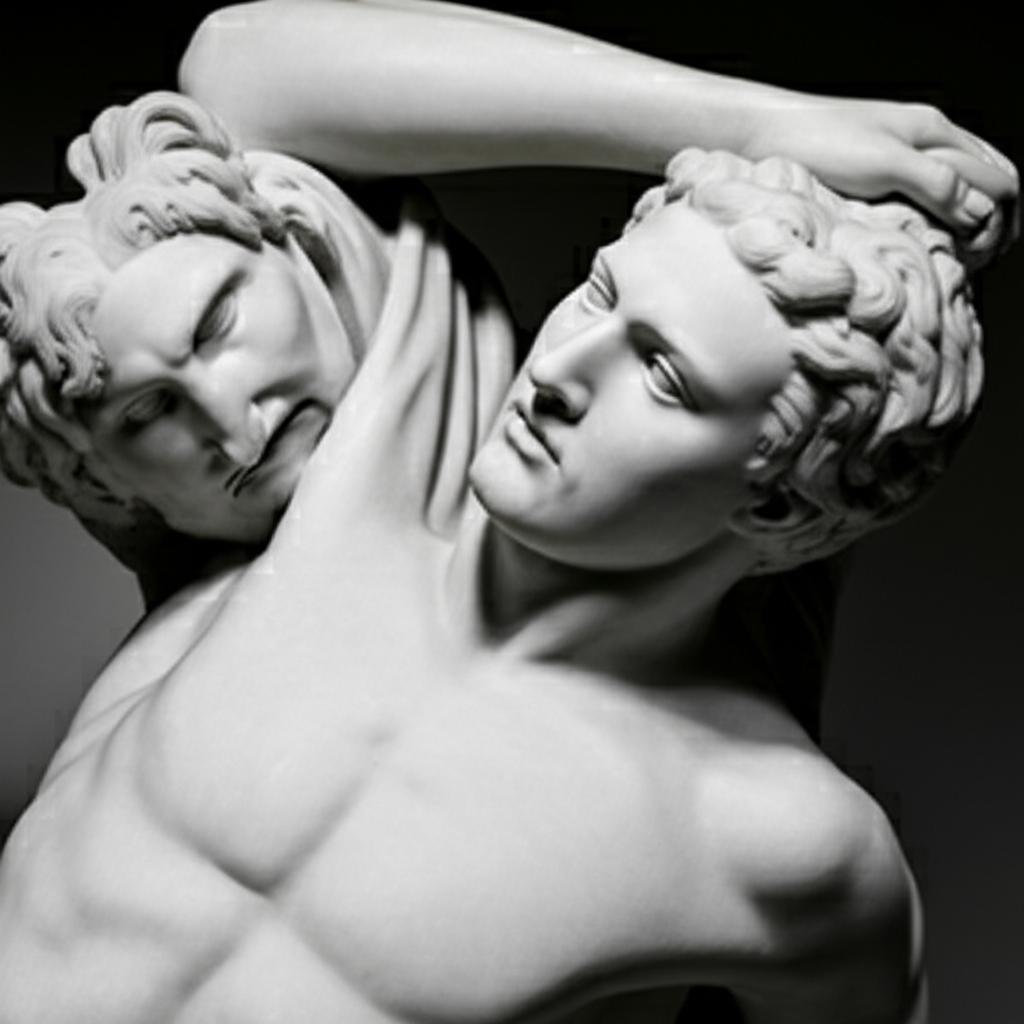
The Concept of Sin: A Deviation from the Good
While desire is a force, sin is often understood as a deviation or transgression. Its definition shifts across contexts, yet a common thread persists:
- In Abrahamic traditions, sin is typically a transgression against divine law or a separation from God, often rooted in disordered love or desire. St. Augustine, a towering figure in the Great Books of the Western World, famously articulated sin as a turning away from God, the supreme Good, towards lesser goods, driven by concupiscence – a disordered desire for temporal things.
- In more secular or philosophical terms, sin can be understood as an act or omission that causes harm, prevents human flourishing, or deviates from a moral ideal. It's a failure to live up to one's potential or to act in accordance with universal ethical principles (e.g., Kant's categorical imperative).
The Interplay: When Desire Becomes Sinful
The core problem lies not in desire itself, but in its direction, intensity, and object. When does a natural human inclination transform into a moral failing?
- Disordered Desire: A desire becomes problematic when it is directed towards an inappropriate object, or when it seeks a good in an excessive or exclusive manner, elevating a lesser good above a greater one. For instance, the desire for food is natural, but gluttony, an excessive pursuit of this desire, can be considered a sin.
- Weakness of Will (Akrasia): This concept, explored by Plato and Aristotle, describes the phenomenon where one knows what is Good but acts against that knowledge due to an overwhelming desire or passion. It highlights the struggle between reason and appetite.
- Ignorance or Malice: Sometimes, sin arises from a lack of understanding of what is truly Good, or from an active intent to cause harm. However, even in cases of malice, one might argue there's a disordered desire for power, revenge, or self-aggrandizement at play.
Philosophical Approaches to Managing Desire
| Philosopher/Tradition | Primary Approach | Goal |
|---|---|---|
| Plato | Reason's Governance | Harmony of the Soul, Justice |
| Aristotle | Virtue Ethics | Eudaimonia (Flourishing) through moderation |
| Stoicism | Apathy (Freedom from Passion) | Tranquility, Inner Peace |
| Augustine | Ordered Love | Union with God, True Happiness |
| Spinoza | Understanding Necessity | Freedom through Knowledge of God/Nature |
The Quest for Good and Evil: Navigating the Moral Landscape
The Problem of Sin and Desire is inextricably linked to our understanding of Good and Evil. If sin is a deviation from the Good, then defining the Good becomes paramount. Is the Good an external, objective reality (Plato's Forms, divine law)? Or is it a construct of human reason and societal agreement?
The struggle to reconcile desire with the pursuit of the Good is a defining characteristic of human ethical life. It's the challenge of self-mastery, of aligning our inner impulses with our highest ideals. It prompts us to reflect on:
- The role of free will in choosing to indulge or restrain desires.
- The impact of our actions, driven by desire, on ourselves and the community.
- The continuous effort required to cultivate virtues that guide our desires towards constructive, rather than destructive, ends.
Ultimately, the Problem of Sin and Desire remains a potent reminder of the complexities of human nature. It's not about eradicating desire – an impossible and undesirable feat – but about understanding its immense power and learning to direct it in ways that foster Good rather than Evil, leading to a life of greater meaning, integrity, and flourishing.
YouTube Video Suggestions:
-
📹 Related Video: PLATO ON: The Allegory of the Cave
Video by: The School of Life
💡 Want different videos? Search YouTube for: ""Augustine Original Sin Concupiscence""
2. ## 📹 Related Video: PLATO ON: The Allegory of the Cave
Video by: The School of Life
💡 Want different videos? Search YouTube for: ""Plato Aristotle Desire Ethics""