

The Enduring Quandary: Labor and the State
The relationship between labor and the State has been a foundational problem in political philosophy since antiquity, deeply intertwined with questions of justice, freedom, and the distribution of wealth. At its core, this problem asks how the collective organization of society – the State – should define, regulate, value, and benefit from the productive efforts of its citizens, and what obligations arise from this intricate dance. It's a debate that transcends mere economics, touching on the very essence of human dignity and societal purpose.
The Philosophical Tapestry of Labor
From the ancient Greek city-states to the industrial revolutions and beyond, thinkers have grappled with the role of labor in shaping the State and its citizens. The Great Books of the Western World offer a rich dialogue, revealing how different epochs conceived of this fundamental interaction.
Ancient Perspectives: Hierarchy and Necessity
In the classical world, particularly as articulated by figures like Plato and Aristotle, labor was often viewed through the lens of social hierarchy and the needs of the State.
- Plato's Republic: Envisioned a State where the division of labor was paramount for efficiency, with artisans and farmers providing for the material needs, while guardians and philosopher-kings governed. Manual labor was often seen as a necessary but lower pursuit, freeing the elite for intellectual and civic duties. The problem here wasn't so much the laborer's condition, but how to ensure each class performed its function without disrupting the social order or accumulating excessive wealth that could corrupt the State.
- Aristotle's Politics: Similarly, acknowledged the necessity of labor for the State's survival but often relegated it to slaves or non-citizens, allowing free citizens to pursue virtue and participate in political life. The problem of labor for the free citizen was largely absent, pushed to the periphery by the institution of slavery, which created its own profound ethical dilemmas for later generations.
The Dawn of Modernity: Property and Rights
With the Enlightenment, the focus shifted from a predetermined social order to individual rights and the origins of property.
- John Locke and the Genesis of Property: Locke's Second Treatise of Government posits labor as the very foundation of property rights. When an individual mixes their labor with natural resources, they make it their own. The State's primary role, then, becomes the protection of these rights. However, this raises the problem of unequal wealth accumulation: if labor creates property, and some labor more or acquire more through exchange, how does the State reconcile vast disparities in wealth with a commitment to individual freedom and a stable society?
- Jean-Jacques Rousseau and the Corrupting Influence: In Discourse on the Origin and Basis of Inequality Among Men, Rousseau presented a more critical view, suggesting that the development of agriculture and metallurgy – forms of labor – led to the concept of private property, which in turn fostered inequality and conflict, moving humanity away from its natural state. For Rousseau, the State often served to solidify these inequalities, rather than rectify them, creating a profound problem of justice.
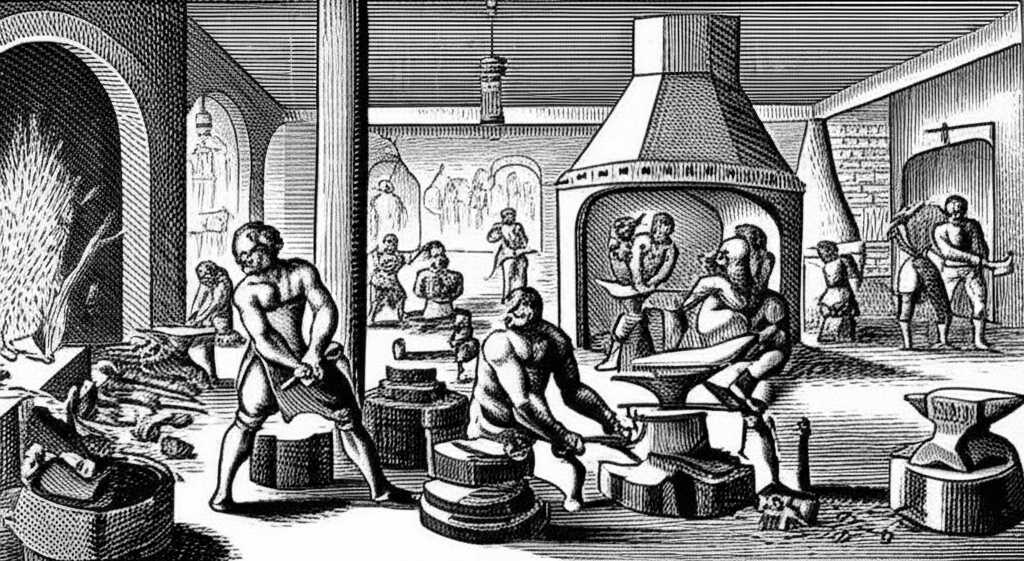
Industrial Age: Value, Alienation, and Revolution
The Industrial Revolution dramatically reshaped the nature of labor and intensified the philosophical debate.
- Adam Smith and the Wealth of Nations: Smith famously championed the division of labor as the engine of economic growth and national wealth. By specializing, workers become more efficient, leading to greater productivity. Yet, Smith also recognized the potential dehumanizing aspect of repetitive tasks, noting that a man "whose whole life is spent in performing a few simple operations... has no occasion to exert his understanding." This foreshadowed a key problem: how does the State manage the immense wealth generated by industrial labor while mitigating its alienating effects on the worker?
- Karl Marx and the Critique of Capitalism: Marx, drawing heavily on earlier thinkers, articulated the problem of labor under capitalism as one of exploitation and alienation. For Marx, labor is the source of all value, yet the capitalist system alienates the worker from the product of their labor, the act of labor itself, their species-being, and other workers. The State, in his view, primarily serves the interests of the capitalist class, perpetuating the extraction of surplus value and the concentration of wealth. The solution, for Marx, lay in a revolutionary transformation of the State and economic system.
Key Dimensions of the Problem
The problem of labor in the State is multifaceted, encompassing several critical areas of inquiry:
- The Valuation of Labor: How does the State (and society) assign value to different forms of labor? Is all labor equally worthy? How does this valuation impact social status and wealth distribution?
- The Distribution of Wealth: Given that labor is a primary source of wealth, what is the State's responsibility in ensuring a just and equitable distribution of that wealth? Should it intervene to prevent extreme disparities?
- Freedom vs. Necessity: To what extent should individuals be free to choose their labor, and to what extent does the State's need for certain types of labor (e.g., essential services, military) override individual choice? How does the State balance individual liberty with collective needs?
- Alienation and Human Flourishing: If labor is a fundamental human activity, how can the State structure society to ensure that labor is not merely a means to survival, but a path to human flourishing, creativity, and self-realization?
- The State as Regulator and Provider: What is the appropriate scope of the State's intervention in labor markets? Should it set wages, working conditions, provide social safety nets, or remain largely hands-off?
Enduring Questions for the Modern State
The historical dialogue from the Great Books provides a powerful lens through which to view contemporary challenges. The problem of labor in the State remains as relevant as ever, manifesting in debates over:
- Minimum wage and living wages
- The impact of automation and artificial intelligence on employment
- The gig economy and worker rights
- Global supply chains and international labor standards
- The role of education in preparing individuals for the labor force
- The relationship between labor, taxation, and social welfare programs
Ultimately, the philosophical inquiry into labor and the State is an ongoing quest to define a just and thriving society, one where the efforts of its members contribute to collective wealth and well-being without sacrificing individual dignity or fostering insurmountable inequalities.
YouTube: "Great Books of the Western World Labor Philosophy"
YouTube: "Marx on Alienation of Labor Explained"
📹 Related Video: What is Philosophy?
Video by: The School of Life
💡 Want different videos? Search YouTube for: "The Problem of Labor in the State philosophy"