

The Problem of Labor in the State
The relationship between human labor, the structures of the state, and the distribution of wealth presents one of philosophy's most enduring and complex problems. From ancient Greece to the industrial age and beyond, thinkers have grappled with how work defines individuals, contributes to society, and shapes the political economy. This article explores the historical and philosophical dimensions of this fundamental tension, examining how various conceptions of labor have influenced the role of the state and the accumulation of wealth, highlighting the persistent challenges in achieving a just and equitable social order.
Ancient Foundations: Labor, Hierarchy, and the Polis
In the foundational texts of Western thought, particularly within the Great Books, the concept of labor was often viewed through the lens of social hierarchy and necessity. For philosophers like Plato and Aristotle, manual labor was largely seen as a means to an end, a practical activity necessary for the sustenance of the state (the polis), but often relegated to those not fully engaged in the higher pursuits of citizenship, philosophy, or governance.
- Plato's Republic: Envisioned a state where different classes performed specific functions. While farmers and artisans provided essential goods through their labor, they were distinct from the guardian and philosopher-king classes, whose primary labor was intellectual and political. The problem here was not the labor itself, but its potential to distract citizens from civic duty or intellectual development, creating a clear division of wealth and status.
- Aristotle's Politics: Further elaborated on the natural divisions within society, with a justification for slavery based on the idea of natural servitude. Productive labor was necessary, but the ideal citizen was one free from its demands, allowing them to participate fully in the political life of the state. The wealth generated by the labor of others was meant to support this ideal. The underlying problem for these thinkers was how to organize society to allow for the highest human flourishing, often at the expense of those performing manual tasks.
This ancient perspective established a persistent problem: how does a state reconcile the necessity of labor with the aspirations for intellectual and political freedom, and what does this mean for the distribution of wealth and power?
The Enlightenment: Property, Rights, and the Social Contract
The Enlightenment era brought a revolutionary re-evaluation of labor, transforming it from a mere necessity into a source of individual rights and the basis of wealth.
- John Locke and Property: In his Second Treatise of Government, Locke argued that labor is the primary source of property rights. When an individual mixes their labor with natural resources, those resources become their property. This concept fundamentally linked labor to individual liberty and the accumulation of wealth. The state, according to Locke, was established precisely to protect these natural rights, including the right to property acquired through labor. The problem then shifted to how the state could effectively secure these rights without infringing upon them, and how the accumulation of wealth through labor could lead to disparities that the state might need to address.
- Jean-Jacques Rousseau and Inequality: While acknowledging the role of labor in society, Rousseau, particularly in his Discourse on Inequality, presented a critical perspective. He argued that the establishment of private property, initially sanctioned by labor, eventually led to profound social inequalities and the creation of a state that often served to protect the interests of the wealthy. For Rousseau, the problem was that the very concept of property, while stemming from individual effort, ultimately corrupted human nature and established the "chains" of civil society, leading to a system where the wealth of a few came at the expense of the many.
These thinkers laid the groundwork for understanding the state's complex role in mediating between individual labor, property rights, and the potential for vast disparities in wealth.
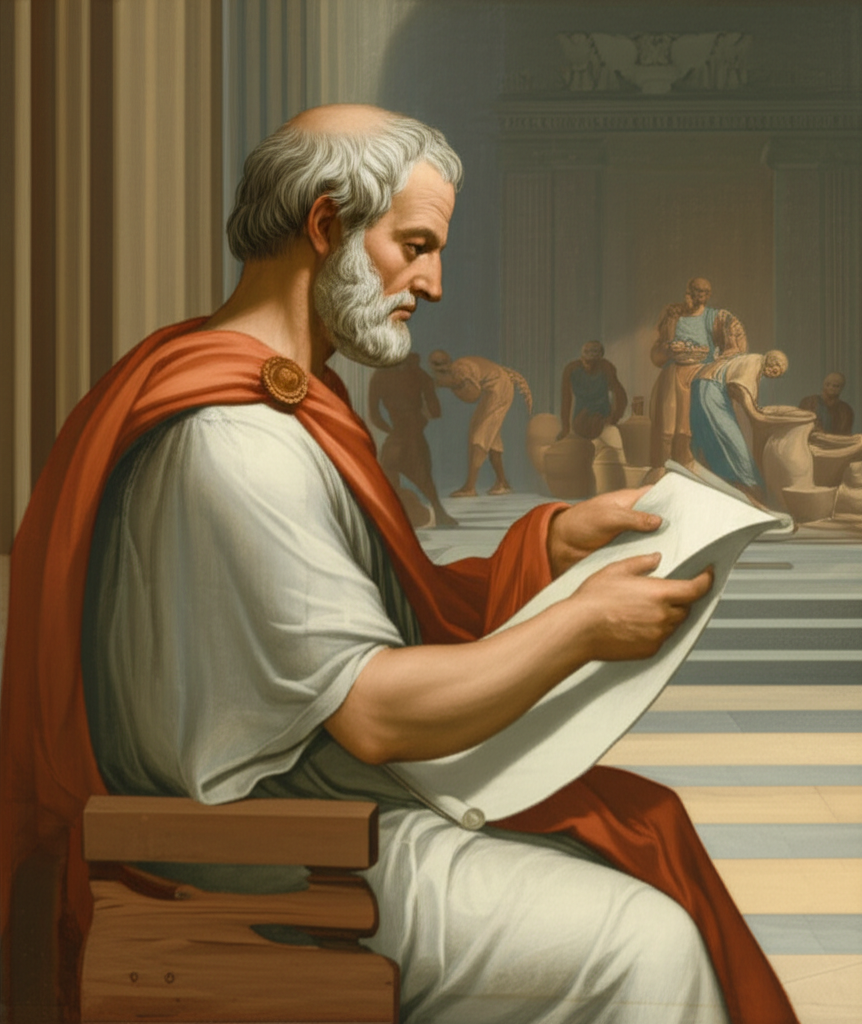
The Industrial Age: Alienation, Exploitation, and the Capitalist State
The advent of the Industrial Revolution intensified the problem of labor in the state, as new forms of production dramatically altered the nature of work and the distribution of wealth.
- Adam Smith and the Division of Labor: In The Wealth of Nations, Adam Smith championed the division of labor as the engine of economic prosperity and the source of national wealth. Specialization, he argued, increased efficiency and productivity, benefiting society as a whole. The state's role was to provide a stable framework of laws, protect property, and facilitate free markets, allowing individuals to pursue their self-interest, which would inadvertently lead to collective prosperity. However, Smith also recognized the potential for the mind-numbing effects of highly specialized, repetitive labor on the worker.
- Karl Marx and Alienated Labor: Marx, drawing heavily on the problems inherent in industrial capitalism, posited that labor under this system became alienated. In Das Kapital, he argued that workers were separated from:
- The product of their labor: They do not own what they produce.
- The process of labor: They have no control over how they work.
- Their species-being: Their creative human essence is denied.
- Other workers: Competition replaces cooperation.
This alienation, Marx contended, was the fundamental problem of capitalism, leading to the exploitation of the working class (proletariat) by the owners of capital (bourgeoisie). The state, in Marx's view, was not a neutral arbiter but an instrument of the ruling class, designed to protect the interests of capital and perpetuate the unequal distribution of wealth generated by the labor of others. The solution, he believed, lay in a revolutionary transformation that would abolish private property and establish a classless society where labor would be fulfilling and wealth collectively owned.
These contrasting views from the Great Books highlight the profound philosophical divide on the nature of labor and the state's responsibility in a rapidly industrializing world.
The Enduring Problem: Labor, Dignity, and Justice in the Modern State
Today, the problem of labor in the state continues to evolve with technological advancements, globalization, and shifting economic paradigms. The core questions remain:
- How does the state ensure dignified labor in an era of automation and precarity?
- What is the state's role in mitigating the widening gap in wealth accumulation?
- How do we balance individual liberty and the pursuit of wealth with the collective good and social justice?
From debates about universal basic income to the regulation of global supply chains, contemporary societies are still grappling with the philosophical legacies of labor and its relationship to the state and wealth. The pursuit of a just society requires a continuous re-evaluation of these fundamental problems, drawing upon the rich intellectual heritage that has sought to understand the very essence of human work and its place in the political order.
YouTube Video Suggestions:
-
📹 Related Video: What is Philosophy?
Video by: The School of Life
💡 Want different videos? Search YouTube for: ""Marx Alienation of Labor Explained Philosophy""
-
📹 Related Video: PLATO ON: The Allegory of the Cave
Video by: The School of Life
💡 Want different videos? Search YouTube for: ""Locke's Theory of Property and the State""