

The Enduring Quandary: Labor, Liberty, and the Leviathan State
The relationship between individual labor and the collective entity of the State presents one of the most persistent and profound problems in political philosophy. From ancient city-states to modern industrial nations, societies have grappled with how to organize, incentivize, and regulate human effort without infringing upon fundamental liberties, all while addressing the distribution of wealth that labor generates. This article delves into the philosophical contours of this complex problem, exploring how thinkers throughout history have conceived of labor's role within the State and the inherent tensions that arise.
The Foundations of Toil: Labor's Place in Early Political Thought
From the earliest philosophical inquiries, labor was recognized as the fundamental engine of human society, yet its status and organization varied dramatically. The Great Books of the Western World reveal a consistent engagement with this theme, albeit through different lenses.
- Ancient Divisions: In Plato's Republic, the ideal State is built upon a rigid division of labor, where each citizen performs the task for which they are best suited, from farmers and artisans to guardians and philosopher-kings. This structure, while efficient in theory, subordinates individual choice to the collective good and the State's design. Aristotle, in his Politics, acknowledged the necessity of labor for the household and the city, but often viewed manual labor as a lesser activity, suitable for slaves or those without the leisure for civic participation, thereby creating a distinct social hierarchy based on one's relationship to productive work.
- The Dawn of Property Rights: Moving into the early modern era, figures like John Locke fundamentally re-evaluated labor's significance. In his Two Treatises of Government, Locke famously argued that labor is the origin and justification of private property. By mixing one's labor with natural resources, an individual establishes a natural right to that which they have worked upon. Here, labor is not merely a means to an end for the State, but a deeply personal act that confers rights, setting the stage for a potential problem when the State seeks to regulate or appropriate the fruits of that labor.
The Modern Predicament: Labor, Coercion, and the Accumulation of Wealth
The advent of the modern State and the Industrial Revolution intensified the philosophical problem of labor. As societies became more complex and economies more interdependent, the State's role in mediating labor relations grew exponentially, often leading to profound questions about freedom, exploitation, and the distribution of wealth.
The State as Regulator and Beneficiary:
The modern State finds itself in a perpetual balancing act. It requires a productive workforce to generate tax revenue, maintain infrastructure, and ensure national security. This often leads to state intervention in labor markets, through regulations on working conditions, minimum wages, or even, in extreme cases, forced labor (e.g., conscription). However, such interventions can clash with individual liberty and the right to one's own labor.
- The Social Contract and Surrender of Labor: Philosophers like Thomas Hobbes, in Leviathan, posited that individuals surrender certain natural rights, including aspects of their labor, to the sovereign State in exchange for security and order. While this provides stability, it also raises the problem of where the line is drawn between necessary submission and undue coercion. Jean-Jacques Rousseau, in The Social Contract, further complicated this by suggesting that true freedom lies in obedience to a collective "general will," which could, theoretically, dictate the terms of labor for the common good, potentially overriding individual autonomy.
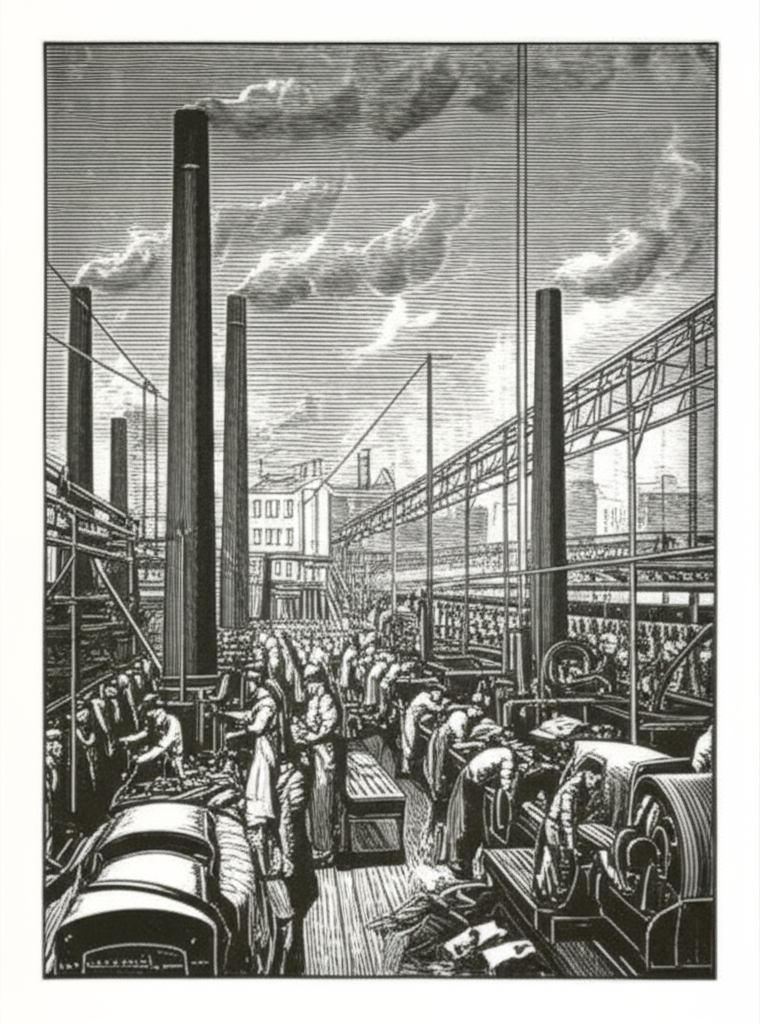
- Alienation and the Question of Wealth: The rise of industrial capitalism, eloquently critiqued by Karl Marx in works like Das Kapital, brought the problem of labor to a head. Marx argued that in capitalist systems, labor becomes alienated from its product, its process, its species-being, and other laborers. The worker no longer owns the means of production nor the full value of their labor; instead, their effort contributes to the accumulation of wealth for the capitalist class. The State, in this view, often acts as an instrument to uphold these economic structures, thereby perpetuating the exploitation of labor.
Navigating the Ethical Labyrinth: Balancing Individual and Collective Needs
The ongoing problem of labor in the State is not merely an economic or political one; it is fundamentally an ethical dilemma. How does a State foster prosperity and stability without undermining the dignity and freedom of its citizens?
Key Tensions in State-Labor Relations:
| Aspect of Labor | Individual Perspective | State Perspective | Potential Problem |
|---|---|---|---|
| Autonomy | Right to choose work, set terms, own fruits of labor. | Need for skilled workforce, regulation for public good. | Coercion, over-regulation, loss of individual agency. |
| Value & Wealth | My labor creates my wealth; I deserve its full value. | Labor contributes to national wealth; must be taxed for public services. | Exploitation, unfair distribution of wealth, tax burden. |
| Welfare | Need for fair wages, safe conditions, social safety nets. | Cost of welfare, impact on economic competitiveness. | Underpaid labor, poor conditions, social inequality. |
| Productivity | Desire for meaningful work, personal growth. | Need for efficient, high-output labor for economic growth. | Alienation, repetitive tasks, focus on quantity over quality. |
Conclusion: An Enduring Philosophical Frontier
The problem of labor in the State remains a vibrant and urgent area of philosophical inquiry. From the ancient Greek polis to the contemporary globalized economy, societies continually wrestle with how to reconcile the individual's right to their labor and its resultant wealth with the collective needs and demands of the State. Whether through the lens of natural rights, social contract theory, or critiques of economic exploitation, the fundamental tension persists. There is no easy answer, only an ongoing imperative for ethical deliberation, political reform, and a constant re-evaluation of what it means to be a working citizen within the structures of power.
YouTube Video Suggestions:
-
📹 Related Video: ARISTOTLE ON: The Nicomachean Ethics
Video by: The School of Life
💡 Want different videos? Search YouTube for: ""Marx's Theory of Alienation Explained""
2. ## 📹 Related Video: PLATO ON: The Allegory of the Cave
Video by: The School of Life
💡 Want different videos? Search YouTube for: ""John Locke's Labor Theory of Property Explained""