

The Unseen Chasm: Navigating the Problem of Induction in Scientific Discovery
Summary
The problem of induction poses a profound challenge to our understanding of knowledge and the very foundation of science. At its core, it questions the logic of inferring general conclusions from specific observations, a process fundamental to how we build scientific theories and predict future events. Despite its undeniable success, science relies heavily on the assumption that patterns observed in the past will continue into the future. This article explores why this seemingly intuitive leap of faith lacks a purely rational justification, leaving an enduring philosophical puzzle that impacts our conception of certainty and the limits of human understanding.
The Inductive Leap: From Specifics to Universals
In the realm of science, our pursuit of knowledge often begins with observation. We witness phenomena, record data, and identify patterns. From these specific instances, we then attempt to formulate general laws or theories that explain not only what we've seen but also what we expect to see. This process is known as induction.
Consider a classic example: for millennia, humans have observed the sun rising in the east every morning. Based on countless such observations, we induce the general principle that "the sun always rises in the east." This principle then allows us to predict tomorrow's sunrise with high confidence. Similarly, scientific laws like gravity or the laws of thermodynamics are built upon vast collections of empirical data, leading to generalizations about how the universe operates.
- Examples of Inductive Reasoning in Science:
- Observing countless falling objects leads to the law of universal gravitation.
- Repeated experiments showing water boiling at 100°C at sea level lead to a general understanding of water's properties.
- Monitoring planetary movements allows for the prediction of future celestial events.
This method of reasoning is so ingrained in our thinking and so demonstrably effective that its underlying logic rarely comes under scrutiny in everyday life or even in much scientific practice. Yet, it harbors a deep philosophical quandary.
Hume's Challenge: The Lack of Logical Justification
The most incisive articulation of the problem of induction comes from the Scottish philosopher David Hume, a towering figure in the Great Books of the Western World. Hume meticulously demonstrated that while induction is psychologically compelling and practically indispensable, it lacks a purely rational or logical foundation.
Hume argued that our belief in inductive inferences – that the future will resemble the past – is not based on reason but on custom or habit. We believe the sun will rise tomorrow because it always has. But what logical proof do we have that the laws of nature are immutable? What prevents a radical, unforeseen change?
The Core of Hume's Argument:
- Induction is not deductive: Deductive reasoning guarantees its conclusion if its premises are true (e.g., "All men are mortal; Socrates is a man; therefore, Socrates is mortal"). Inductive reasoning, however, offers no such guarantee. The next observation could always contradict our generalization.
- Induction cannot be justified inductively: To justify induction by appealing to its past successes (e.g., "Induction has worked in the past, so it will work in the future") is to use induction itself, creating a circular argument. This is like trying to prove that a specific type of bread is healthy by only eating that bread.
- No a priori justification: There is no a priori (prior to experience) reason to believe in the uniformity of nature. We cannot logically prove that the universe must operate consistently over time.
This means that our most fundamental scientific predictions and generalizations rest not on an unshakeable logical bedrock, but on a pragmatic assumption: the Principle of the Uniformity of Nature. We assume that the underlying laws governing the universe remain constant, but this assumption itself cannot be proven without circularity.
Why This Matters for Scientific Knowledge
The problem of induction is not merely an academic footnote; it strikes at the heart of what we consider knowledge in science. If we cannot logically justify the leap from "all observed Fs have been G" to "all Fs are G," then what status do scientific laws truly hold?
| Aspect of Science | Impact of Induction Problem |
|---|---|
| Prediction | Future events are merely probable, not certain, based on past observations. |
| Generalization | Universal laws (e.g., gravity) are hypotheses, not logically proven truths. |
| Falsifiability | Emphasizes that scientific theories are always open to revision, rather than absolute proof. |
| Scientific Method | Highlights the role of observation and experimentation as providing evidence, not absolute proof. |
This problem doesn't invalidate science but rather reframes its philosophical underpinnings. It suggests that scientific knowledge is always provisional, open to revision, and built upon a foundational assumption that transcends pure logic. Karl Popper, another prominent philosopher of science, famously argued that science progresses not by proving theories true (which induction cannot do), but by falsifying them. A good scientific theory is one that makes bold predictions and is therefore highly falsifiable.
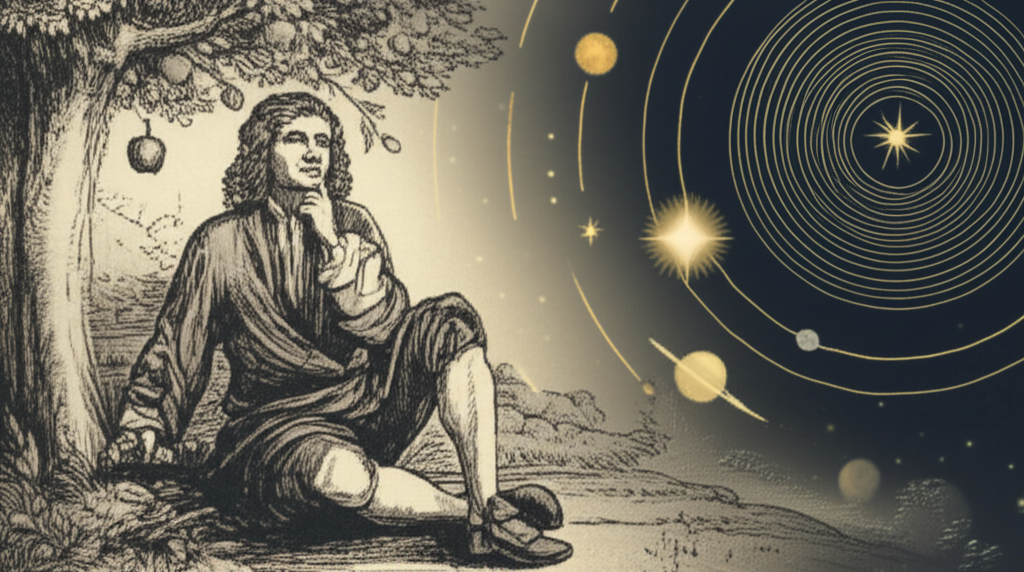
Navigating the Inductive Abyss: Attempts at Justification
Philosophers have offered various responses to Hume's challenge, attempting to either justify induction or redefine our understanding of scientific knowledge.
- Pragmatic Justification: Some argue that even if induction isn't logically certain, it's the best method we have for understanding and interacting with the world. As Bertrand Russell noted, "The man who never expects to die will be a fool." We use induction because it has, thus far, proven incredibly successful in practice.
- Probabilistic Justification: Bayesian approaches to logic attempt to quantify the strength of inductive inferences, assigning probabilities to hypotheses based on new evidence. While this doesn't solve the fundamental problem of how to justify the initial probability assignments or the assumption of uniformity, it provides a powerful framework for reasoning with uncertainty.
- Falsificationism (Popper): As mentioned, Popper shifts the focus from verification to falsification. Science doesn't prove, it disproves. A theory is scientific if it can, in principle, be shown to be false. This sidesteps the problem of induction by accepting that universal statements cannot be confirmed, only refuted.
Conclusion: The Enduring Mystery of Science and Knowledge
The problem of induction remains one of philosophy's most profound and enduring puzzles, challenging our confidence in the very fabric of scientific knowledge. It reminds us that even our most robust scientific theories and predictions, born from meticulous observation and rigorous experimentation, rest on an unproven assumption about the uniformity of nature.
Far from undermining science, this philosophical insight enriches our understanding of it. It highlights the provisional nature of scientific truth, the courage required to make inductive leaps, and the constant need for critical inquiry. Our pursuit of knowledge is not a march toward absolute certainty, but a continuous journey of refining our best guesses about the universe, guided by evidence, informed by logic, and always mindful of the unseen chasm that induction asks us to bridge.
📹 Related Video: PLATO ON: The Allegory of the Cave
Video by: The School of Life
💡 Want different videos? Search YouTube for: ""David Hume Problem of Induction Explained""
📹 Related Video: SOCRATES ON: The Unexamined Life
Video by: The School of Life
💡 Want different videos? Search YouTube for: ""Karl Popper Falsification and the Scientific Method""