

The Enduring Quandary: The Problem of Induction in Scientific Discovery
The bedrock of much human understanding, particularly in the realm of science, rests upon a seemingly simple premise: what has happened before will happen again. This fundamental assumption, known as induction, allows us to infer general rules from specific observations, forming the basis of our knowledge of the world. Yet, as Daniel Sanderson, I find myself continually drawn to one of philosophy's most profound and unsettling challenges to this very foundation: the problem of induction. This article will explore why this problem, first articulated with chilling clarity by David Hume, continues to cast a shadow over the certainty of scientific discovery and the very nature of empirical knowledge.
What is Induction? Unpacking the Foundation of Empirical Knowledge
At its core, induction is a type of logic that moves from specific observations to general conclusions. Unlike deduction, which guarantees the truth of its conclusion if its premises are true (e.g., "All men are mortal; Socrates is a man; therefore, Socrates is mortal"), induction offers no such guarantee. It operates on probability and patterns.
Consider these everyday examples:
- Every swan I have ever seen is white. Therefore, all swans are white.
- The sun has risen every day of my life. Therefore, the sun will rise tomorrow.
- This copper wire conducted electricity yesterday. Therefore, it will conduct electricity today.
In science, inductive reasoning is paramount. Scientists observe phenomena, conduct experiments, and collect data to identify patterns. From these patterns, they formulate hypotheses, theories, and laws that aim to describe and predict the natural world. Newton's laws of motion, for instance, were generalized from countless observations of moving objects.
The Philosophical Earthquake: Hume and the Problem
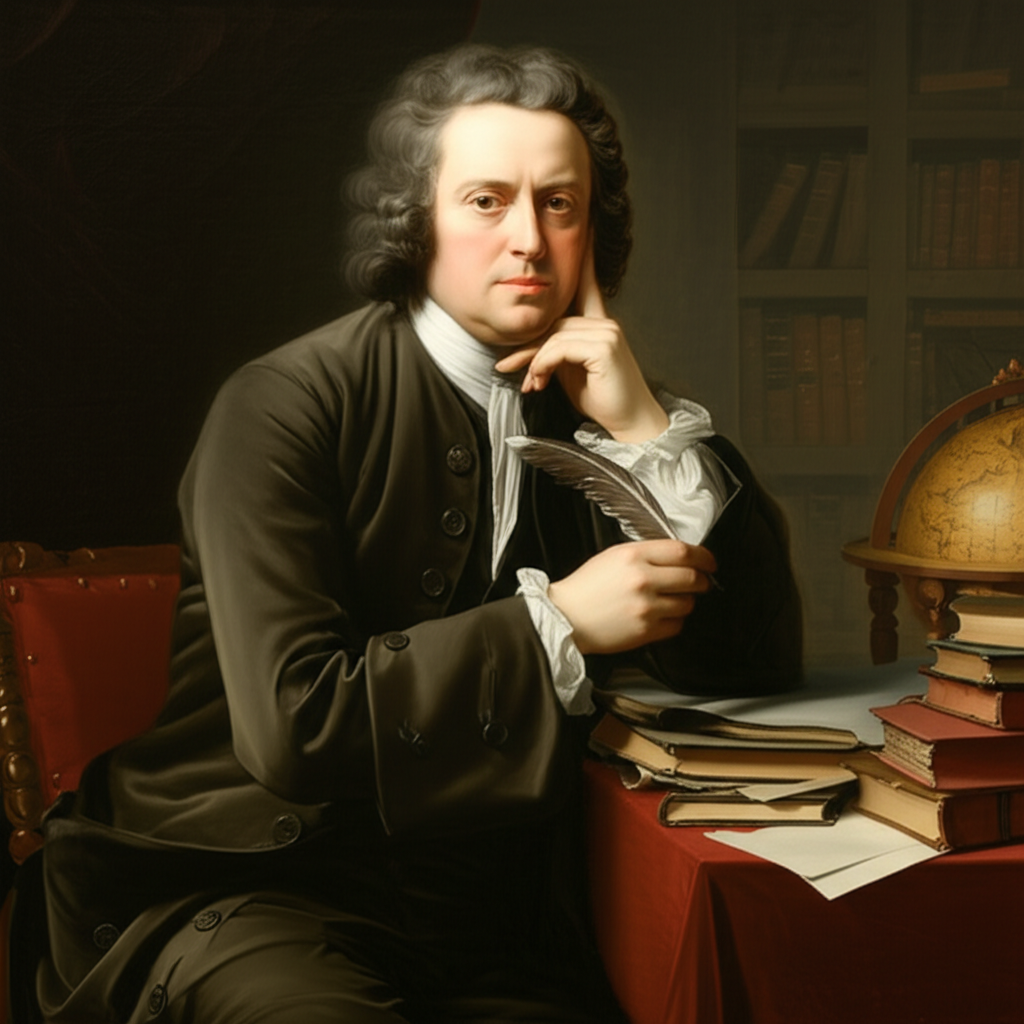
The profound philosophical challenge to induction was most forcefully articulated by the Scottish philosopher David Hume in the 18th century, a figure central to the Great Books of the Western World canon. Hume argued that there is no rational, non-circular justification for believing that the future will resemble the past.
Hume's argument can be summarized thus:
- We believe that the future will resemble the past (the Principle of the Uniformity of Nature).
- This belief is based on past experience (e.g., the sun has always risen).
- But to justify this belief in the future based on past experience is to assume that past experience is a reliable guide to the future.
- This is precisely the principle we are trying to justify.
- Therefore, any attempt to justify induction using induction itself is circular and thus, not a sound logical justification.
Hume concluded that our reliance on induction is not a matter of logic or reason, but rather a psychological habit, a "custom or habit" of the mind. This insight was, and remains, a monumental blow to the quest for certain knowledge derived from experience.
Induction's Indispensable Role (and its Unsettling Implications) in Science
Despite Hume's devastating logical critique, induction remains utterly indispensable for scientific inquiry. Without it, science as we know it simply wouldn't exist. How could we formulate laws, predict events, or even learn from experiments if we couldn't assume some regularity in nature?
Consider the process of scientific discovery:
- Observation: Repeated observations of phenomena (e.g., apples falling).
- Pattern Recognition: Identifying consistent relationships (e.g., objects always fall towards the earth).
- Generalization (Induction): Formulating a general law (e.g., the law of universal gravitation).
- Prediction: Using the law to predict future events (e.g., if I drop this, it will fall).
The problem, however, lies in the leap from "always observed" to "always will be." The fact that the sun has risen every day does not logically guarantee it will rise tomorrow. A black swan, however unlikely, could always appear, overturning the generalization "all swans are white." This inherent uncertainty, this lack of logical necessity, means that no scientific theory, however well-supported by evidence, can ever be proven with absolute certainty. They are always, in principle, provisional and open to revision.
Attempting to Justify the Unjustifiable
Philosophers of science and logic have grappled with Hume's problem for centuries, proposing various solutions, though none have achieved universal acceptance.
Here are some common attempts and their shortcomings:
| Justification Attempt | Description | Criticism |
|---|---|---|
| Pragmatic Justification | We must use induction because it works; it's the best method we have for making predictions and achieving practical success. | This doesn't address the logical problem. "It works" is an inductive claim itself, based on past experience. It doesn't prove induction is rationally sound, only that it's useful. |
| Inductive Justification | Induction has been reliable in the past; therefore, it will be reliable in the future. | This is a blatant example of circular reasoning, assuming the very principle it aims to justify. It offers no independent logical support. |
| Probabilistic Justification | While induction doesn't guarantee certainty, it allows us to assign probabilities to future events based on past frequency. | This approach still relies on the assumption that past frequencies are reliable indicators of future probabilities, which is itself an inductive leap. The core problem of justifying this assumption remains. |
| Falsificationism (Popper) | Karl Popper argued science doesn't rely on induction to prove theories, but rather on deduction to falsify them. Theories are conjectures. | While offering an important insight into scientific methodology, Popper's view still implicitly relies on inductive assumptions in the background (e.g., that experimental results are reliable). |
The Enduring Legacy for Knowledge and Science
The problem of induction remains one of the most significant challenges in epistemology and the philosophy of science. It forces us to confront the inherent limitations of empirical knowledge and to acknowledge that even our most robust scientific theories are not logically certain truths, but rather highly probable generalizations based on past experience.
As Daniel Sanderson, I believe this recognition is not a weakness, but a strength. It fosters intellectual humility and a constant openness to revision, which is the very spirit of scientific progress. While we may never logically justify our faith in the uniformity of nature, we continue to operate under its assumption, building our world and expanding our knowledge one inductive leap at a time. The problem of induction serves as a perpetual reminder that even the most fundamental aspects of our understanding require continuous philosophical scrutiny.
YouTube: "David Hume Problem of Induction Explained," "Philosophy of Science Induction vs Deduction"
📹 Related Video: What is Philosophy?
Video by: The School of Life
💡 Want different videos? Search YouTube for: "The Problem of Induction in Scientific Discovery philosophy"