

The very foundation of scientific discovery, the bedrock upon which we build our understanding of the universe, rests upon a surprisingly shaky philosophical premise: the problem of induction. This article delves into the core challenge posed by induction to our claims of knowledge in science, exploring how our reliance on past observations to predict future events, while practically indispensable, lacks a sound logical justification. From the regularity of planetary motion to the efficacy of medical treatments, the scientific method fundamentally assumes that patterns observed will continue, a leap of faith that has perplexed philosophers for centuries and continues to prompt profound questions about the nature of truth and certainty.
The Unseen Foundation of Knowledge
We wake up each morning expecting the sun to rise. We drop an apple, confident it will fall. We observe that every time we mix hydrogen and oxygen under specific conditions, water is formed. These are not mere expectations; they are deeply ingrained assumptions that drive our daily lives and, more critically, the entire enterprise of science. This process of inferring general rules from specific observations is known as induction. It is the engine of discovery, allowing us to formulate theories, predict phenomena, and build a cohesive understanding of the world.
Yet, this seemingly intuitive and incredibly powerful mode of reasoning harbours a profound philosophical paradox. How can we logically justify the leap from "all observed swans are white" to "all swans are white," or "the laws of physics have always held true" to "the laws of physics will always hold true"? This is The Problem of Induction, a challenge that strikes at the heart of scientific knowledge and our very capacity for rational belief.
Defining Induction: From Particulars to Universals
At its simplest, induction is a form of reasoning where the premises provide strong evidence for the conclusion, but do not guarantee its truth. Unlike deduction, where conclusions necessarily follow from premises (e.g., "All men are mortal; Socrates is a man; therefore, Socrates is mortal"), inductive arguments move from specific instances to general principles.
Consider these inductive inferences:
-
Observation: Every raven I have ever seen is black.
-
Inductive Conclusion: Therefore, all ravens are black.
-
Observation: The sun has risen every day of recorded history.
-
Inductive Conclusion: Therefore, the sun will rise tomorrow.
While these conclusions seem eminently reasonable and useful, their truth is not guaranteed by the premises. A single non-black raven, or a day the sun doesn't rise, would falsify the conclusion, even if the premise remains true.
Hume's Hammer: The Skeptical Challenge to Induction
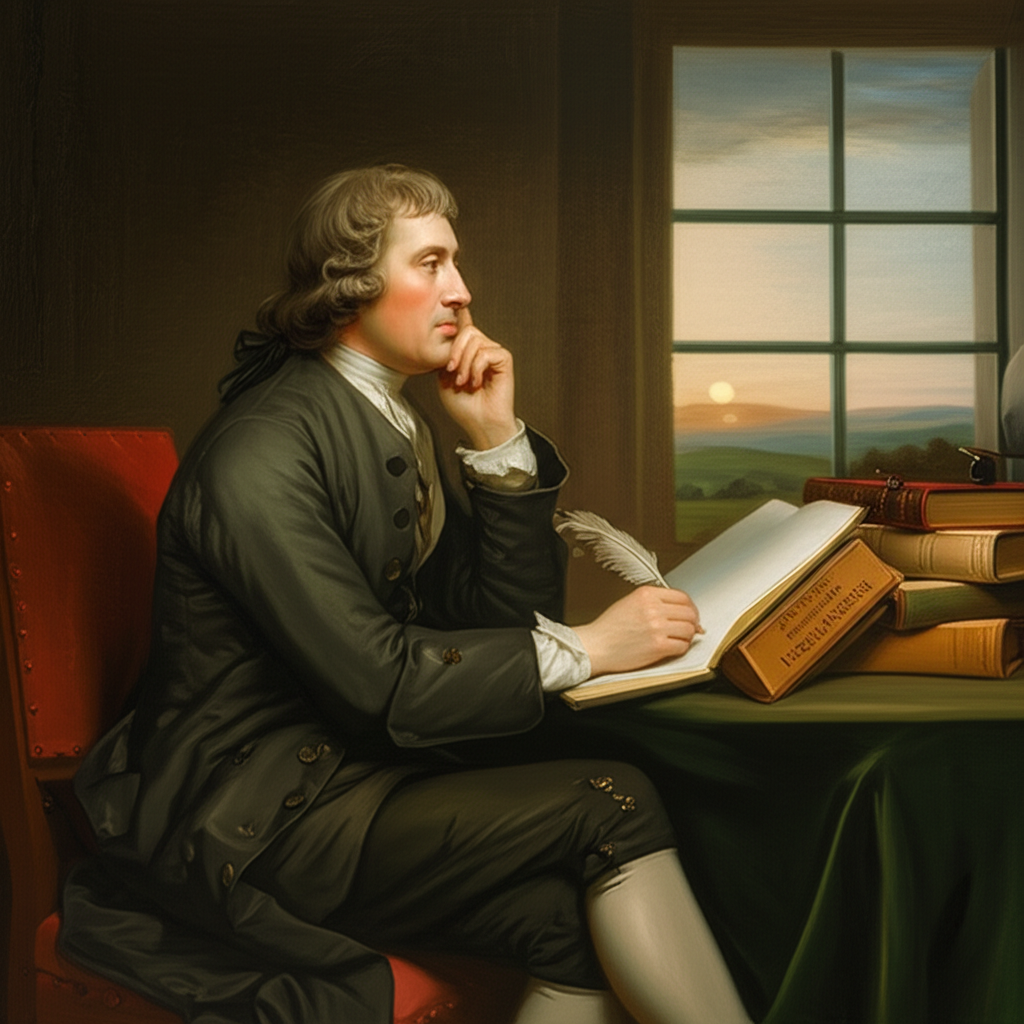
The most famous and devastating formulation of The Problem of Induction comes from the Scottish philosopher David Hume in his seminal work, An Enquiry Concerning Human Understanding, a cornerstone text in the Great Books of the Western World. Hume meticulously demonstrated that our belief in cause and effect, and indeed all future predictions, cannot be justified by logic.
Hume's argument can be summarized as follows:
| Hume's Argument Against Inductive Justification |
|---|
| 1. Inductive reasoning relies on the assumption of the "Uniformity of Nature." This principle states that the future will resemble the past, and that unobserved instances will resemble observed instances. |
| 2. How do we justify the Uniformity of Nature? |
| Option A: Deductively? No, because it is conceivable that the future might not resemble the past. There's no contradiction in imagining a chaotic universe, so its negation is not logically impossible. |
| Option B: Inductively? This would be circular reasoning. To justify induction by appealing to the success of past inductions (i.e., induction has worked in the past, so it will work in the future) is to use induction to justify induction. |
| 3. Therefore, the Uniformity of Nature cannot be justified by reason (neither deductively nor inductively). |
| 4. Consequently, inductive inferences, which rely on this unjustified assumption, cannot be rationally justified. |
Hume concluded that our belief in induction is not a matter of logic or reason, but rather a product of custom and habit. We believe the sun will rise tomorrow not because we have a rational proof, but because we are conditioned by repeated experience. This insight was profoundly unsettling, suggesting that a vast portion of our purported knowledge, especially scientific knowledge, rests on an irrational foundation.
Induction in Science: The Everyday Paradox
Despite Hume's powerful critique, science continues to operate, and indeed thrive, by employing induction. Every scientific law, every theory, every prediction, from Newton's laws of motion to the theory of evolution, is fundamentally inductive.
- Gravity: We observe countless instances of objects falling to the earth. Inductively, we infer a universal law of gravitation. We then predict that any object released will fall.
- Medicine: Clinical trials observe the effects of a drug on a sample population. Inductively, scientists conclude it will have similar effects on the broader population.
- Cosmology: Observations of distant galaxies and cosmic background radiation lead to inductive conclusions about the origin and evolution of the universe.
The practical success of science is undeniable. Its predictions often come true, its technologies transform our lives, and its explanations provide profound insights. This empirical success seems to offer a pragmatic justification for induction: it works, so we use it. However, philosophical logic demands more than mere utility; it demands a rational basis.
The paradox lies in this: science, which prides itself on its rationality and empirical rigor, relies upon a mode of reasoning that, according to Hume, cannot be rationally justified. This doesn't mean science is invalid, but it does mean our understanding of its foundational knowledge is more complex and less certain than often assumed.
Responses and Rebuttals: Seeking Justification
Philosophers have not been content to let Hume's skepticism stand unchallenged. Many attempts have been made to provide a rational justification for induction, or at least to circumvent the problem.
-
Pragmatic Justification (Hans Reichenbach): This argument concedes that induction cannot be proven to be reliable, but asserts that if any method can lead to true predictions about the future, induction is the only one that could possibly do so. If the universe is uniform, induction will find that uniformity. If it's not, no method will work. Therefore, using induction is the only rational gamble to take.
-
Falsificationism (Karl Popper): Rather than seeking to justify induction, Popper suggested that science doesn't actually rely on it in the way we think. Instead, science progresses through deductive falsification. Scientists propose bold conjectures (hypotheses), and then attempt to deductively derive observable predictions from them. If observations contradict the predictions, the hypothesis is falsified. If not, it is corroborated, but never proven true. The goal is not to prove theories, but to eliminate false ones. While this offers an alternative model for scientific progress, it doesn't entirely escape the problem, as the initial formation of hypotheses often involves inductive leaps, and the belief that a well-corroborated theory will continue to hold true still leans on induction.
-
Probabilistic Justification (Bayesianism): Some philosophers argue that induction can be justified in terms of probability. As we observe more instances that confirm a generalization, our subjective probability that the generalization is true increases. Bayesian logic provides a framework for updating our beliefs in response to new evidence. However, this still presupposes an initial probability distribution and doesn't fully escape the circularity of assuming that past success predicts future success at a fundamental level.
These attempts highlight the enduring difficulty of the problem. While they offer sophisticated ways to manage or reframe our approach to knowledge and science, the brute logical gap identified by Hume remains a persistent philosophical quagmire.
The Enduring Problem: A Philosophical Quagmire
The Problem of Induction is not merely an academic curiosity; it has profound implications for our understanding of knowledge, certainty, and the very nature of reality. It forces us to confront the limits of human reason and the inherent uncertainty in even our most robust scientific conclusions.
- Limits of Certainty: It reminds us that absolute certainty in empirical knowledge may be unattainable. All scientific laws, no matter how well-established, are ultimately provisional.
- The Role of Belief: It underscores the role of non-rational factors (like habit and custom) in shaping our most fundamental beliefs, even in the context of supposedly objective science.
- Philosophical Humility: It encourages a degree of philosophical humility, reminding us that the universe might not always conform to our expectations, no matter how consistently it has done so in the past.
The continuing debate around induction keeps logic and epistemology vibrant, pushing us to critically examine the assumptions underlying our pursuit of knowledge.
Conclusion: Living with the Unjustified Leap
The Problem of Induction stands as one of philosophy's most enduring challenges, a testament to the fact that even the most seemingly obvious aspects of our reasoning can hide profound logical difficulties. David Hume's incisive critique revealed that the very foundation of scientific knowledge—the inductive leap from observed instances to general laws—lacks a rational justification.
While science continues to make incredible progress, its empirical success does not resolve the philosophical problem. We are left to navigate a world where our most reliable method for understanding and predicting phenomena relies on an assumption that cannot be proven without circularity. This doesn't invalidate science, but it reframes our understanding of its logic and the nature of the knowledge it produces. We live with the unjustified leap, trusting that the universe will continue to play by the rules we've observed, even as we remain philosophically aware that it doesn't have to.
YouTube:
- "The Problem of Induction Hume"
- "Karl Popper Falsification vs Induction"
📹 Related Video: What is Philosophy?
Video by: The School of Life
💡 Want different videos? Search YouTube for: "The Problem of Induction in Scientific Discovery philosophy"