

The Unseen Assumption: Navigating the Problem of Induction in Scientific Discovery
The quest for knowledge has always been central to human endeavor, and science stands as our most powerful tool in this pursuit. Yet, beneath the impressive edifice of scientific understanding lies a profound philosophical challenge, often overlooked in the daily grind of observation and experimentation: The Problem of Induction. This fundamental issue, brought to stark clarity by David Hume, questions the very logic by which we generalize from past experiences to predict future events, thereby shaking the foundations of much of what we call scientific knowledge. It forces us to confront the inherent assumptions in our reasoning, revealing that even our most rigorous scientific conclusions rest upon an unproven leap of faith.
The Foundation of Expectation: What is Induction?
At its heart, induction is the process of reasoning from specific observations to general principles. It’s how we learn that the sun will rise tomorrow because it has risen every day before. It’s how a child learns that fire is hot after touching it once. In science, this translates to observing countless instances of a phenomenon – say, apples falling to the ground – and then formulating a universal law, like gravity.
Consider these everyday and scientific examples of induction:
- Everyday Induction:
- Observation: Every cat I've met has four legs.
- Conclusion: All cats have four legs.
- Scientific Induction:
- Observation: Repeated experiments show that heating water to 100°C at sea level causes it to boil.
- Conclusion: Water always boils at 100°C at sea level.
This method seems intuitively sound, even indispensable. Without it, how could we ever move beyond isolated facts to build coherent theories or make reliable predictions? Our very survival, and the progress of science, appears to hinge on this mode of reasoning.
Hume's Hammer: The Sceptical Challenge to Inductive Logic
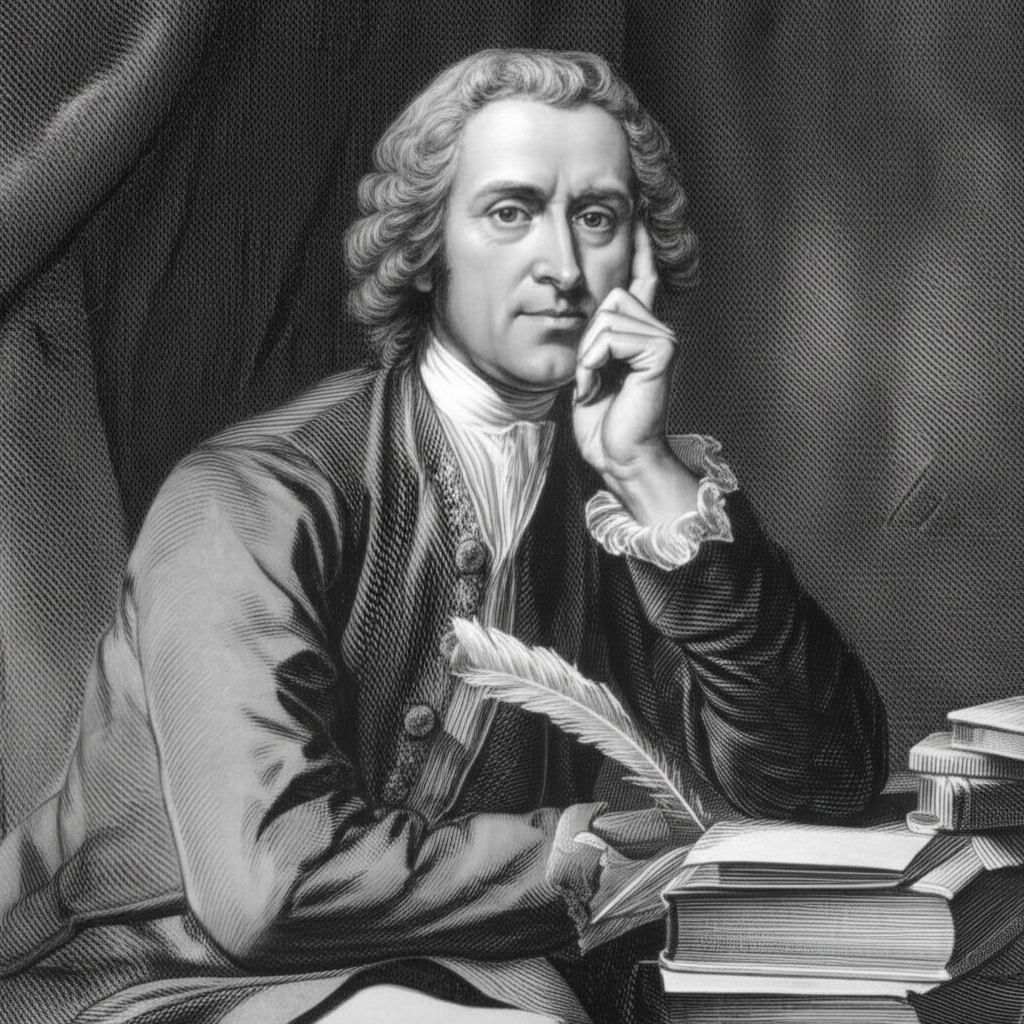
It was the Scottish philosopher David Hume, a pivotal figure in the Great Books of the Western World canon, who delivered the most devastating critique of induction. In his work, Hume observed that all reasoning concerning matters of fact is founded on the relation of cause and effect. Our belief in cause and effect, he argued, stems from our experience of constant conjunction – that one event has always been followed by another.
Hume's core argument against the logic of induction can be summarized as follows:
- Experience as the Guide: We believe that the future will resemble the past because, in our experience, it always has.
- The Uniformity of Nature: This belief relies on an unspoken assumption: the "uniformity of nature," meaning that the laws of nature that have held true in the past will continue to hold true in the future.
- The Circularity Problem: How do we justify this assumption of uniformity?
- Inductively? We can't. To say "the future will be like the past because it has always been like the past" is to use induction to justify induction. This is circular reasoning and provides no independent logical support.
- Deductively? We can't. There is no logical contradiction in imagining a future where the laws of nature suddenly change. The sun could fail to rise tomorrow, or gravity could suddenly repel objects. While improbable based on our past, it's not logically impossible.
Therefore, Hume concluded that our belief in induction is not founded on reason or logic, but on custom and habit. We expect the future to resemble the past because we are psychologically conditioned to do so, not because we have any rational proof that it must. This leaves scientific knowledge resting on a psychological propensity rather than a firm logical bedrock.
Induction in the Scientific Method: A Necessary Fiction?
Despite Hume's trenchant critique, science undeniably proceeds through induction. Scientific discovery is replete with instances where observations lead to generalizations, which then form the basis of theories and predictions.
Consider the typical steps in the scientific method:
- Observation: Noticing patterns or specific events.
- Hypothesis Formulation: Proposing a general explanation for these observations (an inductive leap).
- Experimentation: Testing the hypothesis through further observations.
- Theory Building: If the hypothesis is consistently supported, it contributes to a broader scientific theory (another inductive generalization).
Without the inductive leap, science would be reduced to a mere catalogue of isolated facts, incapable of explaining, predicting, or controlling the natural world. Every scientific law, from Newton's laws of motion to the principles of chemistry, is a generalization based on a finite number of observations. We believe these laws will hold true in unobserved instances, and in the future, precisely because of induction.
Philosophers of science, notably Karl Popper, attempted to sidestep Hume's problem by emphasizing falsification over verification. Popper argued that science progresses not by proving theories true (which induction cannot do), but by disproving them. A scientific theory, in his view, is one that could be proven false by observation. While this offers a valuable perspective on scientific methodology, it doesn't fully resolve the underlying logical problem of why we trust the results of past observations to guide our future expectations.
The Quest for Justification: Responses and Reinterpretations
Over centuries, philosophers have grappled with Hume's problem, seeking to provide a rational justification for induction.
- Pragmatic Justifications: Some argue that while induction cannot be logically proven, it is the best method we have. As Bertrand Russell noted, if there's a better way to predict the future, we haven't found it. It works, even if we don't know why it works logically.
- Probabilistic Approaches: Others suggest that induction doesn't guarantee certainty but deals in probabilities. While we can't be 100% sure the sun will rise, the vast number of past instances makes it overwhelmingly probable. However, even probability relies on inductive assumptions about the stability of statistical patterns.
- Analytic Justifications: A few attempts have been made to argue that induction is logically valid by definition, or that its validity is built into the very meaning of "rational belief." These attempts, however, face significant challenges in gaining widespread acceptance.
The truth remains that no fully satisfactory logical solution to Hume's problem has emerged. Our most profound scientific knowledge, the bedrock of modern civilization, rests on a foundation that, when examined closely by pure logic, appears surprisingly precarious.
Living with the Unprovable: The Pragmatic Approach to Scientific Knowledge
The enduring legacy of Hume's problem is not to dismantle science, but to instill a profound sense of humility in our pursuit of knowledge. It reminds us that even our most robust scientific theories are provisional, subject to revision, and ultimately grounded in an unprovable assumption about the regularity of the universe.
Despite its logical fragility, induction remains the engine of scientific discovery. It is the practical, effective method that has allowed humanity to understand, predict, and manipulate the world to an astonishing degree. We continue to rely on it because, quite simply, it works. The problem of induction doesn't invalidate science; rather, it clarifies the philosophical limits and inherent assumptions of human reason itself. It’s a constant reminder that our knowledge, however vast, is always an interpretation, built upon the shifting sands of experience and the unyielding mysteries of the future.
Conclusion: The Enduring Enigma
The problem of induction is a cornerstone of philosophical inquiry into knowledge and science. It challenges us to look beyond the surface of scientific certainty and confront the deeper logical and epistemological questions that underpin our understanding of the world. While science continues to advance, driven by the pragmatic success of inductive reasoning, the philosophical enigma articulated by Hume persists, serving as a powerful testament to the limits of human reason and the perpetual quest for justified knowledge.
YouTube Video Suggestions:
-
📹 Related Video: KANT ON: What is Enlightenment?
Video by: The School of Life
💡 Want different videos? Search YouTube for: ""Hume Problem of Induction Explained""
2. ## 📹 Related Video: ARISTOTLE ON: The Nicomachean Ethics
Video by: The School of Life
💡 Want different videos? Search YouTube for: ""Karl Popper Falsification vs Induction""