

The Unseen Leap: Unraveling the Problem of Induction in Scientific Discovery
The Problem of Induction stands as one of philosophy's most enduring and perplexing challenges, particularly for its implications in scientific discovery. At its core, it questions the very logic by which we extrapolate from past observations to future predictions, or from specific instances to general laws. While science overwhelmingly relies on induction to build its edifice of knowledge, the philosophical justification for this method remains elusive, forcing us to confront a foundational uncertainty at the heart of our understanding of the world. This article delves into this profound issue, tracing its philosophical roots and exploring its vital, yet problematic, role in how we gain knowledge.
The Inductive Impulse: Building Knowledge from Experience
In our everyday lives, and even more so in science, we constantly engage in inductive reasoning. It's the process of drawing general conclusions from specific observations. Consider the simple act of expecting the sun to rise tomorrow because it has risen every day in recorded history. Or, in a scientific context, observing that every time we drop an object, it falls towards the earth, leading us to formulate the law of gravity. This method is the engine of empirical knowledge: we observe patterns, hypothesize general rules, and then test these rules with further observations.
- Observation: The apple falls from the tree.
- Repeated Observation: All observed apples fall from trees.
- Inductive Generalization: All apples (and objects) will fall towards the earth.
This seems entirely reasonable, even indispensable. How else could science progress? From medicine to astrophysics, the accumulation of data and the formulation of theories rely heavily on this leap from the observed to the unobserved, from the past to the future.
Hume's Hammer: The Philosophical Quandary of Induction
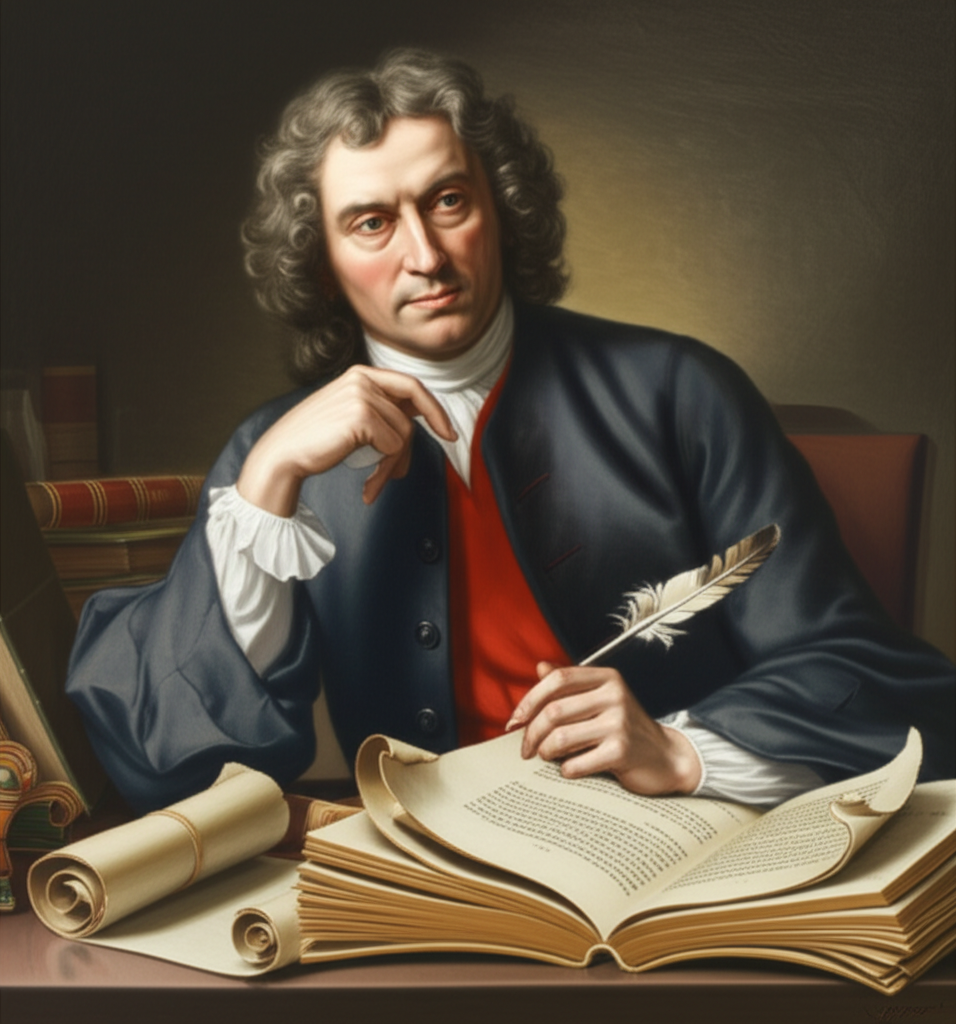
The profound philosophical challenge to induction was most famously articulated by the Scottish philosopher David Hume in the 18th century, a cornerstone of the Great Books of the Western World. Hume argued that there is no rational, deductive justification for believing that the future will resemble the past. Our belief in the uniformity of nature, he posited, is not based on logic, but on custom or habit.
Hume's argument can be summarized as follows:
- Premise 1: All arguments from experience are based on the assumption that the future will resemble the past (i.e., the uniformity of nature).
- Premise 2: This assumption itself cannot be proven deductively (through logic alone), because it's always possible that nature could change.
- Premise 3: If we try to prove the assumption inductively (by appealing to past instances where the future did resemble the past), we fall into circular reasoning. We're using induction to justify induction.
Therefore, Hume concluded, our belief in the reliability of induction is not founded on reason, but on a psychological disposition. This doesn't mean induction isn't useful or necessary; it simply means its foundation in pure logic is shaky, leaving a gaping hole in our claim to certain knowledge.
Induction's Indispensable Role in Scientific Discovery
Despite Hume's powerful critique, science continues to operate, and indeed thrive, on the principles of induction. Without it, the very idea of scientific laws or predictions would collapse.
Table: The Inductive Pillars of Scientific Inquiry
| Scientific Activity | Role of Induction | Example |
|---|---|---|
| Formulating Hypotheses | Generalizing from specific observations to propose testable statements. | Observing many falling objects leads to a hypothesis about universal gravity. |
| Developing Theories | Synthesizing multiple hypotheses and observations into a comprehensive framework. | Evolutionary theory based on countless biological and fossil observations. |
| Making Predictions | Inferring future outcomes based on established patterns and laws. | Predicting planetary movements or chemical reactions. |
| Establishing Laws | Postulating universal principles based on repeated experimental evidence. | Newton's Laws of Motion, Boyle's Law of gases. |
| Empirical Research | Drawing conclusions about populations from samples, or effects from causes. | Clinical trials for drugs, environmental impact studies. |
Every time a scientist designs an experiment, analyzes data, or proposes a new theory, they are, in some form, making an inductive leap. They are assuming that the regularities observed in their finite set of experiments will hold true in unobserved cases, or that the natural laws that applied yesterday will apply tomorrow. This is the bedrock upon which all empirical knowledge is built.
Living with the Inductive Leap: Pragmatism and Falsification
The Problem of Induction hasn't stopped science, but it has prompted philosophers and scientists to seek alternative justifications or to reframe our understanding of knowledge.
- Pragmatic Justification: One common response is that while induction cannot be logically proven, it is demonstrably the most successful method we have for navigating and understanding the world. As Bertrand Russell noted, "The man who has fed the chicken every day throughout its life at last wrings its neck instead, showing that more refined views as to the uniformity of nature would have been useful to the chicken." We use induction because, practically speaking, it works.
- Falsificationism (Karl Popper): Karl Popper famously argued that science doesn't proceed by induction in the sense of verifying theories, but rather by attempting to falsify them. A scientific theory, according to Popper, is one that is testable and could potentially be proven wrong. While this shifts the emphasis from confirmation to refutation, even falsification relies on the inductive assumption that experimental results are reliable and that future tests will behave similarly.
Ultimately, the Problem of Induction highlights a fundamental tension: our rational desire for certainty and the empirical reality of how we acquire knowledge. It reminds us that even our most robust scientific theories are not absolutely proven in a deductive sense, but rather are highly probable, constantly tested, and provisionally accepted based on the overwhelming weight of inductive evidence.
Conclusion: The Enduring Challenge to Scientific Knowledge
The Problem of Induction remains a cornerstone of epistemological debate, a persistent thorn in the side of anyone seeking absolute certainty in scientific knowledge. It forces us to acknowledge that while science is undeniably the most powerful engine for understanding and manipulating the natural world, its very foundation rests upon an unproven logic.
This doesn't invalidate science; rather, it deepens our appreciation for its provisional nature and the human ingenuity required to build such an impressive edifice of knowledge on what Hume identified as a psychological habit. The problem of induction is not a call to abandon science, but a profound invitation to reflect on the limits and character of human reason, forever grappling with the unseen leap from the known to the unknown.
YouTube Suggestions:
-
📹 Related Video: PLATO ON: The Allegory of the Cave
Video by: The School of Life
💡 Want different videos? Search YouTube for: "David Hume Problem of Induction Explained"
-
📹 Related Video: PLATO ON: The Allegory of the Cave
Video by: The School of Life
💡 Want different videos? Search YouTube for: "Karl Popper Falsification vs Induction"