

The Enduring Enigma: Confronting the Problem of Good and Evil in the World
From the earliest myths to the most sophisticated philosophical treatises, humanity has been relentlessly preoccupied with The Problem of Good and Evil in the World. It's not merely an academic exercise; it's a deeply personal, often agonizing, quest to understand the very fabric of our existence. Why do we suffer? What motivates acts of profound cruelty, and conversely, astonishing compassion? This pillar page delves into the multifaceted nature of this Problem, exploring how some of the greatest minds in the Great Books of the Western World have grappled with its complexities, from ancient Greek thought to modern existential quandaries, and how their insights continue to resonate in our contemporary World.
Unpacking the Core: What Is the Problem?
At its heart, The Problem of Good and Evil isn't a single question but a constellation of interconnected inquiries. It asks about the nature of good and evil – are they objective truths, subjective constructs, or something else entirely? It probes their origin – where do they come from? Is evil a fundamental force, or merely the absence of good? And crucially, it confronts their manifestation in the World – the ubiquitous presence of suffering, injustice, and moral transgression, often termed Sin in theological contexts, alongside acts of virtue, beauty, and love.
Key Facets of the Problem:
- Metaphysical: Are good and evil inherent to reality, or human constructs?
- Epistemological: How do we know what is good or evil?
- Ethical: What should we do in the face of good and evil? How should we live?
- Theological (The Problem of Evil/Theodicy): If a benevolent, omnipotent God exists, why is there evil and suffering in the World?
- Psychological: What drives individuals to commit acts considered evil, or to strive for good?
Echoes from Antiquity: Defining Good and Evil
The journey through the Great Books reveals a fascinating evolution in understanding good and evil.
Ancient Greek Perspectives: Virtue, Reason, and the Good Life
For many classical Greek thinkers, evil was often understood as a deficiency or a lack, rather than an active force. Good was inextricably linked to human flourishing and rational living.
- Plato (e.g., The Republic): For Plato, the ultimate Good was the Form of the Good, an abstract, perfect reality that illuminates all other forms. Evil, then, was often seen as a deviation from this ideal, a product of ignorance or an imbalance in the soul's faculties (reason, spirit, appetite). A just society, like a just individual, would be one ordered by reason towards the Good.
- Aristotle (e.g., Nicomachean Ethics): Aristotle grounded his understanding in human nature and the pursuit of eudaimonia (flourishing or living well). Good was defined by virtuous action – finding the "golden mean" between extremes. Evil, conversely, was vice, a failure to achieve this balance, born of poor habits or flawed character. It wasn't about abstract forms, but practical wisdom and ethical living in the World.
The Abrahamic Tradition: Divine Will, Free Will, and the Weight of Sin
With the rise of monotheistic religions, particularly Christianity, the Problem of Good and Evil took on a profoundly different character, introducing concepts like divine command, original Sin, and the weight of moral choice.
- Augustine of Hippo (e.g., Confessions, City of God): Augustine wrestled intensely with the origin of evil. Rejecting the Manichaean view of evil as an opposing force to good, he famously posited that evil is not a substance but a privation – an absence or corruption of good. This allowed him to reconcile the existence of evil with an omnibenevolent God. The concept of original Sin, inherited from Adam, became central to understanding humanity's fallen state and its propensity towards evil. Free will, though a gift, became the vehicle through which Sin entered the World.
- Thomas Aquinas (e.g., Summa Theologica): Building on Augustine and Aristotle, Aquinas integrated Christian theology with Aristotelian philosophy. He saw God as the ultimate Good, the source of all being. Evil, for Aquinas, was also a privation of good, a defect in the natural order or in the human will. His work further developed the concept of natural law, where moral precepts are discoverable through reason and align with God's divine order. To act against this order was to commit Sin.
The Modern Turn: Reason, Sentiment, and the Will to Power
The Enlightenment and subsequent philosophical movements brought new lenses to the Problem, questioning traditional authorities and focusing on human autonomy and experience.
- Immanuel Kant (e.g., Groundwork of the Metaphysics of Morals): Kant sought to establish morality on the bedrock of pure reason, independent of religious dogma or personal inclination. For Kant, the Good resides in the "good will" – the intention to act out of duty, in accordance with universal moral laws (the Categorical Imperative). Evil, then, is to act against duty, to treat others as mere means, or to prioritize self-interest over universal moral principles.
- Friedrich Nietzsche (e.g., On the Genealogy of Morality): Nietzsche launched a radical critique of traditional notions of good and evil, arguing that they were historically constructed rather than divinely ordained or rationally derived. He famously distinguished between "master morality" (valuing strength, nobility, power) and "slave morality" (valuing humility, pity, compassion – which he saw as a resentful inversion of master values by the weak). For Nietzsche, the Christian concept of Sin and its associated morality had weakened humanity, turning vital instincts into vices. He called for a "revaluation of all values."
The Problem of Evil: A Persistent Theological Challenge
One of the most profound and persistent aspects of The Problem of Good and Evil is the theological "Problem of Evil" or theodicy. How can a God who is all-powerful (omnipotent), all-knowing (omniscient), and all-good (omnibenevolent) permit the vast amount of suffering and moral evil in the World?
Common Responses (Theodicies):
- Free Will Defense: This argument, prominent in Augustinian thought, posits that moral evil stems from humanity's free will. God, in granting us the freedom to choose, necessarily allowed for the possibility of choosing evil, as true freedom requires genuine alternatives.
- Soul-Making Theodicy (e.g., John Hick): This view suggests that the World, with its challenges and suffering, is a "vale of soul-making." Evil and adversity provide opportunities for moral and spiritual growth, enabling humans to develop virtues like courage, compassion, and resilience.
- Evil as a Test: Some traditions view suffering as a test of faith or a means to strengthen one's character.
- God's Inscrutable Ways: Another response suggests that God's ways are beyond human comprehension, and what appears as evil from our limited perspective may serve a greater, divine purpose we cannot grasp.
The Problem's Nuance: It's important to distinguish between moral evil (human actions like murder, cruelty, injustice) and natural evil (suffering caused by natural disasters, disease, etc.). While free will can account for moral evil, natural evil presents an additional challenge to theodicy.
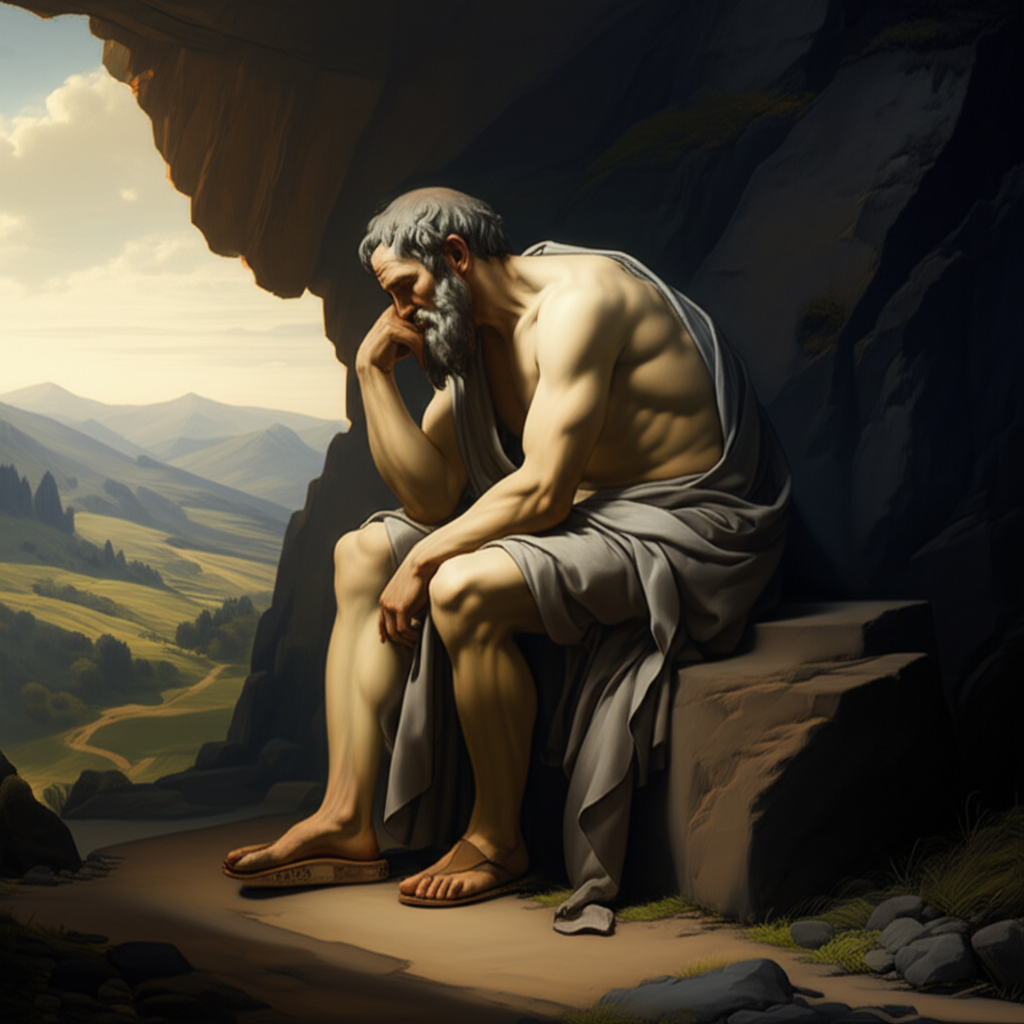
Contemporary Dimensions and Ongoing Debates
Even in our secular age, The Problem of Good and Evil remains fiercely relevant. Modern ethical dilemmas, global conflicts, and personal struggles continue to force us to confront these fundamental questions.
Secular Ethics and Moral Relativism
- Utilitarianism (e.g., John Stuart Mill): Good is defined by maximizing overall happiness or well-being for the greatest number. Evil is that which causes suffering or reduces utility.
- Existentialism (e.g., Jean-Paul Sartre): In a godless World, humans are "condemned to be free" and must create their own values. There's no pre-ordained good or evil; we are responsible for our choices and the meaning we forge.
- Moral Relativism: The belief that moral judgments are true or false only relative to some particular standpoint (e.g., culture, individual), and no single standpoint is uniquely privileged. This challenges the notion of universal good and evil.
The Problem in the 21st Century
The abstract philosophical debates about good and evil find concrete expression in our everyday lives and global challenges:
- Social Justice: Debates over systemic injustice, inequality, and human rights are direct confrontations with what societies deem good or evil.
- Environmental Ethics: The Problem extends to our relationship with the planet, questioning our moral responsibility to future generations and other species in the face of environmental degradation.
- Technological Ethics: The rise of AI, genetic engineering, and advanced surveillance forces us to reconsider the boundaries of what is permissible and what constitutes a good or harmful application of knowledge.
Conclusion: An Unending Inquiry
The Problem of Good and Evil in the World is not a puzzle with a single, definitive answer. As we've seen through the lens of the Great Books of the Western World, it's a dynamic and evolving inquiry that reflects humanity's deepest concerns about suffering, justice, meaning, and purpose. From Plato's Forms to Nietzsche's revaluation of values, and from Augustine's struggle with Sin to Kant's categorical imperative, philosophers and theologians have offered profound insights, yet the Problem persists.
It challenges us to look inward at our own choices, outward at the structures of society, and upward at the very nature of existence. Understanding these diverse perspectives doesn't necessarily provide easy answers, but it equips us with the conceptual tools to navigate the complex moral landscape of our World with greater wisdom and empathy, continuing the conversation that has defined human thought for millennia.
YouTube Video Suggestions:
-
📹 Related Video: What is Philosophy?
Video by: The School of Life
💡 Want different videos? Search YouTube for: ""The Problem of Evil Philosophy Explained""
2. ## 📹 Related Video: KANT ON: What is Enlightenment?
Video by: The School of Life
💡 Want different videos? Search YouTube for: ""Nietzsche Good and Evil Explained""