

The Enduring Riddle: Exploring the Problem of Good and Evil in the World
The existence of both profound goodness and unspeakable evil in our world presents one of humanity's most persistent and perplexing philosophical challenges. From the earliest myths to contemporary ethical debates, thinkers have grappled with the fundamental problem of why these opposing forces coexist, how they originate, and what they tell us about human nature, the universe, and our place within it. This pillar page delves into the multifaceted Problem of Good and Evil, exploring its historical roots, philosophical interpretations, and the ongoing quest for understanding.
Unpacking the Concepts: What Do We Mean by 'Good' and 'Evil'?
Before we can tackle the problem, we must first attempt to define its core components. These aren't simple terms; their meanings have been debated for millennia, shifting across cultures, religions, and philosophical schools.
- Good: Often associated with well-being, virtue, morality, justice, happiness, and flourishing. It can refer to:
- Moral Good: Actions, intentions, or character traits deemed praiseworthy or right.
- Intrinsic Good: Things that are good in themselves, regardless of their consequences (e.g., happiness, knowledge).
- Instrumental Good: Things that are good because they lead to something else good (e.g., money for security).
- Evil: Typically linked to suffering, malice, injustice, harm, and destruction. Philosophers often distinguish between different types:
- Moral Evil: Evil that results from the intentional actions or inactions of moral agents (e.g., murder, cruelty, oppression). This is where the concept of sin often emerges in theological contexts.
- Natural Evil: Evil that results from natural processes, independent of human will (e.g., earthquakes, tsunamis, diseases).
- Metaphysical Evil: The inherent imperfection or finitude of created things, often seen as an "absence of good" rather than a positive force.
Understanding these distinctions is crucial, as different philosophical approaches address different facets of the Problem of Good and Evil.
The Origin Story: Where Does Evil Come From?
Perhaps the most agonizing question within this problem is the origin of evil. If the world is, in some sense, ordered or created, why does suffering and malevolence persist?
Theological Perspectives
Many religious traditions offer explanations rooted in divine will, cosmic struggle, or human transgression.
- The Fall and Original Sin: In Abrahamic religions, particularly Christianity, the concept of sin is central. As explored by St. Augustine in Confessions and City of God (part of the Great Books of the Western World), evil is not a substance but a privation or absence of good, a turning away from God. The 'Fall' of humanity, often symbolized by Adam and Eve's disobedience, introduced sin into the world, corrupting human nature and leading to moral evil.
- Dualism: Some traditions propose a cosmic struggle between two opposing forces of good and evil (e.g., Zoroastrianism).
- Free Will Defense: A prominent argument, especially in monotheistic contexts, posits that God allows evil to exist because it is a necessary byproduct of granting humanity free will. Without the freedom to choose evil, the capacity for genuine good, love, and moral growth would be impossible.
Philosophical Perspectives
Secular philosophy offers alternative explanations, often focusing on human psychology, societal structures, or the inherent nature of existence.
- Ignorance: Plato, particularly in works like The Republic, suggests that evil often stems from ignorance. People do wrong not because they are inherently evil, but because they are mistaken about what is truly good for them or for society. The ideal of the Form of the Good illuminates the path to virtue.
- Human Nature: Some philosophers argue that human beings possess inherent capacities for both good and evil, shaped by environment, upbringing, and choices. Thomas Hobbes, in Leviathan, posited that in a state of nature, life would be "solitary, poor, nasty, brutish, and short," suggesting a fundamental self-interest that can lead to conflict and harm.
- Social and Political Structures: Others contend that evil is largely a product of oppressive systems, economic inequality, or power imbalances, rather than individual depravity.
The Problem of Evil: A Challenge to Divine Benevolence
For monotheistic religions, the Problem of Good and Evil often sharpens into the specific "Problem of Evil": How can an all-powerful, all-knowing, and all-good God permit the existence of evil and suffering in the world? This logical dilemma is often framed as:
- If God is all-good, God would want to prevent evil.
- If God is all-powerful, God could prevent evil.
- Evil exists.
- Therefore, an all-good and all-powerful God does not exist (or is not as described).
This problem has spurred countless theological and philosophical responses, known as theodicies, attempting to reconcile God's attributes with the reality of suffering.
Key Theodicies and Responses:
| Theodicy/Response | Core Argument | Critics' Concerns |
|---|---|---|
| Free Will Defense | Evil is a consequence of human freedom, which is a greater good. | Does not explain natural evil; could an omnipotent God create free beings who always choose good? |
| Soul-Making Theodicy | Evil and suffering are necessary for human moral and spiritual development (e.g., John Hick). | Justifies immense suffering; implies God uses suffering as a tool. |
| Greater Good Theodicy | Evil is necessary for a greater good that we may not comprehend (e.g., showing compassion, courage). | Can lead to justifying any evil; makes God's motives inscrutable. |
| Privation of Good | Evil is not a created entity but an absence or corruption of good (St. Augustine). | Does not diminish the experience of suffering; still requires an explanation for why good is absent. |
| Limited God | God is good but not all-powerful, or vice versa (less common in traditional monotheism). | Contradicts traditional attributes of God. |
Human Agency and the Moral Compass
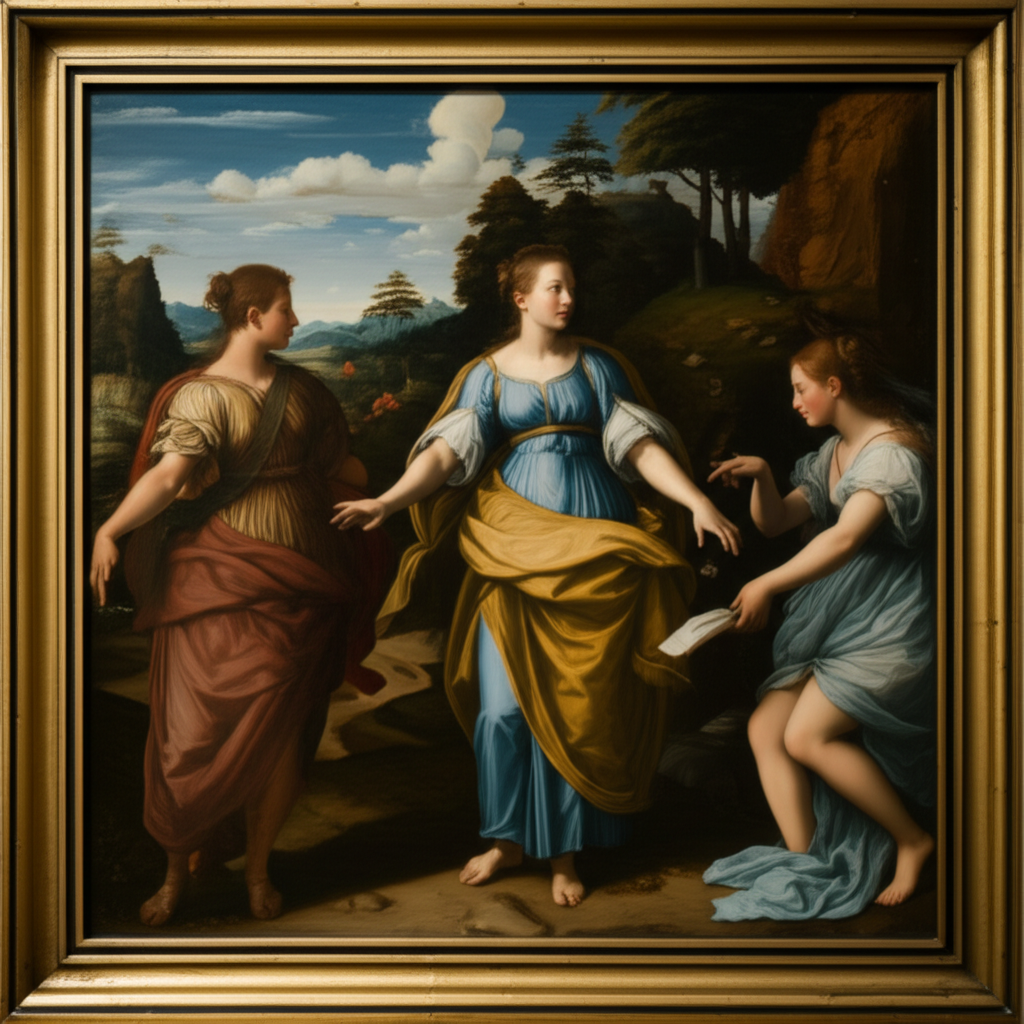
Regardless of the ultimate origin of evil, human beings undeniably play a significant role in its manifestation and mitigation within the world. Our capacity for moral choice, empathy, and reason empowers us to act for good or ill.
- Virtue Ethics (Aristotle): In Nicomachean Ethics, Aristotle emphasizes the cultivation of virtues through practice and habit. Good actions stem from a virtuous character, achieving eudaimonia (human flourishing). Evil, in this view, often arises from a lack of virtue or acting from vice.
- Deontology (Kant): Immanuel Kant, in works like Groundwork of the Metaphysics of Morals, argued that moral actions are those performed out of duty, guided by universal moral laws (the Categorical Imperative). Evil is acting against this duty, using others as mere means rather than ends in themselves.
- Utilitarianism (Mill): John Stuart Mill, expanding on Jeremy Bentham, proposed that the good action is the one that maximizes overall happiness or utility for the greatest number of people. Evil, then, is that which causes unnecessary suffering or reduces overall well-being.
- Existentialism (Sartre): Jean-Paul Sartre emphasized radical human freedom and responsibility. There are no pre-ordained values; we are condemned to be free, constantly choosing our values and thus defining good and evil for ourselves through our actions.
Facing Evil in the World: Beyond Theory
The Problem of Good and Evil isn't just an abstract philosophical exercise; it's a lived reality. Genocides, wars, poverty, disease, and individual acts of cruelty constantly remind us of evil's pervasive presence. Conversely, acts of profound kindness, self-sacrifice, and collective efforts for justice demonstrate the persistent power of good.
The challenge for us, as individuals and societies, is not merely to understand good and evil, but to actively confront, mitigate, and prevent evil, while simultaneously cultivating and promoting good. This involves:
- Ethical Education: Fostering moral reasoning and empathy from a young age.
- Social Justice: Addressing systemic inequalities that breed suffering and resentment.
- Personal Responsibility: Acknowledging our capacity for both good and harm, and striving for virtuous action.
- Resilience and Hope: Maintaining faith in the possibility of good, even in the face of profound evil.
The Ongoing Dialogue: Perspectives from the Great Books
The Problem of Good and Evil has been a recurring theme throughout the Great Books of the Western World, evolving with each era's intellectual and spiritual landscape.
| Philosopher/Work | Key Contribution to the Problem |
|---|---|
| Plato (The Republic) | Evil as ignorance; the Form of the Good as ultimate reality. |
| Aristotle (Nicomachean Ethics) | Evil as vice, a deviation from the virtuous mean; focus on character. |
| St. Augustine (Confessions, City of God) | Evil as privation of good; original sin; the free will defense. |
| St. Thomas Aquinas (Summa Theologica) | Reconciling faith and reason; natural law; evil as a defect in being. |
| René Descartes (Meditations on First Philosophy) | Evil linked to error in judgment, especially regarding free will and intellect. |
| Baruch Spinoza (Ethics) | Good and evil as relative human concepts, not absolute properties of nature. |
| Immanuel Kant (Groundwork of the Metaphysics of Morals) | Moral evil as a violation of duty; good will as the only unconditional good. |
| Friedrich Nietzsche (Thus Spoke Zarathustra, Beyond Good and Evil) | "Revaluation of all values"; master vs. slave morality; questioning traditional definitions of good and evil. |
📹 Related Video: What is Philosophy?
Video by: The School of Life
💡 Want different videos? Search YouTube for: "The Problem of Evil Explained - Philosophy"
📹 Related Video: PLATO ON: The Allegory of the Cave
Video by: The School of Life
💡 Want different videos? Search YouTube for: "What is Good and Evil? Philosophical Perspectives"
Conclusion: A Perennial Pursuit
The Problem of Good and Evil in the World remains an open-ended inquiry, a testament to the complexity of existence and the human condition. There are no easy answers, no single definitive solution that satisfies all perspectives. Yet, the persistent engagement with this problem is not futile. It forces us to examine our values, question our assumptions, and strive for a deeper understanding of ourselves and the universe.
By exploring the rich tapestry of philosophical and theological thought, from the ancient Greeks to modern existentialists, we gain not only intellectual insight but also a clearer moral compass for navigating the ethical dilemmas of our own lives and contributing to a world where good might, ultimately, prevail. The conversation continues, and so too must our commitment to confronting evil and championing good.