

The Enduring Problem of Good and Evil in the World: A Philosophical Journey
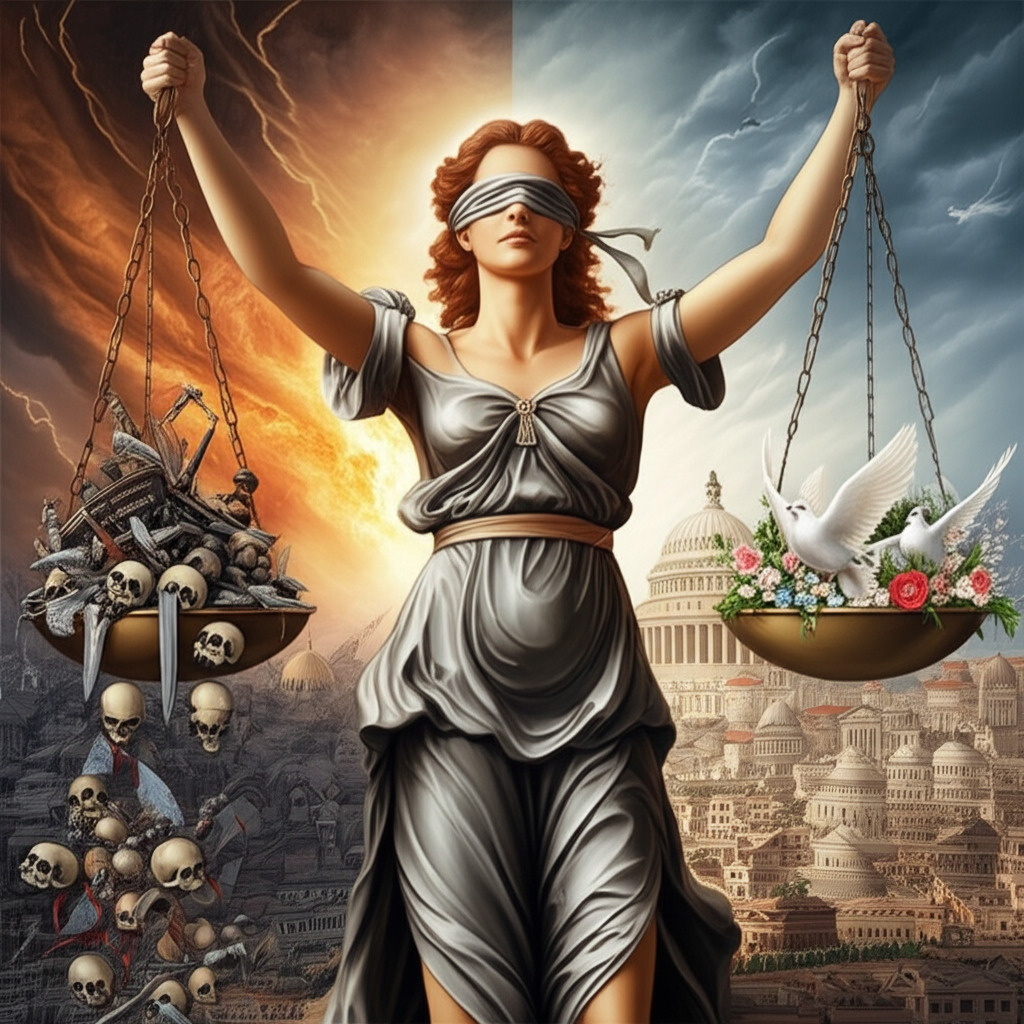
The existence of Good and Evil in our world presents one of humanity's most persistent and perplexing problems. From ancient myths to modern ethics, philosophers and theologians alike have grappled with the apparent contradiction of suffering, injustice, and malevolence coexisting with acts of profound kindness, beauty, and moral rectitude. This pillar page delves into the multifaceted nature of this problem, exploring how various philosophical traditions, drawing heavily from the Great Books of the Western World, have attempted to define, explain, and ultimately navigate the profound moral landscape that shapes human experience. We will examine the theological quandaries, the ethical frameworks, and the existential dilemmas that arise when we confront the stark realities of virtue and depravity.
Defining the Dichotomy: What Are Good and Evil?
Before we can tackle the problem of their coexistence, we must first attempt to define what we mean by Good and Evil. Are they objective realities, universal truths that exist independently of human perception, or are they subjective constructs, products of cultural norms, personal beliefs, or individual preferences?
- Objective vs. Subjective:
- Objective Good/Evil: Proponents argue that certain actions or states of being are inherently good or evil, regardless of who believes them or what culture they arise in. For instance, gratuitous cruelty might be considered objectively evil.
- Subjective Good/Evil: Others contend that morality is relative. What is considered good in one society or for one individual might be evil in another. This perspective often highlights the diversity of ethical systems across cultures and throughout history.
- Moral Absolutism vs. Relativism: This distinction directly follows the objective/subjective debate. Absolutists believe in universal moral principles, while relativists argue that morality is context-dependent. The problem becomes acute when these differing views clash within the same world.
- Intent vs. Outcome: Is an action good because the intention behind it was pure, or because its outcome was beneficial? Conversely, is an act evil because of malicious intent, or because it caused harm, regardless of the perpetrator's motives? This question lies at the heart of many ethical dilemmas.
The Theological Quandary: The Problem of Evil
Perhaps the most famous formulation of the problem of Good and Evil is the theological one, often referred to simply as "the Problem of Evil" or the "Epicurean Paradox." This challenge is primarily directed at monotheistic religions, particularly Christianity, Judaism, and Islam, which posit an omnipotent (all-powerful), omnibenevolent (all-good), and omniscient (all-knowing) God.
The core dilemma can be summarized as follows:
- If God is all-good, He would want to prevent evil.
- If God is all-powerful, He would be able to prevent evil.
- If God is all-knowing, He would know how to prevent evil.
- Yet, evil exists in the world.
- Therefore, either God is not all-good, or not all-powerful, or not all-knowing, or does not exist.
This paradox forces theologians and philosophers to develop theodicies – attempts to reconcile the existence of evil with the attributes of God.
Types of Evil
To better understand the theological problem, it's helpful to categorize evil:
- Moral Evil: This refers to the suffering and injustice caused by the free actions of human beings. Examples include murder, war, torture, hatred, and the systematic oppression of groups. This is often where the concept of sin plays a significant role, representing a willful transgression against divine law or moral principles.
- Natural Evil: This encompasses suffering caused by natural phenomena, over which humans have no control. Earthquakes, tsunamis, diseases, hurricanes, and famines fall into this category. The existence of natural evil is particularly challenging for the theological problem, as it's harder to attribute to human sin or free will.
Responses to the Problem of Evil (Theodicies)
Philosophers and theologians have proposed numerous solutions, each with its own strengths and weaknesses:
- The Free Will Defense (Augustine): This is perhaps the most prominent theodicy. It argues that moral evil is a necessary consequence of God granting humans free will. A world with free beings capable of choosing Good (and thereby Evil) is superior to a world where beings are programmed to do only good. The ability to choose is so valuable that it justifies the risk of sin and suffering. Augustine, a key figure in the Great Books, argued that evil is not a substance but a privation of good, a turning away from God.
- The Soul-Making Theodicy (Irenaeus, John Hick): This perspective suggests that the world, with its challenges and suffering, is a "vale of soul-making." Evil and adversity are necessary for humans to develop virtues like courage, compassion, resilience, and faith. A world without challenges would prevent moral and spiritual growth.
- The Best of All Possible Worlds (Leibniz): Gottfried Wilhelm Leibniz, another titan from the Great Books, argued that God, being perfectly rational and good, created the best possible world that could exist. While this world contains evil, it contains the least amount of evil necessary for the maximal overall good. Our limited human perspective simply cannot grasp the full, intricate balance.
- Divine Mystery: Some argue that the ways of God are inscrutable to human understanding. We cannot comprehend the divine plan, and therefore, we should not expect to fully understand why evil exists. This approach often emphasizes faith over pure reason in addressing the problem.
Philosophical Lenses on Good and Evil
Beyond the theological, secular philosophy has offered diverse perspectives on the nature of Good and Evil.
Ancient Greek Perspectives
- Plato (from Republic and Phaedo): For Plato, evil is fundamentally ignorance, a lack of knowledge of the Good. No one knowingly does evil; they merely mistake an apparent good for the true Good. The ultimate Good is linked to the Form of the Good, which illuminates all other virtues. Sin is a consequence of this ignorance.
- Aristotle (from Nicomachean Ethics): Aristotle focused on virtue ethics, defining good as that which leads to eudaimonia (human flourishing). Evil, conversely, is a deviation from the virtuous mean. For example, courage is the mean between cowardice and recklessness. Evil actions arise from vices, which are excesses or deficiencies of character.
Medieval and Early Modern Thought
- Augustine (from Confessions and City of God): As mentioned, Augustine famously argued that evil is not a positive entity but a privation boni – a lack or absence of good. He traced the origin of moral evil and sin to the free will of rational creatures (angels and humans) who chose to turn away from God, who is the ultimate Good.
- Thomas Aquinas (from Summa Theologica): Building on Augustine and Aristotle, Aquinas also saw evil as a privation. He argued that all things naturally seek their good, and evil occurs when a thing deviates from its natural end or perfection. Moral evil (sin) is a deliberate departure from right reason and divine law.
- Immanuel Kant (from Groundwork of the Metaphysics of Morals): Kant's deontological ethics posits that the moral worth of an action lies in the intention behind it, specifically whether it is performed out of duty to a universal moral law (the Categorical Imperative). An action is good if its maxim could be willed as a universal law. Evil, therefore, is acting against this rational duty, often out of self-interest or inclination.
Modern and Contemporary Perspectives
- Friedrich Nietzsche (from On the Genealogy of Morality): Nietzsche radically questioned the traditional Western concepts of Good and Evil, arguing they were socially constructed. He posited a "master morality" (valuing strength, nobility) and a "slave morality" (valuing humility, compassion, which he saw as a resentful inversion of master values). For Nietzsche, "evil" was often simply what the weak called the strong.
- Existentialism (Sartre, Camus): Existentialist thinkers emphasize human freedom and responsibility. In a world without inherent meaning or pre-ordained values, individuals are condemned to be free, meaning they must choose their own values and define their own good. Evil arises from a failure to embrace this freedom, from self-deception, or from denying the freedom of others.
Human Agency, Free Will, and the Concept of Sin
Central to the problem of Good and Evil, particularly moral evil, is the concept of human agency and free will. If we are truly free to choose our actions, then we bear responsibility for the good and evil we bring into the world.
- Free Will vs. Determinism: The debate over free will asks whether our choices are genuinely ours or if they are predetermined by prior causes (e.g., genetics, environment, divine plan). If determinism is true, how can we hold individuals morally culpable for sin or evil acts? Most philosophical and legal systems implicitly assume some degree of free will to assign responsibility.
- The Nature of Sin: While often a theological term, sin describes a specific form of moral evil – a transgression against a divine or moral law. It implies culpability, a knowing violation of what is understood to be good. Its presence in the world raises questions about human nature, temptation, and redemption.
- Consequences and Retribution: Our understanding of Good and Evil directly impacts how societies impose justice, assign punishment, and offer rehabilitation. The philosophical underpinnings of these systems often trace back to theories of free will and moral responsibility.
Navigating the Labyrinth: Towards a Solution?
Given the depth and complexity of the problem of Good and Evil, it's clear there is no single, universally accepted "solution." However, various approaches offer pathways for individuals and societies to confront and mitigate evil, and to cultivate good.
- Ethical Frameworks: Applying structured ethical theories (e.g., utilitarianism, deontology, virtue ethics) can help guide moral decision-making and provide a basis for judging actions.
- Personal Responsibility: Acknowledging our capacity for choice and our role in the moral landscape of the world is crucial. Cultivating empathy, critical thinking, and a commitment to justice are vital steps.
- Social and Political Action: Addressing systemic evils – poverty, oppression, inequality – requires collective effort and the implementation of policies designed to promote human flourishing and reduce suffering.
- The Search for Meaning: For many, finding meaning in the face of suffering and evil is a profound human need, often pursued through philosophy, religion, art, or community engagement.
Conclusion: An Ongoing Dialogue
The problem of Good and Evil in the world remains an enduring, perhaps unresolvable, human dilemma. It forces us to confront the very nature of reality, the limits of human understanding, and the depths of our own moral capacities. From the ancient Greeks grappling with the pursuit of virtue to modern existentialists wrestling with freedom and responsibility, the Great Books of the Western World bear witness to humanity's relentless quest to define, explain, and respond to this fundamental problem.
While definitive answers may elude us, the continuous philosophical and ethical inquiry into Good and Evil is not in vain. It sharpens our moral sensibilities, challenges our assumptions, and compels us to strive for a more just and compassionate world. The dialogue continues, inviting each generation to contribute to its understanding and to choose the path of good amidst the ever-present shadows of evil.
📹 Related Video: What is Philosophy?
Video by: The School of Life
💡 Want different videos? Search YouTube for: ""The Problem of Evil: Crash Course Philosophy #13""
📹 Related Video: PLATO ON: The Allegory of the Cave
Video by: The School of Life
💡 Want different videos? Search YouTube for: ""Plato's Republic: Moral Philosophy & Justice""