

The Enduring Enigma: Unraveling the Problem of Fate and Necessity
From the ancient Greek tragedians to the quantum physicists of today, humanity has grappled with a profound philosophical dilemma: Are our lives predetermined by an inescapable cosmic design, or do we possess the genuine freedom to forge our own path? This is the problem of fate and necessity, a timeless inquiry that challenges our understanding of free will, moral responsibility, and the very nature of reality itself. This pillar page delves into the multifaceted aspects of this enduring question, exploring how philosophers throughout history, drawing from the wellspring of the Great Books of the Western World, have attempted to reconcile the seemingly contradictory forces of predestination and individual agency. We'll examine the core concepts, trace their evolution, and ponder why this problem continues to captivate and confound us.
Defining the Cosmic Threads: Fate, Necessity, and Contingency
To navigate this intricate problem, we must first clarify the fundamental concepts that form its bedrock. These terms, while often used interchangeably in everyday language, carry distinct philosophical weight.
- Fate: At its heart, fate suggests a predetermined course of events, an unalterable destiny. It implies that certain outcomes are fixed, regardless of any choices we might make. This can be attributed to divine decree, an impersonal cosmic force, or even the logical unfolding of events from a pre-ordained blueprint. Think of the Greek Fates, the Moirai, spinning and cutting the thread of life, or the concept of karma in some Eastern traditions.
- Necessity: This concept speaks to the idea that things must be as they are, and cannot be otherwise. Philosophical necessity can manifest in several ways:
- Logical Necessity: A truth that cannot be denied without contradiction (e.g., "all bachelors are unmarried men").
- Causal Necessity: Every event is the inevitable effect of prior causes (determinism). If A happens, B must follow.
- Metaphysical Necessity: The fundamental structure of reality dictates certain truths or processes.
- When we speak of necessity and contingency, we are often contrasting the idea that everything must happen in a certain way with the possibility that things could have been otherwise.
- Contingency: The direct counterpoint to necessity, contingency refers to events or states of affairs that could have been different. A contingent truth is one that is true, but might not have been (e.g., "I am writing this article right now" – I could have been doing something else). The realm of human choice and free will is often seen as the epitome of contingency.
- Will: This is our capacity for conscious choice, decision-making, and intentional action. The concept of free will is central to the problem of fate and necessity, as it represents the human experience of agency and moral responsibility. If our will is truly free, how can anything be fated or necessary?
The interplay of these concepts creates the philosophical tension. If everything is fated or necessary, where does our will fit in? Is our sense of choice an illusion? These are the crucial questions that have driven centuries of philosophical inquiry.
Echoes Through Time: Historical Perspectives from the Great Books
The problem of fate and necessity is not a modern invention; it has resonated through the halls of philosophy since its very inception. The Great Books of the Western World offer a rich tapestry of thought on this profound subject.
Ancient Greek Explorations: Destiny and Deliberation
In ancient Greece, the tension between divine decree and human agency was a constant theme.
- Homer and the Tragedians: Works like The Iliad often depict gods interfering in human affairs, seemingly predetermining outcomes. Yet, heroes like Achilles still make choices with profound consequences, wrestling with their own will against what appears to be an unalterable destiny. The tragic heroes often meet their fate precisely because of their choices.
- The Stoics (e.g., Zeno, Epictetus, Marcus Aurelius): Advocated for a profound acceptance of a divinely ordered cosmos, governed by logos or universal reason. For them, everything that happens is necessary and part of a rational plan. True freedom lies not in changing external events (which are fated), but in aligning one's will with this cosmic order, accepting what cannot be changed, and focusing on one's internal responses. This is a form of determinism where internal freedom is paramount.
- Aristotle: In On Interpretation and Nicomachean Ethics, Aristotle grappled with contingency and the future. His famous "sea-battle" argument explores whether statements about future contingent events (e.g., "there will be a sea-battle tomorrow") are true or false now. If they are, it implies a certain necessity for those events to occur. However, Aristotle ultimately argued for the reality of human choice and contingency, believing that not all future events are predetermined, thus preserving moral responsibility.
Medieval Reconciliations: Divine Foreknowledge and Free Will
With the rise of monotheistic religions, the problem took on new dimensions, particularly concerning God's omnipotence, omniscience (foreknowledge), and human free will.
- Augustine of Hippo: In On Free Choice of the Will and City of God, Augustine confronted the apparent paradox: if God knows everything that will happen, including our choices, how can those choices be truly free? He argued that God's foreknowledge doesn't cause our actions; rather, God simply knows what we will freely choose. God's knowledge is not a causal force, thus preserving human moral responsibility and the efficacy of our will.
- Thomas Aquinas: Building on Aristotle, Aquinas in Summa Theologica posited a complex relationship where God is the primary cause of all things, but human beings act as secondary causes. He maintained that God's will does not negate human free will, as God moves creatures according to their nature. Rational creatures, by their nature, have free will, which God uphets.
Early Modern Debates: Mechanism, Reason, and Freedom
The scientific revolution and new philosophical systems brought fresh perspectives on causality and human agency.
- Baruch Spinoza: In his Ethics, Spinoza presented a rigorously deterministic system. He argued that God (or Nature) is the only substance, and everything that exists or happens follows necessarily from God's eternal and infinite nature. Human beings are modes of this substance, and our actions are determined by prior causes. For Spinoza, true freedom lies in understanding this necessity and acting in accordance with reason, rather than being enslaved by passions arising from inadequate understanding. This is a profound statement on necessity.
- Gottfried Wilhelm Leibniz: In Monadology and Theodicy, Leibniz proposed a theory of "pre-established harmony" among individual substances (monads). While each monad unfolds its entire history internally, these histories are perfectly synchronized by God. He distinguished between absolute necessity (logical truths) and hypothetical necessity or moral necessity, arguing that God chooses the best of all possible worlds, making certain outcomes necessary given that choice, but not absolutely necessary. This preserves a kind of contingency within a divine plan.
- David Hume: In A Treatise of Human Nature and An Enquiry Concerning Human Understanding, Hume examined causality. He argued that we don't observe necessary connections between cause and effect, only constant conjunctions. Our idea of necessity comes from the mind's habit of expecting one event to follow another. Hume was a compatibilist, believing that freedom and (causal) necessity are not contradictory. Freedom, for him, is acting according to one's will without external constraint, even if that will itself is determined.
- Immanuel Kant: In Critique of Pure Reason and Critique of Practical Reason, Kant offered a revolutionary solution. He distinguished between the phenomenal world (the world as we experience it, governed by the laws of necessity and cause-and-effect) and the noumenal world (the world as it is in itself, beyond our experience). In the phenomenal realm, human actions appear determined. However, in the noumenal realm, as moral agents, we must postulate freedom of the will as a condition for morality and responsibility. We act as if we are free, even if we cannot prove it empirically.
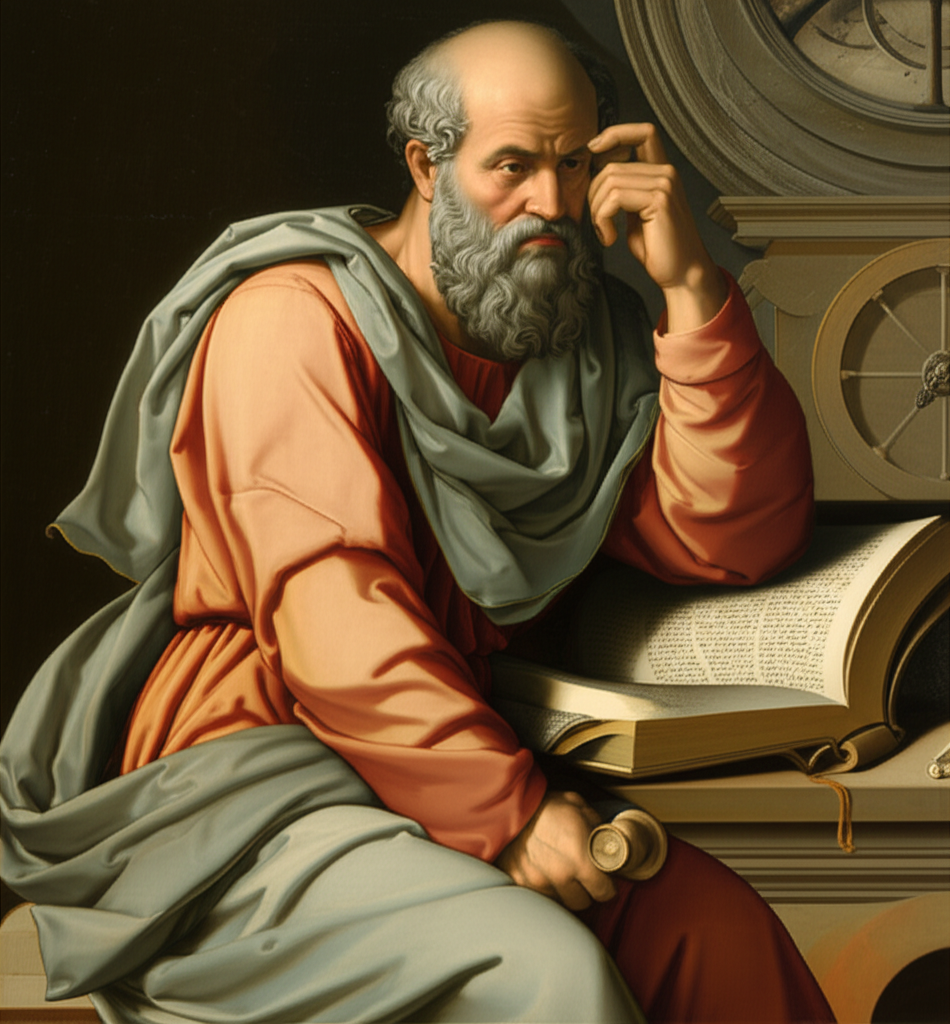 and choice (a path forking in two directions). The lighting is dramatic, highlighting the philosopher's contemplative expression.)
The Core Dilemma: Free Will vs. Determinism
The historical journey brings us to the heart of the problem: the direct confrontation between free will and determinism. If every event, including our decisions, is causally determined by prior events and the laws of nature (a form of necessity), how can we truly be free? And if we are not free, what becomes of moral responsibility, praise, blame, and the very concept of justice?
Philosophers generally categorize responses to this dilemma into three main camps:
1. Compatibilism
- Core Idea: Free will and determinism are compatible. We can be free even if our actions are causally determined.
- How it works: Compatibilists often redefine "free will" not as the ability to choose without prior causes, but as the ability to act according to one's own desires, intentions, or reasons, without external coercion. Even if those desires are themselves determined, the act is still considered free because it originates from the agent's internal state.
- Proponents: Many historical figures like Hume and even some interpretations of Augustine and Aquinas can be seen as leaning towards compatibilism. Modern philosophers like Daniel Dennett also advocate for this view.
- Implication: Moral responsibility is preserved because individuals are still the source of their actions, even if that source is part of a larger causal chain.
2. Incompatibilism
- Core Idea: Free will and determinism are incompatible. You can have one or the other, but not both.
- Sub-categories:
- Hard Determinism: Accepts determinism and rejects free will. All our choices are the inevitable outcome of prior causes. The feeling of making a free choice is an illusion.
- Proponents: Spinoza is a classic example. Some modern neuroscientists or physicists might lean this way if they believe brain states are entirely mechanistic.
- Implication: Moral responsibility, as traditionally understood, is undermined.
- Libertarianism (Metaphysical): Accepts free will and rejects determinism. We genuinely have the power to choose between alternative courses of action, and our choices are not fully determined by prior causes. This often requires a belief in some form of agent causation or an undetermined "gap" in the causal chain.
- Proponents: Kant (in the noumenal realm), some existentialists, and many contemporary philosophers who prioritize moral responsibility.
- Implication: Preserves moral responsibility but faces the challenge of explaining how an uncaused choice can arise without being arbitrary or random.
- Hard Determinism: Accepts determinism and rejects free will. All our choices are the inevitable outcome of prior causes. The feeling of making a free choice is an illusion.
Comparing the Positions: A Snapshot
| Position | Determinism True? | Free Will True? | Compatibility? | Key Idea |
|---|---|---|---|---|
| Compatibilism | Yes | Yes | Yes | Freedom is acting on one's desires, even if desires are determined. |
| Hard Determinism | Yes | No | No | All actions are causally necessitated; free will is an illusion. |
| Libertarianism | No | Yes | No | Agents genuinely choose between alternatives; choices are not fully determined. |
This table highlights the fundamental disagreements that fuel the ongoing debate. The choice between these positions has profound implications for how we view ourselves, our society, and our place in the universe.
Contemporary Echoes and the Enduring Problem
The problem of fate and necessity is far from resolved. In the 21st century, advancements in neuroscience, physics (especially quantum mechanics), and artificial intelligence have injected new life into the debate.
- Neuroscience: Studies on brain activity often show neural precursors to conscious decisions, leading some to suggest that our "choices" are made before we are even aware of them, challenging the notion of our conscious will as the ultimate decider.
- Physics: While classical physics seemed to support a deterministic universe, quantum mechanics introduced elements of randomness and probability at the subatomic level. Does this randomness offer a loophole for free will, or does it simply replace causal necessity with a different kind of indeterminacy, equally problematic for agency?
- Artificial Intelligence: As AI becomes more sophisticated, questions arise about whether a sufficiently complex algorithm could ever possess genuine will or make truly free choices, prompting us to re-evaluate what we mean by these terms in a non-biological context.
Despite these new angles, the core philosophical problem remains: how do we reconcile our subjective experience of making choices with an objective reality that may be governed by forces beyond our control?
📹 Related Video: What is Philosophy?
Video by: The School of Life
💡 Want different videos? Search YouTube for: ""Free Will vs. Determinism Philosophy Explained" or "The Problem of Evil and Free Will""
📹 Related Video: KANT ON: What is Enlightenment?
Video by: The School of Life
💡 Want different videos? Search YouTube for: ""Spinoza's Determinism and Freedom""
Conclusion: The Unfolding Tapestry of Choice and Destiny
The problem of fate and necessity is a cornerstone of philosophical inquiry, a persistent challenge that forces us to examine the very foundations of our existence. From the ancient Stoic acceptance of a fated cosmos to Kant's ingenious division of reality, philosophers have wrestled with the tension between the seemingly unyielding grip of necessity and the undeniable pull of our own will.
There are no easy answers, no universally accepted resolutions. Instead, the journey through this problem offers a deeper appreciation for the complexity of human experience and the intricate relationship between ourselves and the universe. Whether we ultimately lean towards a world entirely governed by determinism, a universe where free will carves out genuine contingency, or a nuanced compatibilist view, the act of engaging with these questions enriches our understanding of what it means to be human, to choose, and to live within the grand, unfolding tapestry of existence. The problem persists, inviting each generation to grapple with its profound implications.