

Navigating the Labyrinth: The Enduring Problem of Fate and Chance
The human experience is perpetually caught between the perceived inevitability of events and the startling unpredictability of the world around us. This tension forms the core of The Problem of Fate and Chance, a profound philosophical dilemma that has occupied thinkers from antiquity to the present day. At its heart lies the question of how much of our lives, and indeed the universe, is predetermined by necessity and how much is open to the whims of contingency or pure randomness. This article delves into this enduring problem, exploring its historical development and its deep implications for our understanding of free will, moral responsibility, and the very fabric of reality, drawing extensively from the rich tapestry of thought found within the Great Books of the Western World.
Ancient Echoes: Fate as an Unyielding Hand
From the earliest myths and epics, humanity has grappled with the concept of fate. The ancient Greeks, for instance, often depicted Moira (Fate) as a power even the gods could not defy. The tragic heroes of Sophocles, whose stories are preserved in the Great Books, often found themselves irrevocably bound by prophecies and curses, their destinies woven by unseen hands.
- Homeric Epics: Heroes like Achilles confront their foretold deaths, yet still rage with a fierce will.
- Greek Tragedies: Oedipus Rex, a prime example, illustrates the inescapable nature of a predetermined destiny, no matter how one tries to avert it.
- Stoicism: Later, philosophers like Epictetus and Marcus Aurelius embraced a form of fatalism, advocating for acceptance of what is beyond our control. For them, understanding the necessity of the cosmos was key to inner peace, emphasizing that while we cannot control external events, we can control our reactions.
This early understanding posited a universe where events unfold according to a strict, unalterable sequence, a cosmic script written before time began. Necessity was the prime mover, leaving little room for deviation.
The Whisper of Chance: Introducing Contingency
Against the backdrop of an all-encompassing fate, the concept of chance began to emerge, offering a counter-narrative of randomness and unpredictability. This wasn't merely about ignorance of future events, but the philosophical assertion that some events are genuinely contingent—they could have been otherwise.
- Epicurean Philosophy: Drawing from Democritus, Epicurus introduced the idea of the "clinamen" or atomic swerve. This slight, unpredictable deviation in the otherwise deterministic fall of atoms was a radical attempt to introduce an element of chance into the material world, thereby providing a physical basis for free will and challenging absolute necessity.
- Aristotle's Distinctions: In his Metaphysics and Physics, Aristotle carefully distinguished between events that are:
- Necessary: Always happen in a particular way (e.g., the sun rising).
- Probable: Happen for the most part (e.g., a man living to old age).
- Accidental/Contingent: Happen rarely or by chance (e.g., finding treasure while digging a well).
This framework provided a more nuanced view, acknowledging both the predictable order of the world and the role of unforeseen occurrences.
The introduction of chance and contingency opened up a vast philosophical landscape, allowing for questions of individual agency, moral choice, and the very meaning of responsibility. If everything is fated, how can we be praised or blamed?
Theological Interventions: Divine Providence vs. Free Will
The monotheistic traditions, heavily featured in the Great Books, wrestled intensely with The Problem of Fate and Chance, often reframing it as the tension between divine omnipotence/omniscience and human free will.
- Augustine of Hippo: In Confessions and City of God, Augustine grappled with God's foreknowledge and human freedom. He argued that God's knowledge of future events does not cause them, preserving human choice while maintaining divine sovereignty. Yet, the concept of divine grace and predestination still leaned heavily towards a form of necessity.
- Thomas Aquinas: Building on Aristotle, Aquinas in his Summa Theologica further refined the distinction between necessary and contingent causes, arguing that God's causality works through secondary causes, including human free will. He posited that while God knows all possibilities, He doesn't force our choices, thus allowing for genuine contingency within a divinely ordered universe.
This era highlighted how deeply intertwined The Problem of Fate and Chance is with questions of morality, justice, and the nature of ultimate reality.
Modern Perspectives: Determinism, Indeterminism, and the Quantum Realm
The Enlightenment and the scientific revolution brought new dimensions to The Problem of Fate and Chance. Newtonian physics, with its elegant laws governing the motion of celestial bodies and terrestrial objects, suggested a universe operating with clockwork precision. This gave rise to scientific determinism, where every event is the inevitable outcome of prior causes, pushing the pendulum back towards necessity.
However, the 20th century introduced revolutionary concepts that challenged this strict determinism:
- Quantum Mechanics: At the subatomic level, phenomena appear to be fundamentally probabilistic rather than deterministic. Events like radioactive decay are described as genuinely random, introducing a form of physical chance or contingency at the most fundamental level of reality. This has profound implications for whether the universe is truly predictable or inherently indeterminate.
- Chaos Theory: While deterministic in principle, chaotic systems (like weather patterns) are so sensitive to initial conditions that they become practically unpredictable, mimicking chance.
- Existentialism: Philosophers like Jean-Paul Sartre emphasized radical freedom and responsibility, arguing that "existence precedes essence." We are condemned to be free, constantly making choices in a world without inherent meaning, thus rejecting any form of predetermined fate.
The contemporary problem often centers on reconciling our intuitive sense of free will with a potentially deterministic universe (whether through physical laws or divine decree) or, conversely, with a universe where genuine chance might undermine meaningful agency.
The Enduring Philosophical Implications
The ongoing debate surrounding The Problem of Fate and Chance is not merely an academic exercise. Its implications ripple through every aspect of human thought and experience:
- Moral Responsibility: If all actions are fated, can we truly be held accountable for our choices? If events are purely random, does moral choice even have meaning?
- Meaning and Purpose: Does a fated existence diminish the significance of our struggles and achievements? Does a purely contingent universe render life arbitrary?
- Scientific Inquiry: How do we approach scientific prediction and explanation if fundamental randomness exists?
- Personal Agency: How do we live our lives—with ambition, caution, or resignation—when faced with the potential sway of fate or the capriciousness of chance?
| Philosophical Stance | Core Idea | Relation to Keywords | Key Thinkers (Great Books) |
|---|---|---|---|
| Fatalism | All events are predetermined and inevitable. | Emphasizes Fate and Necessity. | Sophocles, Stoics (Epictetus) |
| Determinism | All events, including human actions, are causally determined by prior events. | Strong on Necessity, often sees Chance as an illusion. | Newtonian Mechanics, Spinoza |
| Indeterminism | Not all events are causally determined; some are genuinely random or uncaused. | Emphasizes Chance and Contingency. | Epicurus, Quantum Theorists |
| Compatibilism | Free will and moral responsibility are compatible with determinism. | Reconciles Fate/Necessity with a particular definition of freedom. | Augustine, Hume, Dennett |
| Libertarianism | Humans have genuine free will, which is incompatible with determinism. | Emphasizes Chance/Contingency as a necessary condition for freedom. | Descartes, Kant (in some interpretations) |
The journey through the Great Books of the Western World reveals that this problem is not one to be "solved" definitively, but rather understood as a fundamental tension inherent in our existence. It compels us to reflect on our place in the cosmos, the nature of our choices, and the profound mystery of what truly governs our lives. Whether we lean towards the grand narrative of fate and necessity or embrace the unpredictable dance of chance and contingency, the inquiry itself remains a cornerstone of human philosophical endeavor.
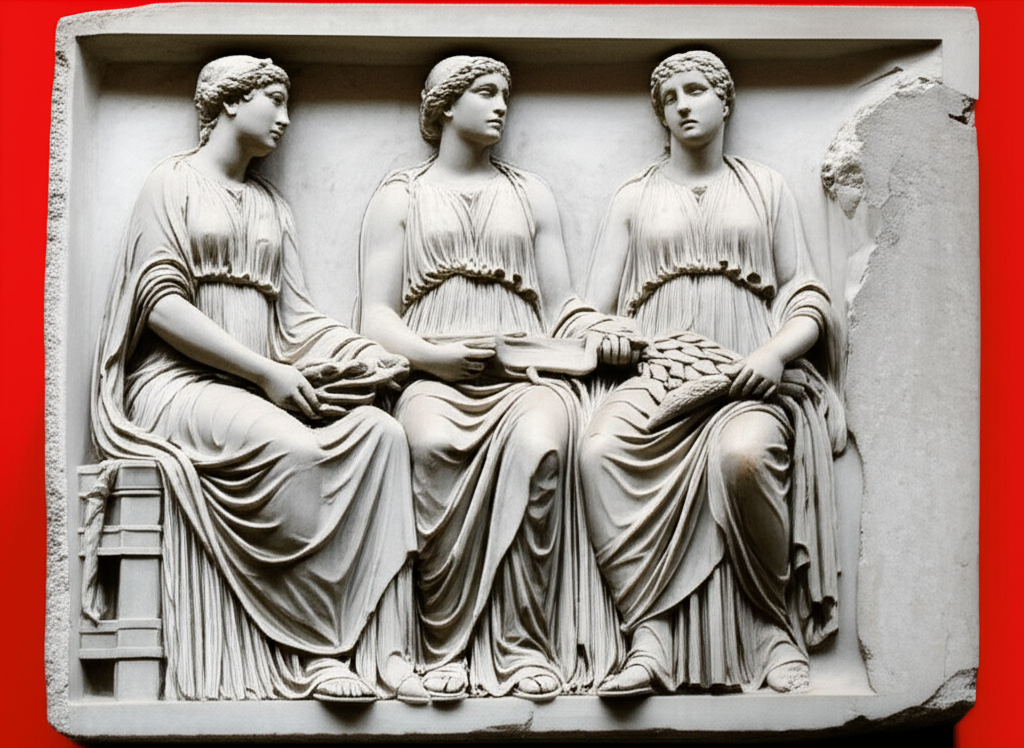 spinning, measuring, and cutting the thread of human life, symbolizing destiny, juxtaposed with a modern, abstract representation of quantum particles in a state of flux, suggesting randomness and unpredictability.)
📹 Related Video: What is Philosophy?
Video by: The School of Life
💡 Want different videos? Search YouTube for: ""Determinism vs Free Will Philosophy""
📹 Related Video: PLATO ON: The Allegory of the Cave
Video by: The School of Life
💡 Want different videos? Search YouTube for: ""Quantum Mechanics and Randomness Explained""