

Navigating the Labyrinth: The Problem of Fate and Chance
A Timeless Conundrum: The Problem of Fate and Chance
The human experience has long grappled with a fundamental tension: are our lives predetermined by an inescapable cosmic design, or are we agents navigating a world brimming with unpredictable accidents and genuine choice? This is The Problem of Fate and Chance, a philosophical Gordian knot that has occupied the greatest minds throughout history, forcing us to confront the very nature of reality, causality, and our place within it. At its core lies the intricate dance between necessity—that which must be—and contingency—that which may or may not be. Understanding this problem isn't merely an academic exercise; it’s an inquiry into the foundations of morality, responsibility, and the meaning we ascribe to our existence.
The Threads of Destiny and the Dice of Fortune: An Introduction
From the ancient Greek tragedians to the scholastic theologians, and onwards to modern existentialists, the question of whether our lives are charted by an unseen hand or shaped by the chaotic roll of the dice remains profoundly unsettling. Do we truly possess free will, or is every choice, every event, merely a link in an unbreakable chain of cause and effect? The Problem of Fate and Chance compels us to examine the very fabric of the universe: Is it a meticulously wound clockwork mechanism, or a vibrant, unpredictable tapestry woven with threads of randomness? This article will delve into the historical perspectives, key definitions, and enduring implications of this profound philosophical challenge, drawing insights from the rich tradition of the Great Books of the Western World.
Defining the Unseen Forces: Fate, Chance, Necessity, and Contingency
To truly grapple with this problem, we must first delineate the core concepts that define its parameters. These aren't just abstract terms; they represent fundamental modes of understanding how events unfold.
Fate: The Unyielding Script
Fate, in its philosophical sense, often refers to a predetermined course of events, an inescapable destiny. This concept implies a universe where every event, from the grandest cosmic shift to the most minute personal decision, is preordained. Ancient Greek thought, particularly in its myths and tragedies, frequently depicted powerful, indifferent Fates (the Moirai) who spun, measured, and cut the thread of human life. Philosophically, this often manifests as determinism, the belief that all events, including human actions, are ultimately determined by causes external to the will. For the Stoics, for instance, the universe operated according to a rational, divine logos, and accepting one's fate was the path to tranquility.
Chance: The Random Swerve
In stark contrast to fate, chance represents the absence of discernible cause, the realm of the accidental, the unpredictable. It is the unexpected turn, the lucky break, or the sudden misfortune that seems to defy any rational explanation or prior determination. Philosophically, chance often serves as the antithesis to determinism, suggesting genuine randomness in the universe. The Epicureans, for example, introduced the concept of the "atomic swerve" (parenklisis)—a slight, unpredictable deviation in the otherwise deterministic downward motion of atoms—as a mechanism to account for free will and the existence of genuine chance in the cosmos.
Necessity and Contingency: The Fabric of Reality
These two concepts often serve as the philosophical bedrock upon which fate and chance are built:
- Necessity: Refers to that which must be; it cannot be otherwise. A necessary truth (e.g., 2+2=4) is true in all possible worlds. A necessary event is one whose occurrence is inevitable, given prior conditions or the nature of reality itself. Often, fate is seen as a form of necessity, where events are necessitated by prior causes or a divine plan.
- Contingency: Refers to that which may or may not be; it is not necessary. A contingent truth could have been false (e.g., "Daniel Fletcher wrote this article"). A contingent event is one whose occurrence is not inevitable and could have been otherwise. Chance often operates within the realm of contingency, where events are not predetermined and genuine alternatives are possible.
The problem arises precisely because these two modes of being—necessity and contingency—seem to clash when applied to the entirety of existence, particularly human action.
Echoes from the Great Books: A Historical Journey
The Great Books of the Western World offer a rich tapestry of perspectives on The Problem of Fate and Chance, illustrating its enduring significance.
Ancient Greece: From Oracle to Atom
- Homer and the Tragedians: Early Greek thought, as seen in Homer's Iliad and the tragedies of Aeschylus, Sophocles, and Euripides, often depicted humans as subject to the whims of the gods and the inexorable decrees of Fate. Yet, even within this framework, characters often make choices that lead to their downfall, hinting at a tension between divine will and human agency.
- Aristotle: In his Physics and Metaphysics, Aristotle meticulously explored causality, distinguishing between different types of causes (material, formal, efficient, final). While he acknowledged the prevalence of efficient causation, he also introduced concepts like tyche (chance, luck) and automaton (spontaneity), suggesting that not all events have a clear, intentional cause, and some arise accidentally. He recognized that while much of nature operates with regularity, there are events that are genuinely contingent.
- The Stoics: Philosophers like Zeno and Seneca championed a highly deterministic view. For them, the cosmos was a rational, interconnected whole governed by a divine logos or reason, where every event was causally linked and necessary. Human freedom lay not in altering this fate, but in understanding and assenting to it, finding peace through acceptance.
- The Epicureans: Epicurus and his follower Lucretius (in De Rerum Natura) presented a contrasting view. Their atomistic philosophy posited that the universe consists of atoms moving in a void. To escape strict determinism and account for free will, Epicurus introduced the "atomic swerve," a spontaneous, uncaused deviation of atoms. This chance element was crucial for their ethics, allowing for genuine human choice and responsibility.
The Medieval Synthesis: Divine Will and Human Freedom
The Abrahamic traditions introduced a new layer of complexity: the omniscient and omnipotent God. How could divine foreknowledge and providence coexist with human free will and the existence of chance?
- Saint Augustine: In On Free Choice of the Will and The City of God, Augustine grappled profoundly with this. He argued that God's foreknowledge does not necessitate human actions; rather, God knows what we will freely choose. He saw chance as merely a human perception of ignorance regarding divine causes, not true randomness in God's ordered universe.
- Saint Thomas Aquinas: Drawing heavily on Aristotle, Aquinas in his Summa Theologica posited that God's providence extends to all things, yet he also maintained the existence of secondary causes and genuine contingency in the world. God's will is ultimate, but He permits creatures to act according to their nature, including rational creatures making free choices. Events that appear to be chance from a human perspective are still part of God's larger, often inscrutable, plan.
| Philosophical School/Figure | View on Fate/Necessity | View on Chance/Contingency | Implications for Human Agency |
|---|---|---|---|
| Homer/Tragedians | Strong, divine Fates | Limited, often tragic | Agency often futile, yet choices have consequences |
| Aristotle | Causal regularities | Tyche & Automaton (genuine) | Agency within natural limits; some events are accidental |
| Stoics | Cosmic determinism | None (all necessary) | Freedom in acceptance of fate, not alteration |
| Epicureans | Atomic motion | Atomic swerve (genuine) | Essential for free will and moral responsibility |
| Augustine | Divine foreknowledge | Apparent (due to human ignorance) | God knows free choices, doesn't cause them |
| Aquinas | Divine Providence | Genuine (secondary causes) | Free will within God's ultimate plan; events can be truly contingent |
The Enduring Paradox: Why the Problem Persists
The historical journey reveals that The Problem of Fate and Chance is not easily resolved. The tension between a determined, necessary universe and one where genuine contingency and free will exist continues to fuel philosophical debate.
- Determinism vs. Free Will: If all events are necessitated, how can we be morally responsible for our actions? The concept of justice, punishment, and praise seems to crumble if we could not have done otherwise.
- The Nature of Causality: Does every event require a prior cause? If so, does this chain of causation extend infinitely, or is there an uncaused first cause? If not, then what kind of "uncaused" event constitutes chance?
- Scientific Discoveries: Modern science, particularly quantum mechanics, has introduced new dimensions to the debate. The apparent indeterminacy at the subatomic level has led some to suggest that genuine chance is a fundamental aspect of reality, while others interpret it as merely a limitation of our current knowledge.
Living with the Unanswerable: Implications for Human Agency
Regardless of whether one leans towards a deterministic or indeterministic worldview, The Problem of Fate and Chance forces us to confront profound questions about our lives:
- Meaning and Purpose: If everything is fated, does life lose its meaning? If everything is pure chance, can we truly build a purposeful existence?
- Moral Responsibility: How do we assign blame or praise if choices are not truly free? This question underpins our entire legal and ethical systems.
- The Value of Effort: If the outcome is already decided, why strive? Conversely, if all is random, does effort even matter?
Ultimately, The Problem of Fate and Chance remains a testament to the human intellect's persistent quest to understand its place in the cosmos. It reminds us that while we seek order and meaning, the universe might hold mysteries that transcend our current conceptual grasp, inviting us to ponder the delicate balance between what must be and what might be.
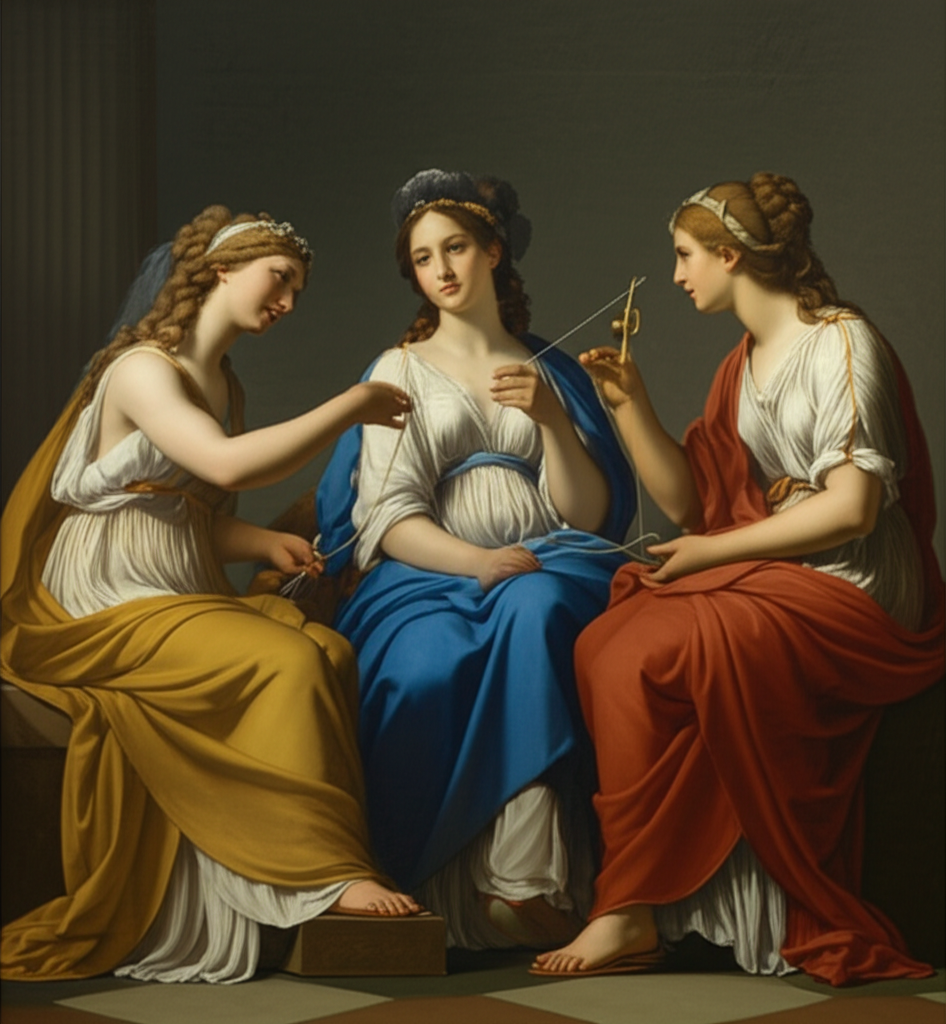 from Greek mythology, spinning, measuring, and cutting the thread of human life, contrasted with a smaller, more chaotic scene of dice being rolled or atoms colliding in the background, symbolizing chance.)
📹 Related Video: What is Philosophy?
Video by: The School of Life
💡 Want different videos? Search YouTube for: ""Determinism vs. Free Will Philosophy Explained""
📹 Related Video: STOICISM: The Philosophy of Happiness
Video by: The School of Life
💡 Want different videos? Search YouTube for: ""Stoicism and Fate: Ancient Wisdom for Modern Times""