

The Enduring Conundrum: The Problem of Evil (Sin) in the World
The existence of suffering, injustice, and moral transgression in a world purportedly governed by a benevolent and omnipotent power presents one of philosophy's most profound and persistent challenges. This "Problem of Evil" forces us to confront the very nature of Good and Evil, the role of Sin, and the meaning of existence in a complex World. From ancient laments to modern ethical dilemmas, this question has shaped theological doctrines, philosophical systems, and individual worldviews, demanding an explanation for why a perfect creator would permit such imperfection.
Unpacking the Paradox: A Summary
The Problem of Evil (and its theological cousin, Sin) is a cornerstone of philosophical and theological inquiry, questioning how an all-good, all-powerful, and all-knowing God can coexist with the undeniable reality of suffering and moral depravity in the World. This paradox, often articulated as a logical inconsistency, demands reconciliation: either God is not truly all-good, not truly all-powerful, or evil does not exist in the way we perceive it. Historically, thinkers have grappled with this "Problem" by positing human free will, the necessity of evil for greater good, or redefining the nature of evil itself, yet the shadow of suffering continues to prompt deep reflection on divine justice, human responsibility, and the nature of the cosmos.
The Genesis of a Great Problem
Since humanity first pondered its place in the cosmos, the stark reality of pain, injustice, and moral failing has stood in stark contrast to the yearning for order, meaning, and divine benevolence. How, indeed, can a World created by a perfectly Good God be so riddled with Evil? This isn't merely a theological quibble; it's a deeply human lament that resonates across cultures and epochs. The "Problem of Evil," as it's formally known, is the intellectual and emotional struggle to reconcile the existence of suffering and moral wrong with the attributes of a deity typically described as omniscient (all-knowing), omnipotent (all-powerful), and omnibenevolent (all-good).
Within this grand philosophical inquiry, the concept of Sin emerges as a crucial, often theological, component. If evil is a transgression against divine law, then "Sin" points to the human agency behind much of the moral evil we observe. This distinction—between natural catastrophes and human-induced suffering—is vital for understanding the nuances of the "Problem."
Defining the Contours: Evil, Sin, and Their Manifestations
To navigate this complex terrain, it's essential to define our terms:
- Evil: Broadly categorized into two forms:
- Moral Evil: Suffering and wrongdoing caused by the free actions of moral agents (e.g., murder, war, cruelty, injustice). This is where the concept of Sin most directly applies.
- Natural Evil: Suffering caused by natural phenomena, independent of human will (e.g., earthquakes, tsunamis, disease, famine).
- Sin: A theological concept, often understood as a transgression against divine law or a separation from God. It implies human culpability and free will in choosing actions that are morally wrong.
The "Problem" primarily focuses on why an all-good and all-powerful God would permit any evil, but the distinction between moral and natural evil often leads to different lines of defense or critique.
Historical Voices: Grappling with the Paradox
The "Problem of Evil" is not a modern invention. Its roots stretch back to ancient thought, finding expression in texts that form the bedrock of the Great Books of the Western World.
Early Formulations and the Epicurean Dilemma
The Greek philosopher Epicurus (as relayed by Lactantius) famously posed the dilemma:
"Is God willing to prevent evil, but not able? Then he is not omnipotent.
Is he able, but not willing? Then he is malevolent.
Is he both able and willing? Then whence cometh evil?
Is he neither able nor willing? Then why call him God?"
This succinct articulation lays bare the logical challenge that has plagued theologians and philosophers for millennia.
The Augustinian Response: Evil as Privation
One of the most influential responses came from St. Augustine of Hippo, whose ideas profoundly shaped Western Christian thought. Drawing from Neoplatonism, Augustine argued that evil is not a substance or a positive entity in itself, but rather a privation of good. Just as darkness is the absence of light, evil is the absence or corruption of good. God, being perfectly good, creates only good. Evil arises when good is corrupted or when beings with free will (like humans and angels) choose to turn away from the good.
Table 1: Augustine's View on Evil and Sin
| Concept | Description | Implication for Problem of Evil |
|---|---|---|
| Evil | Not a positive entity, but a privation (absence or corruption) of good. | God does not create evil; evil is a defect in creation, not a part of it. |
| Free Will | God grants rational beings the ability to choose between good and evil. | Moral evil originates from the misuse of free will by created beings (Sin). |
| Original Sin | The first act of disobedience by Adam and Eve, corrupting human nature. | Explains the pervasive tendency towards Sin and moral evil in humanity. |
The Free Will Defense and Soul-Making Theodicies
Later thinkers, including Thomas Aquinas, further developed the Free Will Defense, arguing that God's gift of genuine free will to humanity is so valuable that it necessitates the possibility of choosing evil. A world where moral agents can choose love, compassion, and virtue is arguably better than a world where such choices are coerced or impossible, even if it entails the risk of Sin and suffering.
Another prominent approach is the Soul-Making Theodicy, notably associated with Irenaeus and later developed by John Hick. This view posits that the World, with its challenges, struggles, and opportunities for moral growth, is an optimal environment for humans to develop virtues like courage, compassion, and resilience. Suffering, in this view, is not pointless but serves a purpose in "soul-making," allowing us to become truly good beings.
The Enduring Challenge: Skepticism and the Weight of Suffering
Despite these sophisticated philosophical and theological defenses (known as "theodicies"), the "Problem of Evil" remains a potent challenge. Critics, such as David Hume, questioned the very coherence of an omnipotent, omniscient, and omnibenevolent God in the face of immense, seemingly gratuitous suffering. Hume's arguments, alongside those of other Enlightenment thinkers, pushed the debate towards a more skeptical and empirical examination of the claims of religion.
The sheer volume and intensity of suffering, particularly natural evils that seem to serve no obvious moral purpose, often strain the limits of theodicies. The suffering of innocent children, for instance, remains a particularly poignant and difficult aspect of the problem.
Sin: Human Responsibility and Divine Justice
The concept of Sin offers a specific lens through which to view the "Problem of Evil," particularly moral evil. If humans are genuinely free, then their moral choices, including those that lead to suffering, are their own responsibility. This shifts a significant portion of the blame for moral evil from God to humanity.
However, even with Sin as an explanation, questions persist:
- Why would God create beings capable of such profound Sin and suffering?
- Does the punishment for Sin (e.g., eternal damnation in some theological traditions) fit the crime?
- How does "original sin" reconcile with individual accountability?
These questions highlight the intricate relationship between divine justice, human freedom, and the pervasive reality of Good and Evil in the World.
Conclusion: An Unfinished Inquiry
The "Problem of Evil (Sin) in the World" is not merely an academic exercise; it is a fundamental human question that touches on our deepest fears, hopes, and quest for meaning. From the philosophical rigor of Plato and Aristotle contemplating the ideal state, to the theological wrestling of Augustine and Aquinas with divine attributes, to the skeptical critiques of Hume and the existential despair of modern thinkers, the Great Books of the Western World bear witness to humanity's relentless pursuit of understanding. While no single answer has definitively resolved the paradox for all, the ongoing engagement with this Problem continues to refine our understanding of ethics, theology, and the very nature of existence itself. It reminds us that even in the face of profound suffering, the human spirit continues to question, to seek, and to strive for a World where good ultimately triumphs over evil.
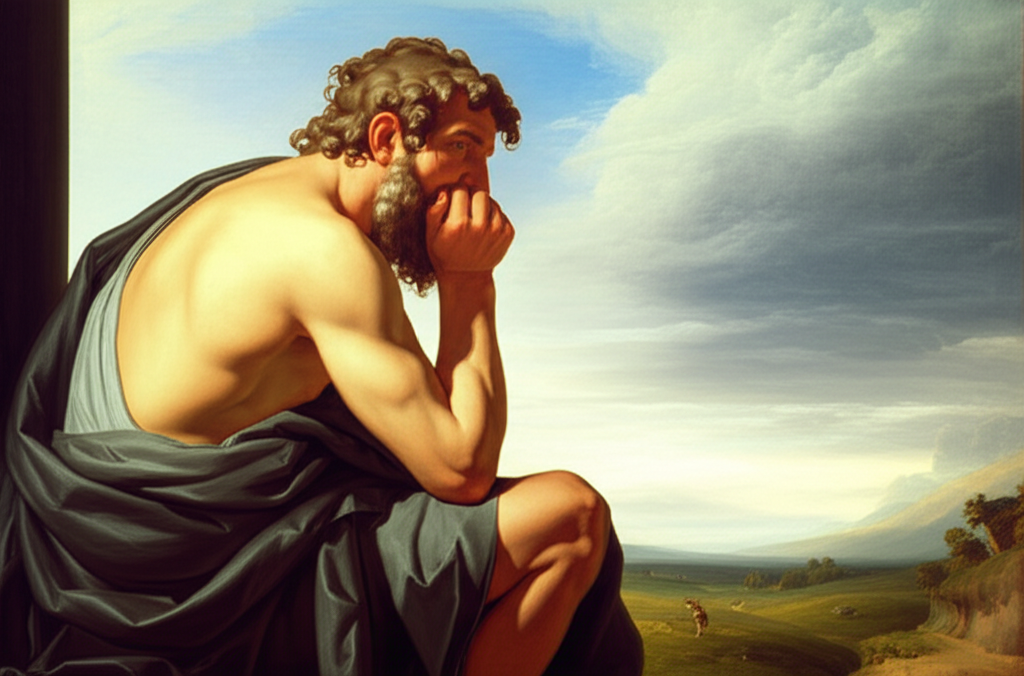 , emphasizing the juxtaposition of a sublime world with the reality of pain and moral choice.)
📹 Related Video: What is Philosophy?
Video by: The School of Life
💡 Want different videos? Search YouTube for: ""Problem of Evil philosophy explained""
📹 Related Video: ARISTOTLE ON: The Nicomachean Ethics
Video by: The School of Life
💡 Want different videos? Search YouTube for: ""Free Will Defense theodicy""