

The Elusive Fabric of Reality: Unraveling the Problem of Causality in Metaphysics
The universe, to our senses, appears to be a grand tapestry woven from cause and effect. Every action seems to have a reaction, every event a preceding condition that brought it into being. Yet, when we delve into the depths of metaphysics – the study of the fundamental nature of reality – the seemingly straightforward concept of cause transforms into one of philosophy's most enduring and perplexing problems. This article explores the core challenges surrounding causality, from ancient inquiries into its nature to modern dilemmas concerning necessity and contingency, and the relationship between the one and many in the causal chain. We will see that understanding causality is not merely an academic exercise, but central to how we comprehend existence, knowledge, and our place within the cosmos.
What is "Cause" Anyway? An Ancient Inquiry
At its most basic, a cause is that which produces an effect. But what does "produces" truly mean? The earliest comprehensive attempt to categorize the different ways something can be a cause comes from Aristotle in his Metaphysics. He identified four distinct types of causes, moving beyond a simple "push-pull" mechanism:
- Material Cause: That out of which something is made (e.g., the bronze of a statue).
- Formal Cause: The essence or blueprint, the form or pattern of a thing (e.g., the idea of the statue in the sculptor's mind).
- Efficient Cause: The primary source of the change or rest, the agent that brings something about (e.g., the sculptor making the statue). This is what we typically mean by "cause" today.
- Final Cause: The end, purpose, or goal for which a thing exists or is done (e.g., the purpose of the statue might be to honor a god).
Aristotle's framework, deeply rooted in the Great Books of the Western World, provided a robust lens for understanding the world for centuries. However, with the rise of modern science, the focus narrowed significantly to the efficient cause, stripping away the teleological (purpose-driven) aspect that once gave meaning to the universe. This shift, while empowering scientific inquiry, inadvertently set the stage for profound metaphysical challenges.
The Humean Challenge: Experience vs. Necessity
The most potent skepticism regarding the nature of causality emerged with David Hume in the 18th century. As a radical empiricist, Hume argued that all our knowledge comes from experience. When we observe causal events, what do we actually perceive?
Hume famously contended that we never observe a necessary connection between a cause and its effect. Instead, we merely observe:
- Contiguity in space and time: The cause and effect are usually close to each other.
- Priority in time: The cause precedes the effect.
- Constant conjunction: We have observed similar causes always being followed by similar effects.
From these repeated observations, our minds, through habit and custom, form an expectation that the effect will follow the cause. We project this expectation onto the world, mistakenly believing there is an objective, necessary link. For Hume, causality is not a feature of the world itself, but a product of our psychological makeup.
This radical conclusion fundamentally challenged the very foundation of science and everyday reasoning. If there's no inherent necessity in causation, then all our predictions about the future are based on mere belief, not rational certainty. The distinction between necessity and contingency became paramount: is the causal chain truly necessary, or is it merely a contingent sequence of events that we happen to observe consistently?
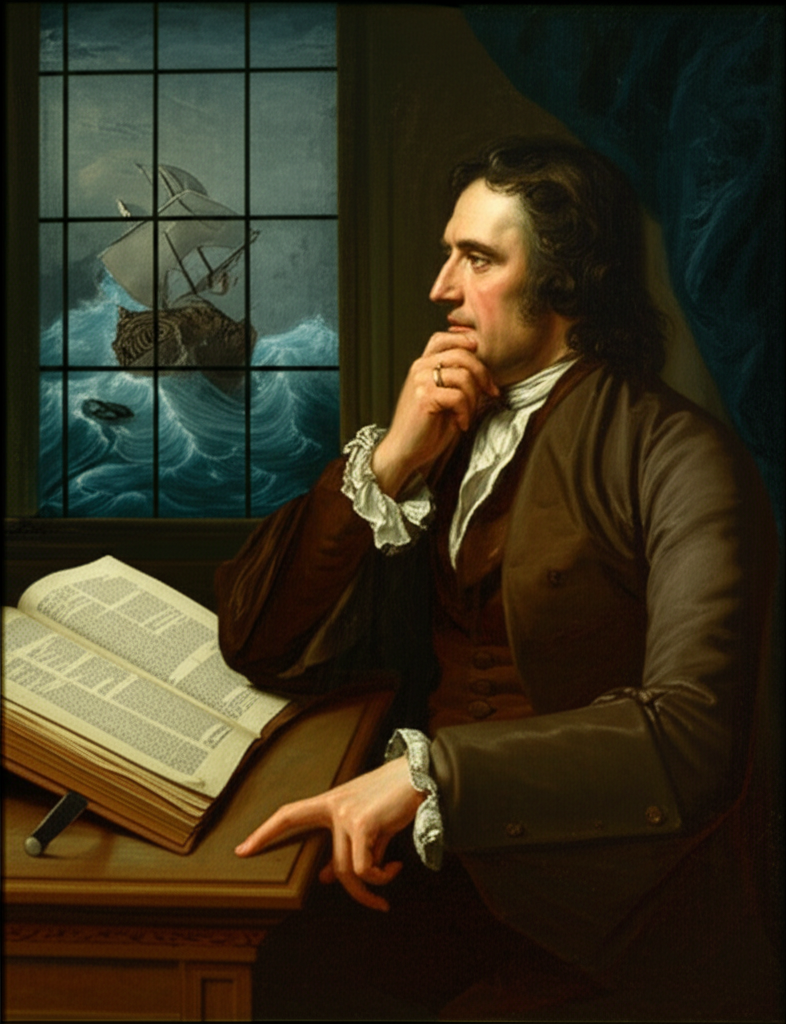
Kant's Grand Synthesis: Causality as a Category of Understanding
Immanuel Kant, deeply disturbed by Hume's skepticism which, he claimed, "interrupted his dogmatic slumber," sought to rescue causality and the possibility of objective knowledge. Kant agreed with Hume that we do not experience necessity directly from the external world. However, he argued that this doesn't mean causality is merely a psychological illusion.
Instead, Kant proposed that causality is a fundamental category of understanding – an innate structure of the human mind that we bring to experience. It is a synthetic a priori judgment:
- Synthetic: It adds new information (it's not just a definition).
- A priori: It is known independently of experience, prior to it.
For Kant, we don't find causality in the raw data of sensation; rather, our minds impose a causal structure on the incoming sensory information, making coherent experience possible in the first place. We cannot experience a world without causality because our minds are wired to organize phenomena causally. Therefore, causality is objectively valid for us, within the realm of experience (the phenomenal world), even if we can't know if it exists in the "thing-in-itself" (the noumenal world).
Modern Metaphysical Dilemmas: Beyond Hume and Kant
While Hume and Kant laid crucial groundwork, the problem of causality continues to evolve, pushing the boundaries of contemporary metaphysics.
The Problem of the One and Many in Causal Systems
One persistent challenge is understanding how individual causal events (the many) relate to a holistic, coherent causal structure of the universe (the one).
- Reductionism vs. Emergence: Can all complex causal phenomena be reduced to simpler, fundamental physical causes? Or do new, emergent causal powers arise at higher levels of organization (e.g., consciousness, social phenomena) that cannot be fully explained by their constituent parts?
- First Cause: Does the causal chain require a first cause to initiate all subsequent events, a concept often explored in cosmological arguments for the existence of God? Or can the universe be an infinite causal regress, or perhaps a self-causing entity?
Necessity and Contingency Revisited
The debate over whether events are truly necessary or contingent remains vibrant, particularly with developments in quantum mechanics and discussions of free will.
| Perspective | Description | Implications
📹 Related Video: What is Philosophy?
Video by: The School of Life
💡 Want different videos? Search YouTube for: "The Problem of Causality in Metaphysics philosophy"