

The Enduring Quandary: Navigating The Problem of Art and Imagination
The relationship between art and the human mind, particularly through the lenses of memory and imagination, presents a philosophical problem as ancient as it is compelling. From the earliest dialogues of Western thought, thinkers have grappled with art's nature, its power, and its often-ambiguous connection to truth and reality. This article explores how art, by its very reliance on imagination and its manipulation of memory, challenges our understanding of knowledge, ethics, and the very structure of the human psyche, drawing insights from the foundational texts of the Great Books of the Western World.
Unpacking the Philosophical Problem of Art
At its heart, the problem of art lies in its paradoxical nature. Art is undeniably a product of human creativity, a testament to our capacity for imagination, yet it often presents us with representations that are not strictly "real." How, then, should we understand its value, its truthfulness, and its impact on the individual and society? Is art a path to deeper understanding, or merely a delightful deception?
This fundamental question has been debated for millennia, with philosophers offering vastly different perspectives on art's role and its implications for the human mind.
Plato's Shadow: Art as Imitation and Deception
One of the most influential and enduring critiques of art comes from Plato, as articulated in his Republic. For Plato, art, particularly mimetic art like poetry and painting, is fundamentally problematic because it is a copy of a copy.
- The Forms: Reality, for Plato, resides in the eternal, unchanging Forms (e.g., the Form of Beauty, the Form of Justice).
- Physical Objects: The world we perceive through our senses consists of imperfect copies of these Forms. A beautiful chair, for instance, is a copy of the Form of Chair, and also participates in the Form of Beauty.
- Art as Mimesis: Art then becomes an imitation (mimesis) of these physical objects. A painting of a chair is thus three removes from ultimate reality – a copy of a copy of a Form.
Plato argued that such imitation appeals to the lower, irrational parts of the soul, stirring emotions and distracting us from the pursuit of true knowledge found through reason and contemplation of the Forms. He feared art's power to mislead, to present illusions as truth, and to corrupt the character of citizens by celebrating passions rather than virtue. For Plato, the artist's imagination was a dangerous faculty, capable of creating compelling falsehoods rather than revealing truth.
Aristotle's Counterpoint: Art as Learning and Catharsis
Aristotle, Plato's student, offered a more nuanced and ultimately more positive view of art, particularly tragedy, in his Poetics. While acknowledging art's imitative nature, Aristotle diverged significantly in his assessment of its value.
For Aristotle, art is not merely a superficial copy but a powerful means of understanding and engaging with the world.
| Plato's View of Art | Aristotle's View of Art |
|---|---|
| Distant from truth; a copy of a copy | Reveals universal truths; more philosophical |
| Appeals to emotions; corrupts the soul | Purges emotions (catharsis); educates |
| Relies on dangerous imagination | Engages intellect and imagination constructively |
| Distracts from reason and virtue | Provides pleasure and learning |
Aristotle argued that imitation is natural to humans and a primary means of learning. Through art, we can explore possibilities, understand human nature, and grasp universal truths that might be obscured in the particularities of everyday life. Tragedy, for example, through its depiction of suffering and human action, evokes pity and fear, leading to a catharsis – a purging or purification of these emotions. This process, far from corrupting the mind, was seen as beneficial, offering moral and intellectual insight. Here, imagination is not a deceiver but a tool for empathetic understanding and intellectual exploration.
The Interplay of Memory and Imagination in Art
Regardless of whether one leans towards Plato's skepticism or Aristotle's appreciation, both implicitly acknowledge the crucial roles of memory and imagination in the creation and reception of art.
- Imagination: This is the faculty that allows artists to conceive of forms, narratives, and images that may not exist in their immediate reality. It's the engine of creativity, enabling the artist to synthesize experiences, conjure novel scenarios, and give shape to abstract ideas. For the viewer, imagination is vital for engaging with the artwork, filling in gaps, and envisioning the world the artist presents. It's how we "see" the unpainted parts of a scene or feel the emotions of a character.
- Memory: Artists draw upon their memories – personal experiences, cultural narratives, artistic traditions – to inform their work. These memories are not simply replicated but transformed and reinterpreted through the imaginative process. For the audience, memory plays a role in recognition, association, and the emotional resonance of an artwork. A piece of music might evoke a past event, or a painting might recall a shared cultural narrative, deepening its impact.
The mind is thus a complex arena where these faculties constantly interact. Art becomes a dialogue between the artist's remembered experiences and imaginative projections, and the audience's own internal landscape of memory and imagination. This interplay is precisely what makes art so powerful, yet also so prone to philosophical questioning. What happens when our imagination, fueled by art, conjures realities that diverge significantly from shared experience or objective truth? This is where the problem of art persists.
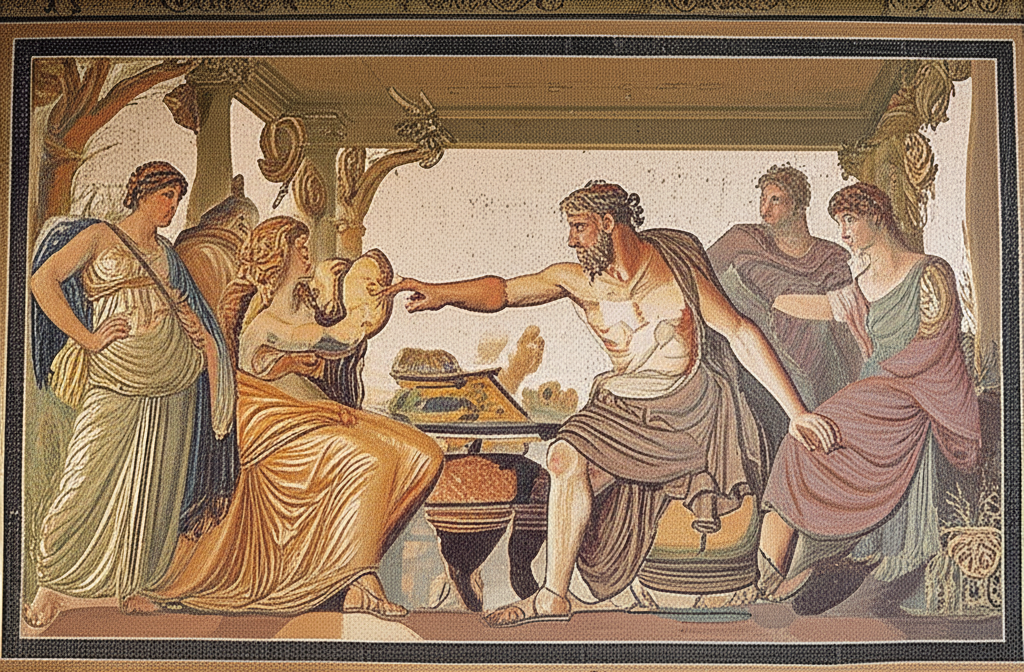
The Enduring Problem: Art, Truth, and the Mind
The problem of art and imagination continues to challenge contemporary thought. How do we reconcile art's capacity for profound insight with its potential for manipulation? In an age saturated with digital imagery and virtual realities, these questions become even more pertinent.
- Does art, by engaging our imagination so fully, blur the lines between reality and fiction?
- How do artists ethically wield the power of imagination and memory in their creations?
- What is the responsibility of the audience in interpreting art, especially when it challenges established truths or norms?
These questions, rooted in the foundational texts of Western philosophy, underscore that the problem of art is not merely an academic exercise. It is a fundamental inquiry into the nature of human perception, the power of the mind, and our ongoing quest for meaning in a world shaped as much by our creations as by objective reality.
Further Exploration
📹 Related Video: PLATO ON: The Allegory of the Cave
Video by: The School of Life
💡 Want different videos? Search YouTube for: ""Plato on Art and Imitation" - search for videos explaining Plato's theory of mimesis and his critique of art from a philosophical perspective."
📹 Related Video: ARISTOTLE ON: The Nicomachean Ethics
Video by: The School of Life
💡 Want different videos? Search YouTube for: ""Aristotle Poetics Catharsis Explained" - search for academic or educational videos detailing Aristotle's views on tragedy, catharsis, and the purpose of art."